What Factors Drive Up the Cost of Structural Repairs?
June 28, 2026
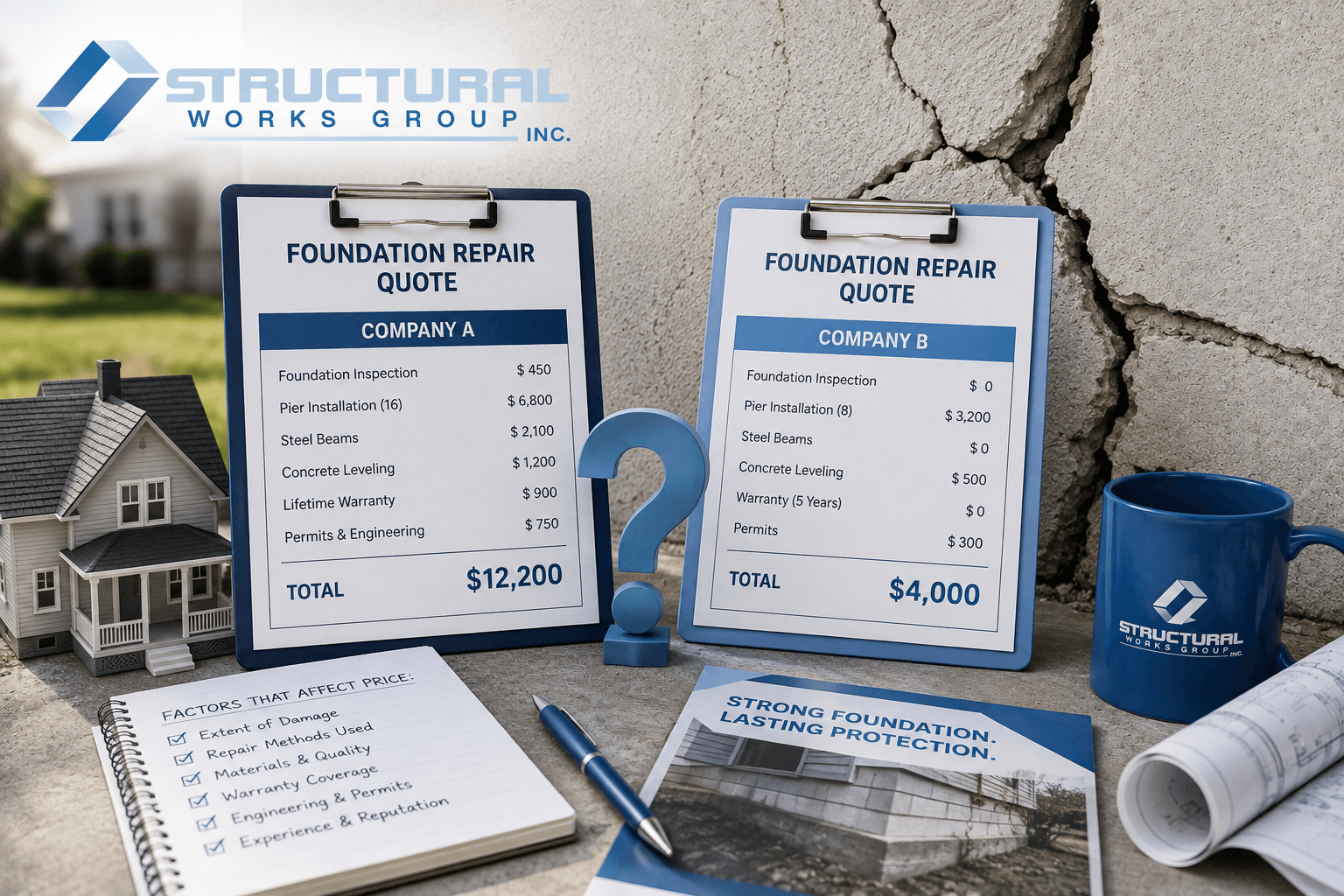
Structural repair is one of those categories where two homeowners with seemingly similar problems can receive quotes that are thousands of dollars apart. That gap is not random — it is the product of specific variables that experienced contractors assess before they can give you an accurate number. If you have recently received a structural repair estimate that was higher than you expected, or if you are trying to budget for work you know is coming, understanding what actually drives cost is the most useful place to start. Some of these factors are outside your control, but others can be managed with the right timing and approach.
The Severity and Extent of Existing Damage
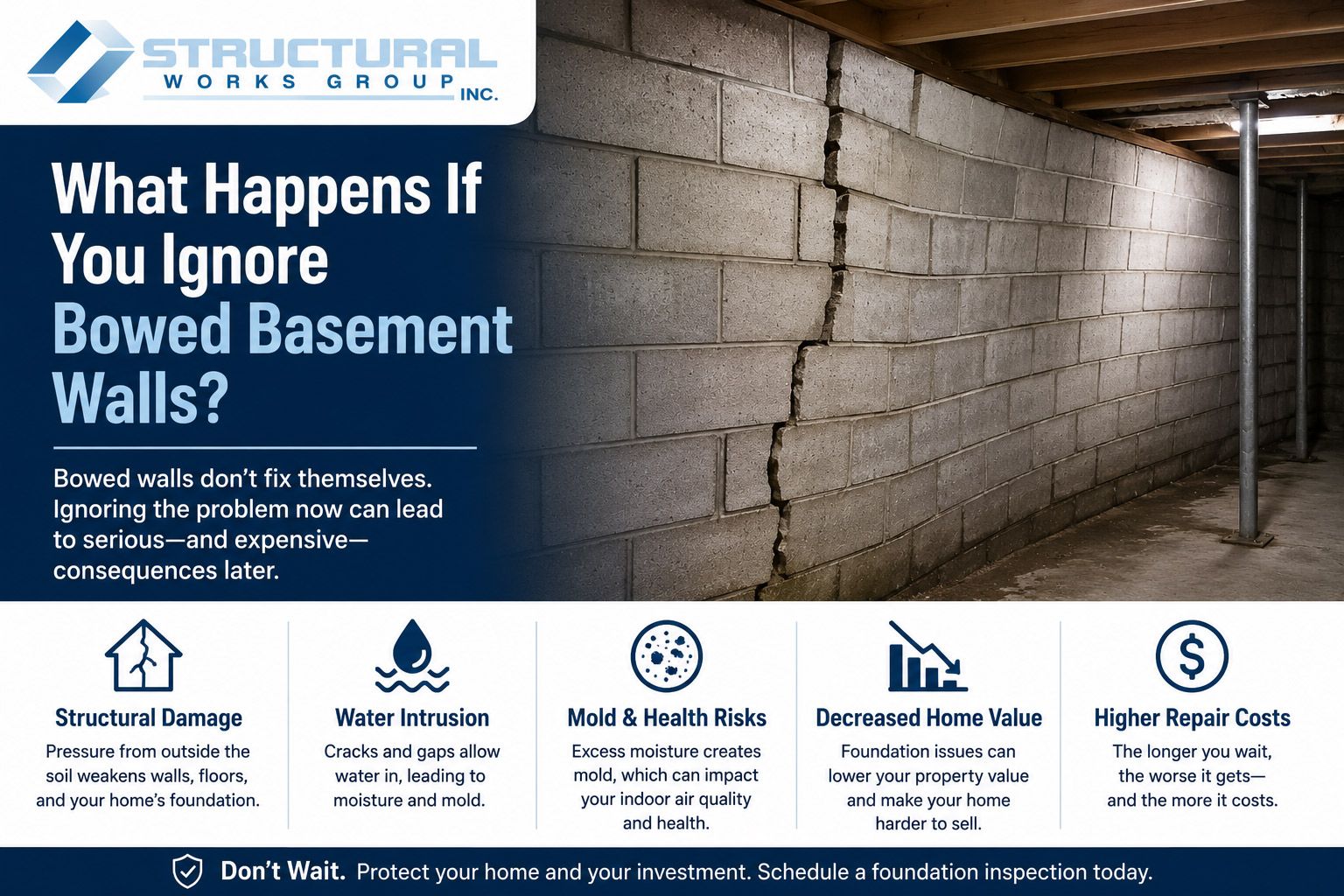
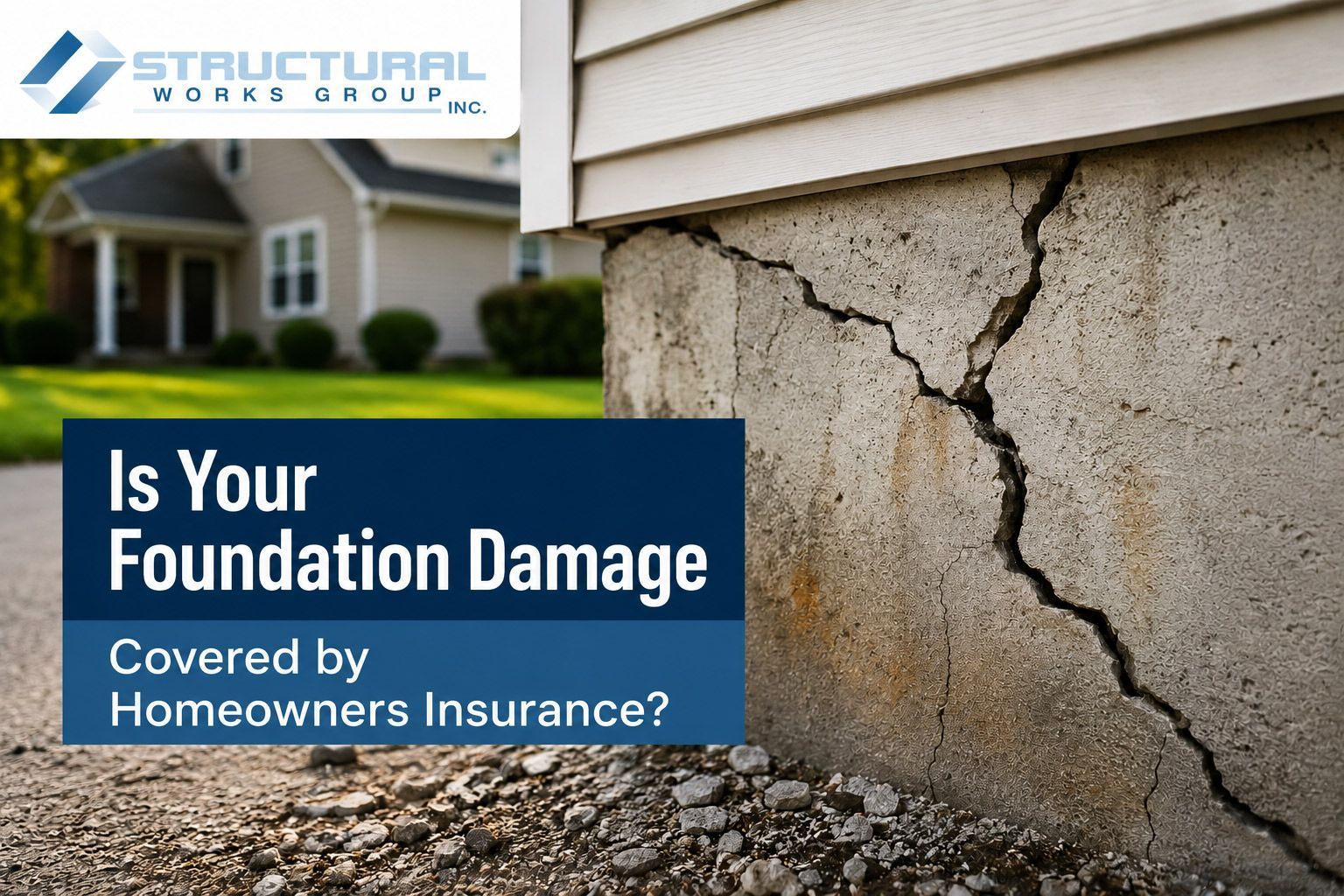
The single biggest cost driver in any structural repair project is how far the damage has progressed. A hairline crack in a foundation wall that is monitored and addressed early is a fundamentally different — and far less expensive — repair than a crack that has widened over years, allowed water infiltration, and triggered wood rot in adjacent framing. Every month that structural damage goes unaddressed, the scope of repair typically expands. In Charlotte, NC, the region's clay-heavy soils and high seasonal humidity accelerate this progression. What begins as a minor settling issue can develop into bowed walls, cracked slabs, and compromised joists if left alone. Early intervention is almost always the single most effective way to keep structural repair costs manageable.
Accessibility and Site Conditions
Labor costs are directly tied to how easy or difficult it is for crews to access the damaged area. Several site conditions add meaningful cost to structural repair projects:
- Crawlspace clearance — very low crawlspaces require workers to maneuver in confined quarters, slowing work and increasing labor hours
- Landscaping or hardscaping — exterior foundation repair that requires removing and replacing mature landscaping, patios, driveways, or retaining walls adds significant material and labor cost
- Slope and grade — homes built on sloped lots in Charlotte, NC and the surrounding hill country often have uneven foundation depths, making excavation more complex
- Finished basements — repairs in finished basements require either working around existing finishes or removing and replacing flooring, drywall, and trim
- Equipment access — properties on narrow lots or with restricted driveway access may prevent heavy equipment from reaching the work area, requiring alternative methods
These conditions are not factors a contractor inflates arbitrarily — they represent genuine increases in labor time and complexity that translate directly into higher project costs.
The Type of Repair Method Required
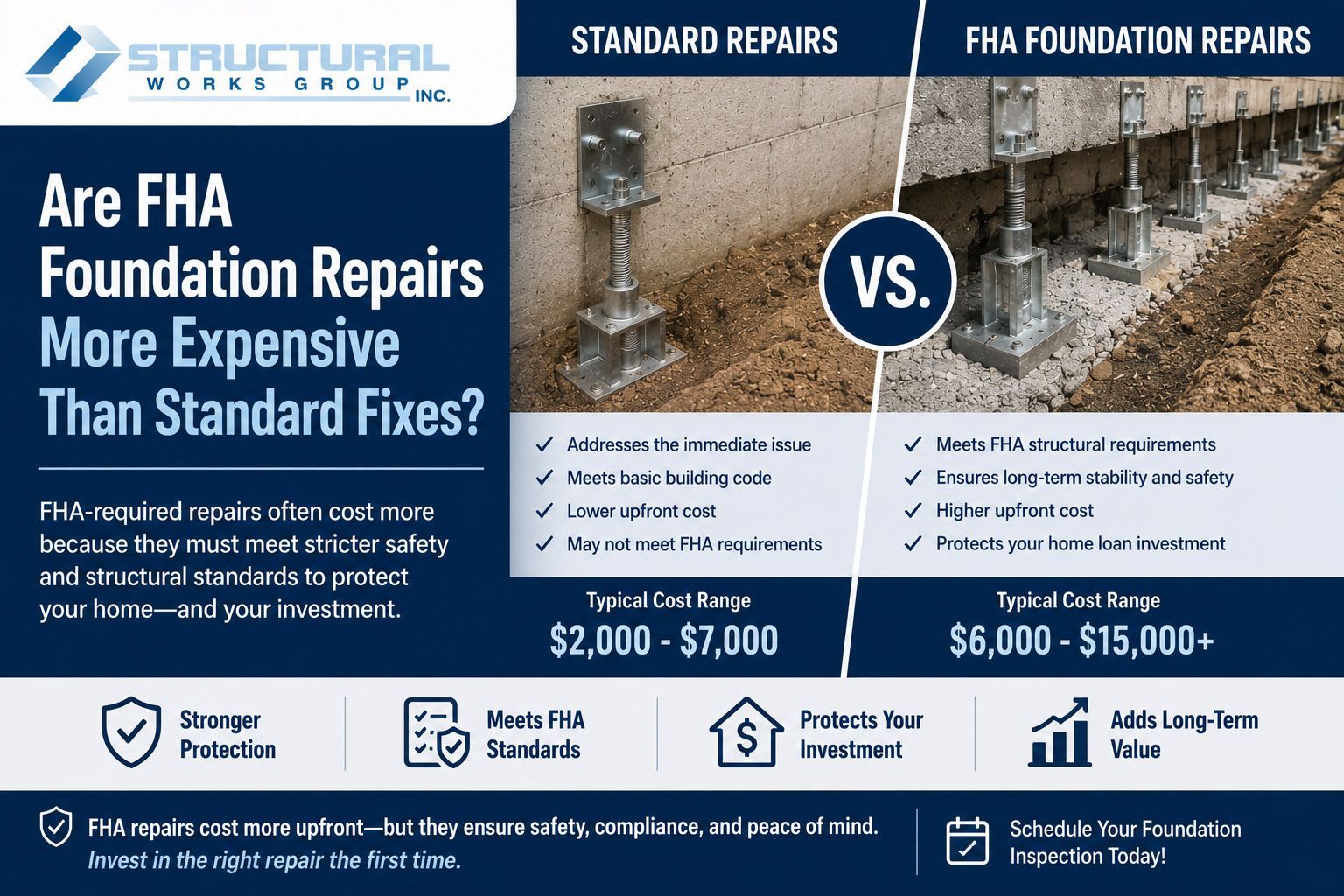
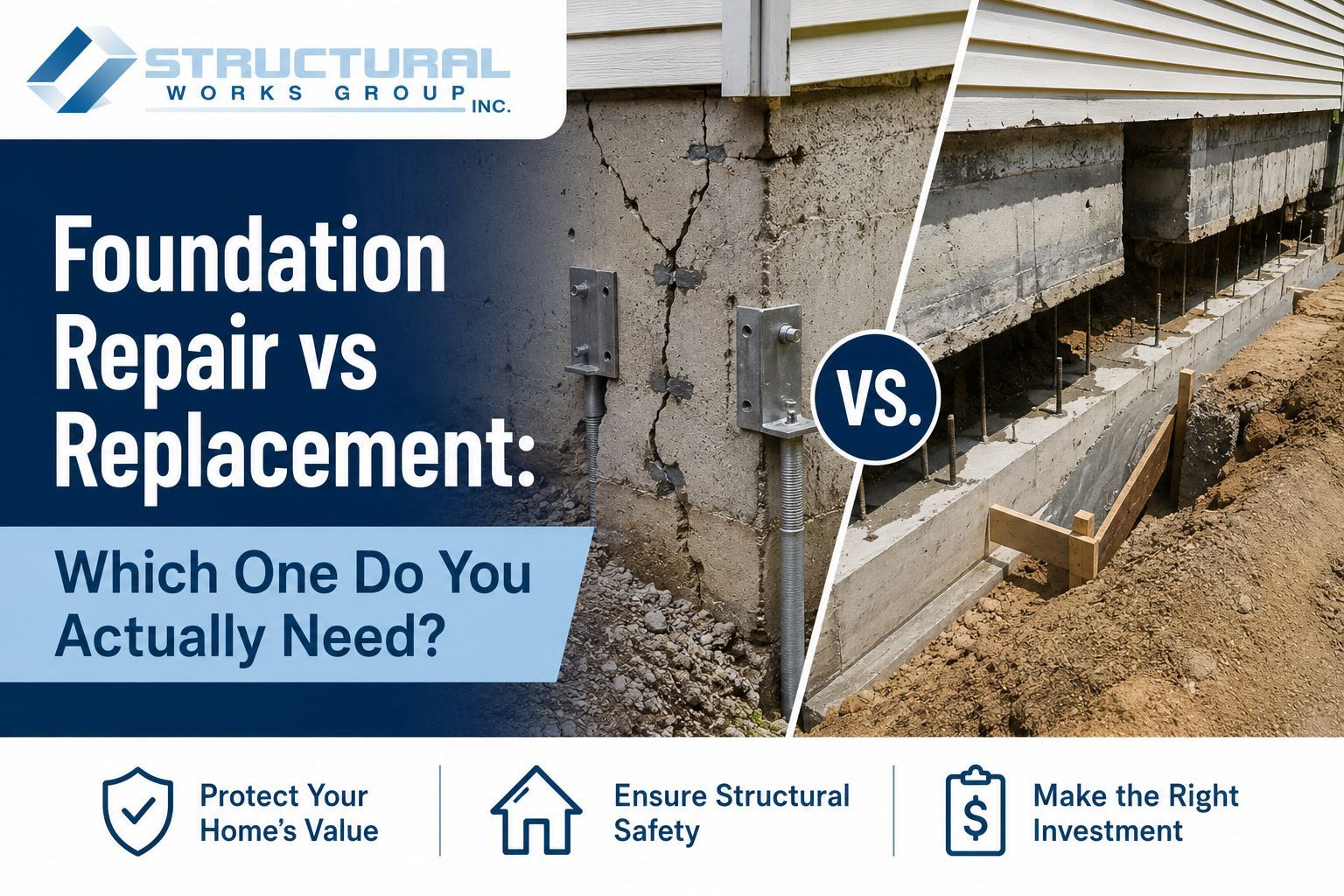
Different structural problems call for different repair approaches, and those approaches carry very different price tags. The method selected is determined by the type of damage, not by cost preference. Here is how common repair methods compare in terms of typical cost ranges:
- Carbon fiber strap installation for bowing walls: $300 – $600 per strap, with most walls requiring multiple straps
- Wall anchor systems for moderate to severe bowing: $500 – $1,200 per anchor
- Helical or push pier installation for settling foundations: $1,000 – $2,500 per pier, with most projects requiring multiple piers
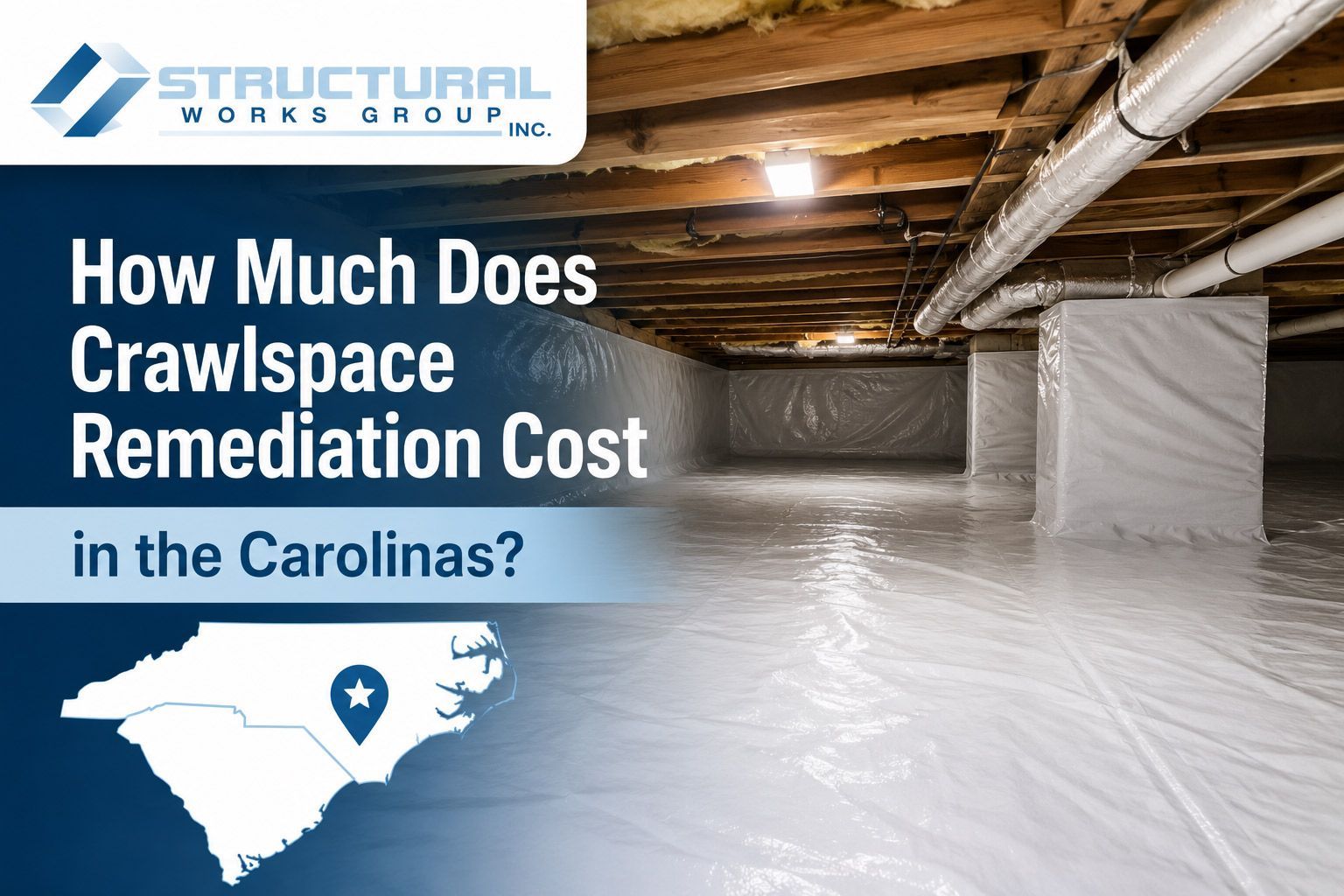
- Full crawlspace encapsulation: $5,000 – $12,000+ depending on size and condition
- Concrete slab lifting with polyurethane foam: $800 – $2,500 depending on the area
- Full basement wall excavation and waterproofing: $10,000 – $25,000+
In Charlotte, NC, piering is particularly common due to expansive clay soils that cause foundation settling. Projects requiring multiple piers — often six to twelve for a single corner of a home — accumulate costs quickly but deliver lasting stability when properly installed.
Underlying Causes That Must Be Addressed
One of the most overlooked cost components in structural repair is the work required to address the root cause of the damage. Repairing a foundation wall without fixing the drainage issue driving hydrostatic pressure against it is like patching a ceiling without fixing the roof leak above it — the repair will not hold. Root cause correction often adds to the project cost but is essential for the repair to be effective and lasting. Common root cause corrections include:
- Exterior waterproofing and drainage system installation
- Downspout extension and grading corrections to redirect surface water away from the foundation
- Interior drain tile system installation to manage groundwater
- Sump pump installation or replacement
- Soil stabilization or compaction in areas of significant settlement
Homeowners in Charlotte, NC who address only the structural symptom and not the underlying water or soil problem should expect the damage to recur, often within a few years. Getting the root cause corrected as part of the initial project is almost always more cost-effective than returning for repeat repairs.
Frequently Asked Questions
Does the age of my home significantly affect structural repair costs?
Older homes sometimes use foundation materials that are no longer standard — stone, brick, or early-era poured concrete that has degraded differently than modern materials. Working with these materials can increase cost because repair methods must be adapted, and replacement materials may need to be custom sourced. That said, age alone does not determine cost — the condition and type of damage matter more than the year the home was built.
Are structural repairs more expensive in the summer or winter in the Carolinas?
Demand for structural repair services in the Carolinas tends to be highest in spring and early summer, following the wet season when drainage and moisture problems become visible. Scheduling work in late fall or winter, when contractor demand is typically lower, can sometimes result in faster scheduling and, in some cases, more competitive pricing. Excavation work, however, can be complicated by frozen or saturated ground conditions in winter.
Does getting multiple quotes lower the cost of structural repairs?
Getting two or three quotes is always advisable for any significant structural project. It gives you a sense of the market rate for your specific repair type and location. Be cautious, however, of choosing a contractor purely on the lowest price — a quote that is significantly lower than others may indicate that important scope items have been omitted or that the contractor lacks the experience for your specific repair type.
Can I do anything to prevent structural repair costs from increasing after work begins?
Yes. The most effective step is requesting a written scope of work before any work begins that specifies exactly what is and is not included. Ask the contractor to identify any conditions that, if found during work, would trigger additional cost — and get a range estimate for those contingencies. This does not eliminate surprises, but it ensures you have informed consent before any change orders are authorized.
Is structural repair financing available, and does it affect overall cost?
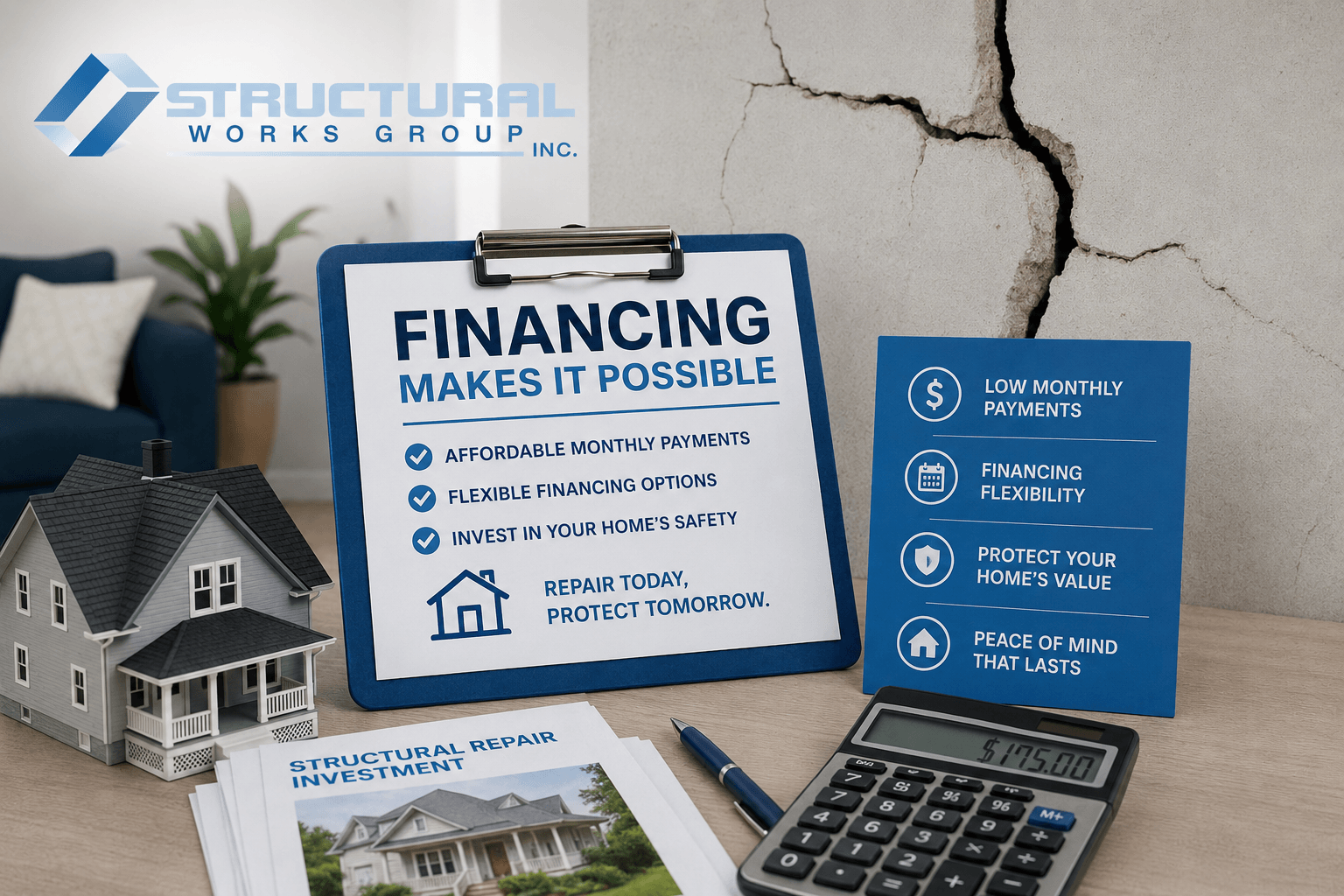
Many structural repair contractors offer financing options, and some lenders provide home equity products specifically for structural and foundation repairs. Financing allows homeowners to proceed with necessary work before damage escalates — which ultimately reduces total cost compared to waiting. Factor in interest costs when comparing financing to out-of-pocket payment, and ask your contractor whether any manufacturer or program financing options are available for specific repair methods.
Conclusion
Structural repair costs are driven by real, measurable factors — the severity and type of damage, site conditions, the repair method required, and whether the underlying cause is corrected as part of the project. Understanding these variables helps you evaluate estimates accurately and make smarter decisions about timing and scope. If you are concerned about structural issues in your home, Structural Works Group serves homeowners throughout Charlotte, NC and the surrounding area with honest assessments, transparent pricing, and permanent repair solutions. Call 980-522-7581 today to schedule your free structural evaluation.