Can You Sell a House With Foundation Problems in Charlotte, NC?

July 5, 2026

Discovering foundation problems when you are preparing to sell a home is one of the most stressful moments a homeowner can face. Whether an inspector flagged it, a buyer's agent noticed it, or you already knew it was there, the immediate question is always the same: does this kill the deal? The answer, for most homeowners in Charlotte, NC, is no — but how you handle it matters enormously. Foundation problems are not automatically deal-breakers. What they are is a factor that requires disclosure, strategy, and often, professional repair. This guide walks through your realistic options and what each one means for your sale.


Disclosure Is Not Optional in North Carolina

North Carolina has some of the most comprehensive seller disclosure requirements in the country. The Residential Property and Owners' Association Disclosure Statement — the standard form used in virtually all NC residential transactions — requires sellers to disclose known material defects, including structural and foundation problems. Attempting to conceal a known foundation issue is not just ethically problematic — it exposes you to significant legal liability, including potential rescission of the sale and damages, even after closing. Charlotte, NC buyers and their agents are increasingly sophisticated, and home inspectors routinely identify foundation concerns during the due diligence period. Any defect discovered post-closing that a reasonable investigation would have revealed can form the basis for a claim against the seller. The safest, and usually the most financially sound, approach is full disclosure from the start.


Selling As-Is: What It Means and What to Expect

Selling a home as-is in Charlotte, NC means you are not agreeing to make repairs before closing. It does not mean you are hiding defects — you still must disclose known problems, and buyers still have the right to conduct inspections. What it does mean is that you are pricing the home to reflect its current condition and leaving repair decisions to the buyer. This approach attracts a specific pool of buyers — primarily investors, house flippers, and cash buyers who are specifically looking for below-market properties with improvement potential. These buyers will price their offers conservatively, factoring in repair costs, carrying costs, and a profit margin. In Charlotte, NC's competitive real estate market, an as-is sale with foundation problems typically yields 10 to 30 percent less than a comparable home in repaired condition, depending on the severity of the issues.


Repairing Before Listing: The Case for Investing First

For many sellers in Charlotte, NC, repairing the foundation before listing is the financially superior choice — even accounting for the upfront cost of repairs. Here is why the math often works in favor of repair:

  • A repaired home qualifies for conventional, FHA, VA, and HUD financing — expanding your buyer pool dramatically
  • A transferable warranty from the repair contractor adds documented value and reduces buyer anxiety
  • Repaired homes typically receive stronger offers with fewer contingencies and less aggressive negotiation
  • A documented, professionally warranted repair is often less frightening to buyers than an unrepaired defect — buyers fear the unknown more than a solved problem
  • Avoiding the as-is discount frequently covers the cost of repair and then some

The calculus shifts if the foundation problems are extensive, repair costs are very high, or the local market is slow enough that even a repaired home would sit. A professional structural assessment gives you the information needed to run these numbers accurately before committing to either path.


How Foundation Problems Affect Financing and Buyer Pool

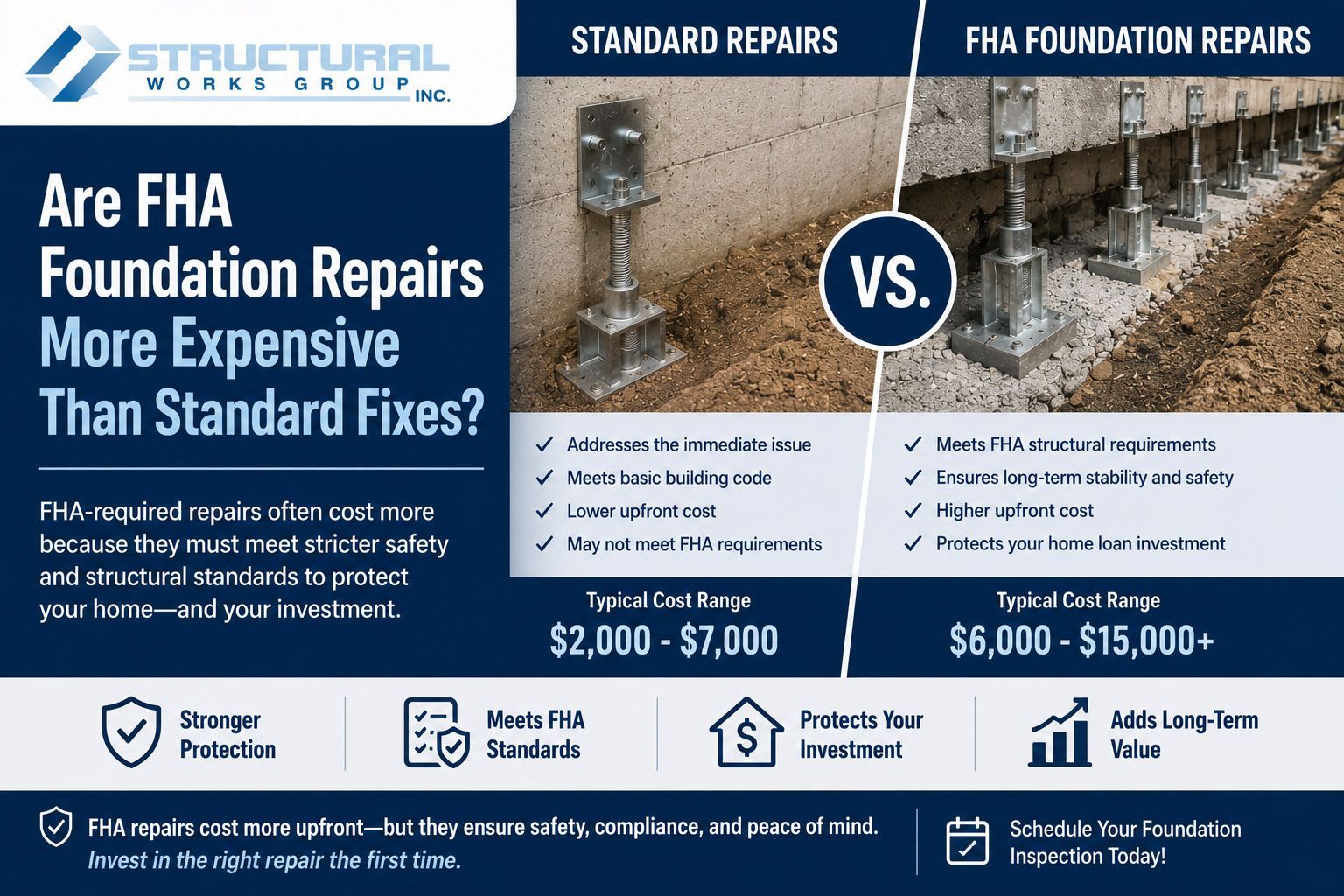
One of the most practical complications of selling a home with unrepaired foundation problems in Charlotte, NC is the effect on financing. Conventional mortgage lenders, and particularly FHA and VA loan programs, have specific requirements about the structural condition of a home. Appraisers conducting FHA and VA appraisals are required to flag significant structural defects and will typically call for repairs before the loan can close. This effectively eliminates FHA and VA buyers — a significant portion of the market — from purchasing a home with unaddressed foundation issues. Cash buyers and conventional buyers who waive appraisal contingencies remain options, but that is a meaningfully smaller pool. In a city like Charlotte, NC, where FHA and VA loans represent a substantial share of transactions, losing those buyers has real implications for both offer frequency and final sale price.

Frequently Asked Questions

  • Are real estate agents required to disclose foundation problems if they know about them?

    Yes. In North Carolina, real estate agents have an independent duty to disclose known material defects to buyers, separate from the seller's disclosure obligation. If an agent is aware of foundation issues and does not disclose them, they can face disciplinary action from the NC Real Estate Commission in addition to civil liability. This is another reason why attempting to conceal known defects is a losing strategy for all parties involved.

  • Can a buyer back out of a contract after discovering foundation problems during inspection?

    Yes, within the due diligence period. North Carolina's standard Offer to Purchase and Contract includes a due diligence period during which a buyer can terminate the contract for any reason and receive their due diligence fee back only if the seller has agreed to refund it. After due diligence expires, the buyer's earnest money is typically at risk if they walk away. Foundation discoveries during inspection are one of the most common reasons buyers renegotiate or exit a contract during due diligence.

  • Will an appraiser automatically flag foundation cracks?

    Not always. Minor, stable cracks that do not indicate active movement may not be flagged by all appraisers. However, cracks with differential movement, bowing walls, visible settling, or other indicators of active structural distress are almost always noted by experienced appraisers, particularly those conducting government-backed loan appraisals. An as-is appraisal conducted before listing can help you understand how an appraiser is likely to interpret your foundation's condition.

  • What if a buyer discovers foundation problems after closing?

    If a buyer discovers a material defect post-closing that the seller knew about and failed to disclose, the seller may face a lawsuit for fraudulent concealment or misrepresentation. Remedies can include repair cost reimbursement, damages, and in some cases, rescission of the sale. North Carolina courts take disclosure obligations seriously, and this is not a theoretical risk — it is a relatively common basis for post-closing litigation involving structural defects.

  • Is there a best time of year to sell a home with foundation issues in Charlotte, NC?

    The Charlotte, NC real estate market is most active in spring and early summer, which generally means more buyers and more competitive conditions that can offset some of the discount associated with foundation concerns. However, cash investors — often the most realistic buyer for an as-is home with structural issues — are active year-round. If you are planning to repair before listing, target completion in late winter or early spring to take advantage of peak buying season.

Conclusion

Selling a home with foundation problems in Charlotte, NC is entirely possible, but the approach you choose will significantly affect your net proceeds and the stress level of the transaction. Disclosure is required. Repair is often the financially smarter choice. And working with qualified professionals to understand the true extent and cost of the problem puts you in control of the situation rather than reacting to it. Structural Works Group works with Charlotte, NC homeowners and their agents to provide fast, accurate foundation evaluations and professional repair services that can make a property transaction-ready. Call us at 980-522-7581 to schedule your free foundation assessment.
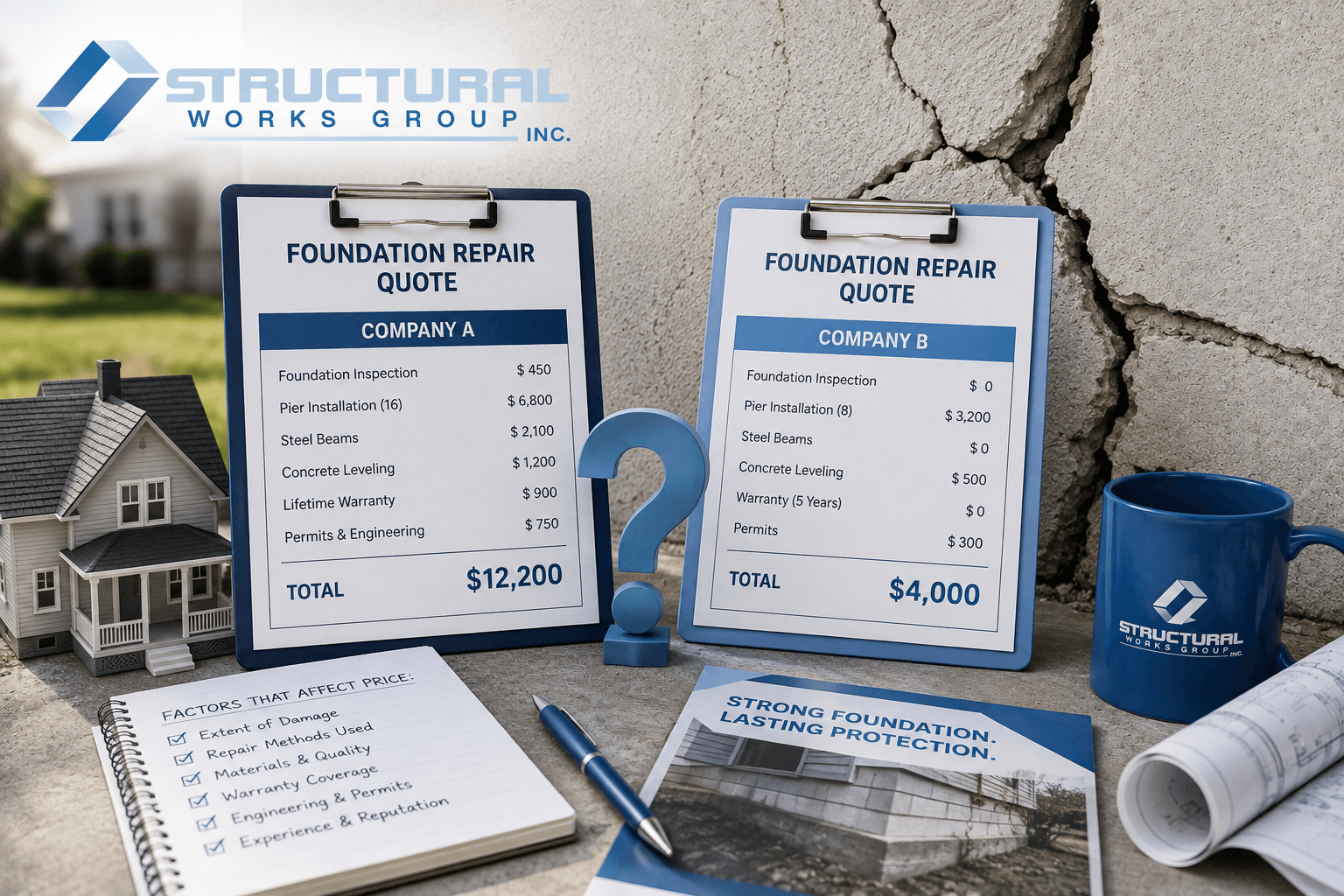
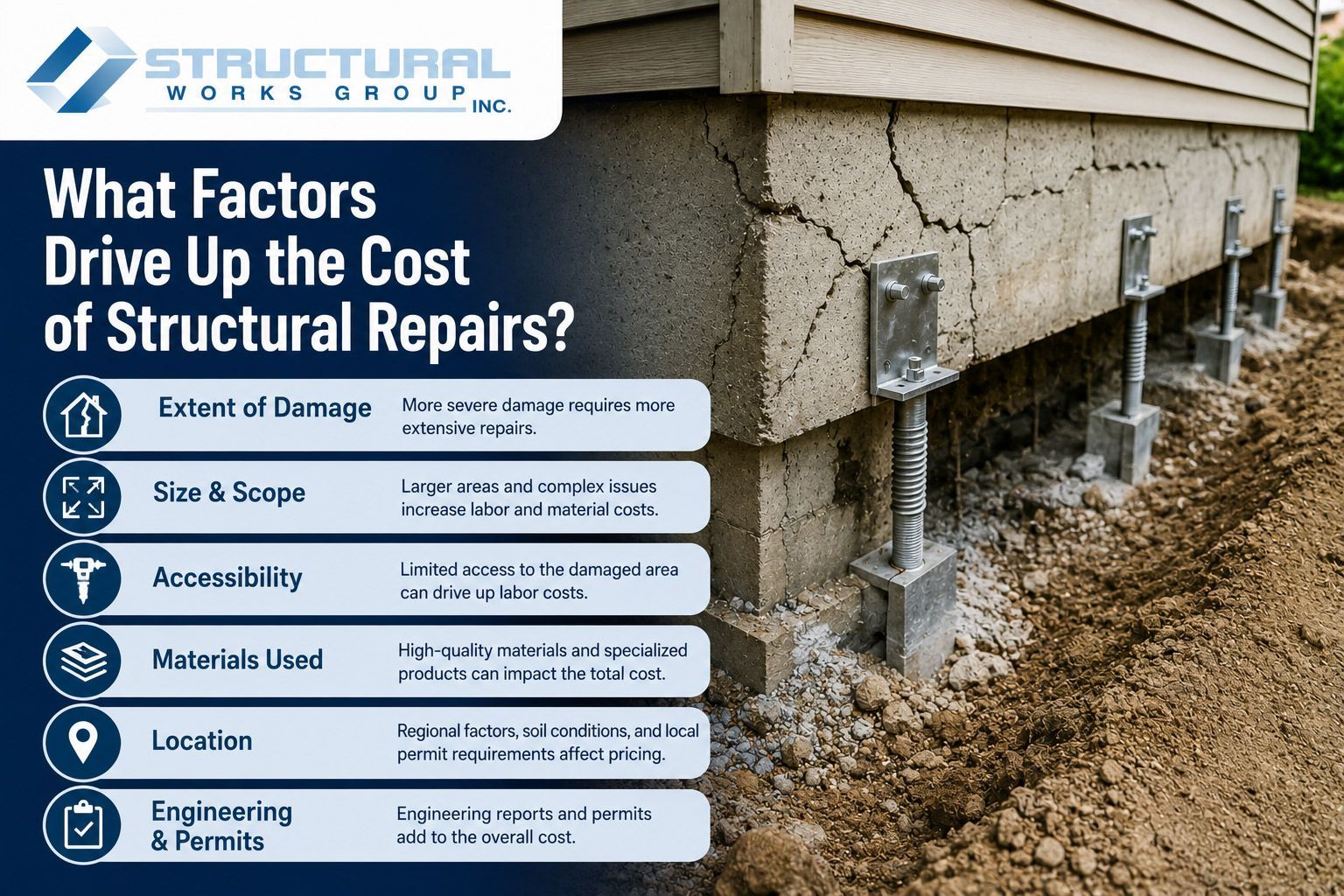
Infographic on structural repair costs beside a cracked home foundation with drainage damage beneath siding
June 28, 2026
Structural repair is one of those categories where two homeowners with seemingly similar problems can receive quotes that are thousands of dollars apart. That gap is not random — it is the product of specific variables that experienced contractors assess before they can give you an accurate number. If you have recently received a structural repair estimate that was higher than you expected, or if you are trying to budget for work you know is coming, understanding what actually drives cost is the most useful place to start. Some of these factors are outside your control, but others can be managed with the right timing and approach. The Severity and Extent of Existing Damage The single biggest cost driver in any structural repair project is how far the damage has progressed. A hairline crack in a foundation wall that is monitored and addressed early is a fundamentally different — and far less expensive — repair than a crack that has widened over years, allowed water infiltration, and triggered wood rot in adjacent framing. Every month that structural damage goes unaddressed, the scope of repair typically expands. In Charlotte, NC, the region's clay-heavy soils and high seasonal humidity accelerate this progression. What begins as a minor settling issue can develop into bowed walls, cracked slabs, and compromised joists if left alone. Early intervention is almost always the single most effective way to keep structural repair costs manageable. Accessibility and Site Conditions Labor costs are directly tied to how easy or difficult it is for crews to access the damaged area. Several site conditions add meaningful cost to structural repair projects: Crawlspace clearance — very low crawlspaces require workers to maneuver in confined quarters, slowing work and increasing labor hours Landscaping or hardscaping — exterior foundation repair that requires removing and replacing mature landscaping, patios, driveways, or retaining walls adds significant material and labor cost Slope and grade — homes built on sloped lots in Charlotte, NC and the surrounding hill country often have uneven foundation depths, making excavation more complex Finished basements — repairs in finished basements require either working around existing finishes or removing and replacing flooring, drywall, and trim Equipment access — properties on narrow lots or with restricted driveway access may prevent heavy equipment from reaching the work area, requiring alternative methods These conditions are not factors a contractor inflates arbitrarily — they represent genuine increases in labor time and complexity that translate directly into higher project costs. The Type of Repair Method Required Different structural problems call for different repair approaches, and those approaches carry very different price tags. The method selected is determined by the type of damage, not by cost preference. Here is how common repair methods compare in terms of typical cost ranges: Carbon fiber strap installation for bowing walls: $300 – $600 per strap, with most walls requiring multiple straps Wall anchor systems for moderate to severe bowing: $500 – $1,200 per anchor Helical or push pier installation for settling foundations: $1,000 – $2,500 per pier, with most projects requiring multiple piers Full crawlspace encapsulation: $5,000 – $12,000+ depending on size and condition Concrete slab lifting with polyurethane foam: $800 – $2,500 depending on the area Full basement wall excavation and waterproofing: $10,000 – $25,000+ In Charlotte, NC, piering is particularly common due to expansive clay soils that cause foundation settling. Projects requiring multiple piers — often six to twelve for a single corner of a home — accumulate costs quickly but deliver lasting stability when properly installed. Underlying Causes That Must Be Addressed One of the most overlooked cost components in structural repair is the work required to address the root cause of the damage. Repairing a foundation wall without fixing the drainage issue driving hydrostatic pressure against it is like patching a ceiling without fixing the roof leak above it — the repair will not hold. Root cause correction often adds to the project cost but is essential for the repair to be effective and lasting. Common root cause corrections include: Exterior waterproofing and drainage system installation Downspout extension and grading corrections to redirect surface water away from the foundation Interior drain tile system installation to manage groundwater Sump pump installation or replacement Soil stabilization or compaction in areas of significant settlement Homeowners in Charlotte, NC who address only the structural symptom and not the underlying water or soil problem should expect the damage to recur, often within a few years. Getting the root cause corrected as part of the initial project is almost always more cost-effective than returning for repeat repairs. Frequently Asked Questions
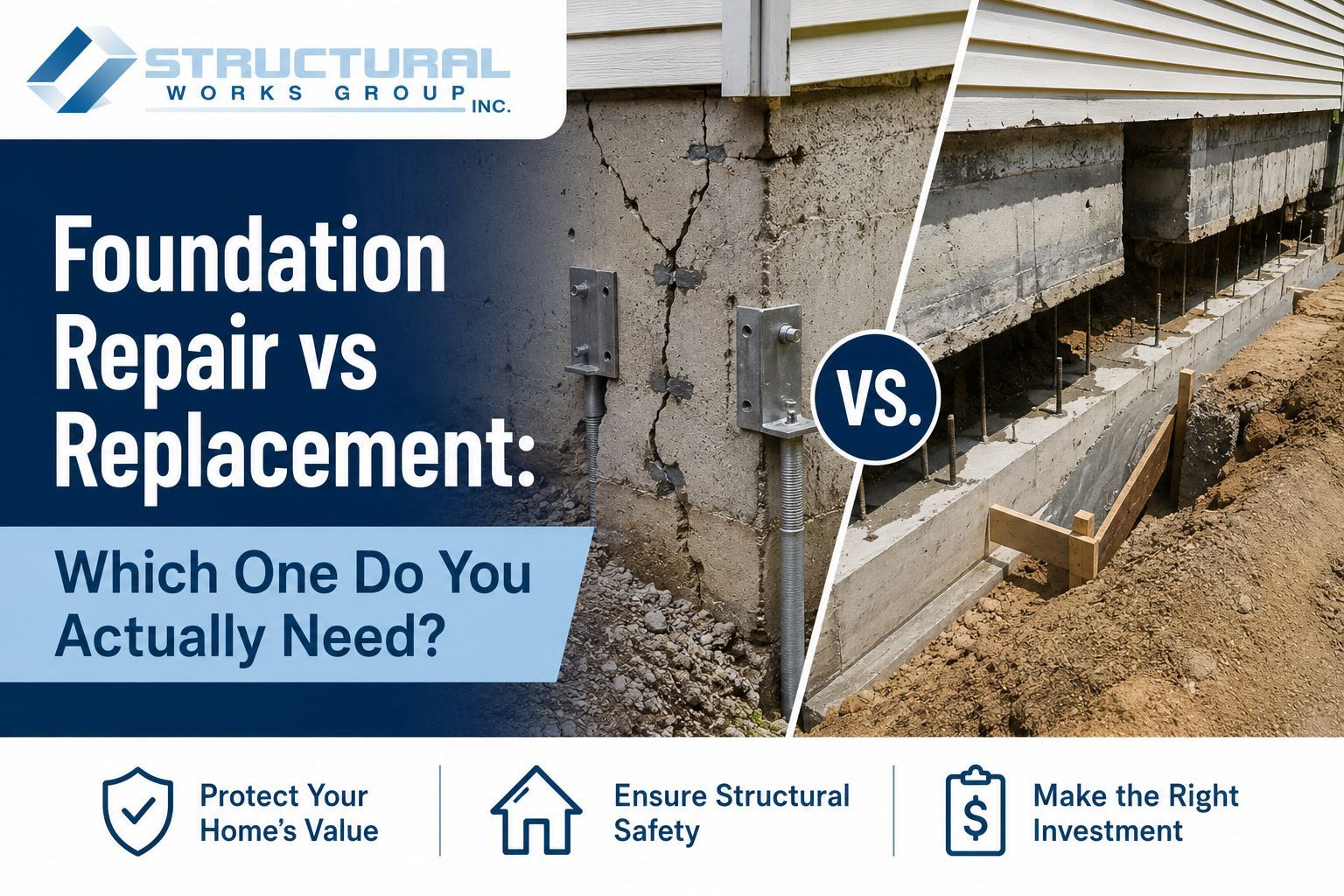
Graphic comparing foundation repair vs replacement with split-house image and “Which one do you actually need?” text
May 31, 2026
Most foundation damage can be repaired, not replaced — learn what factors determine the right approach for your home.
May 25, 2026
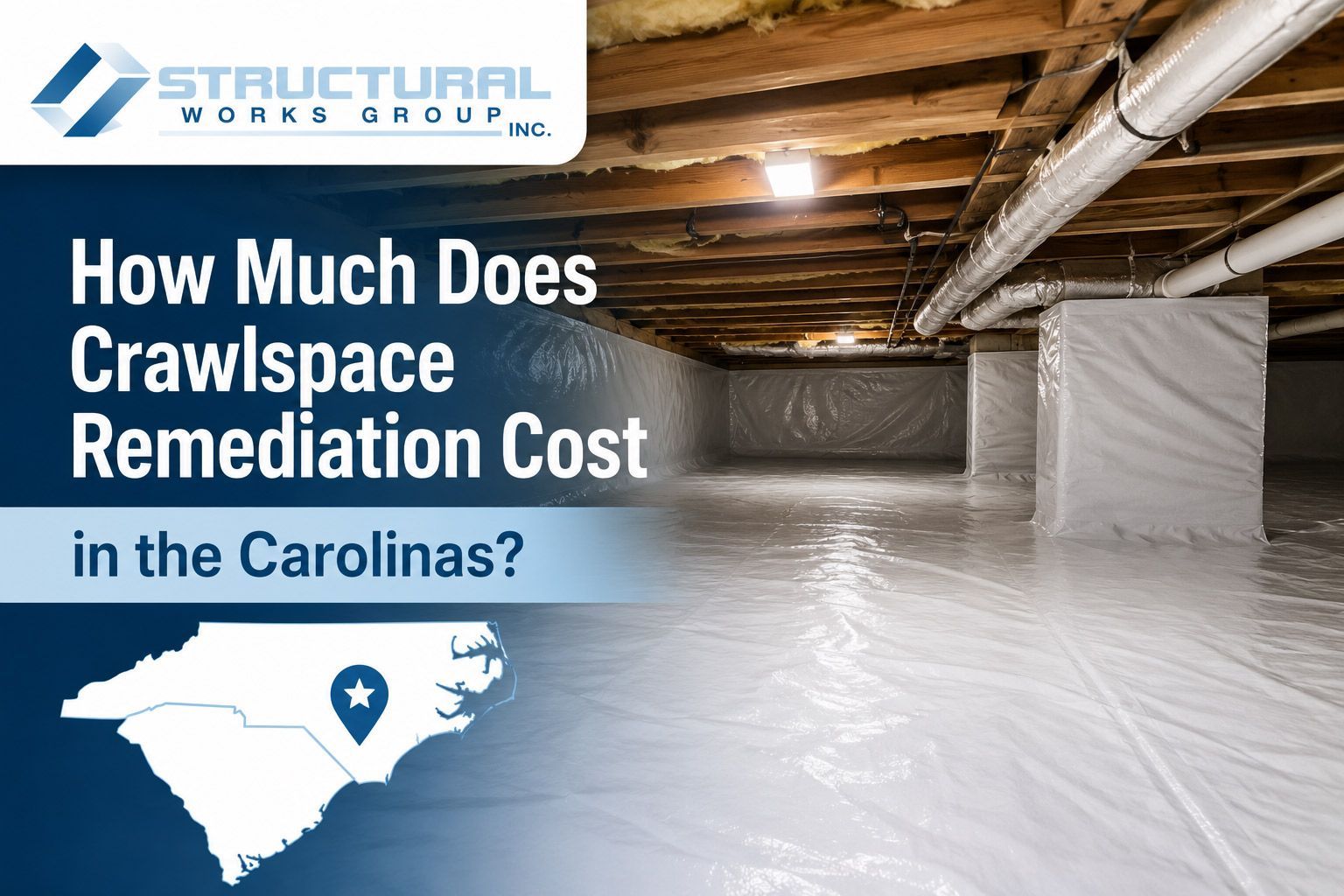
Crawlspace remediation costs in the Carolinas range from $1,200 to $15,000+ — learn what drives pricing and what to expect.
May 4, 2026
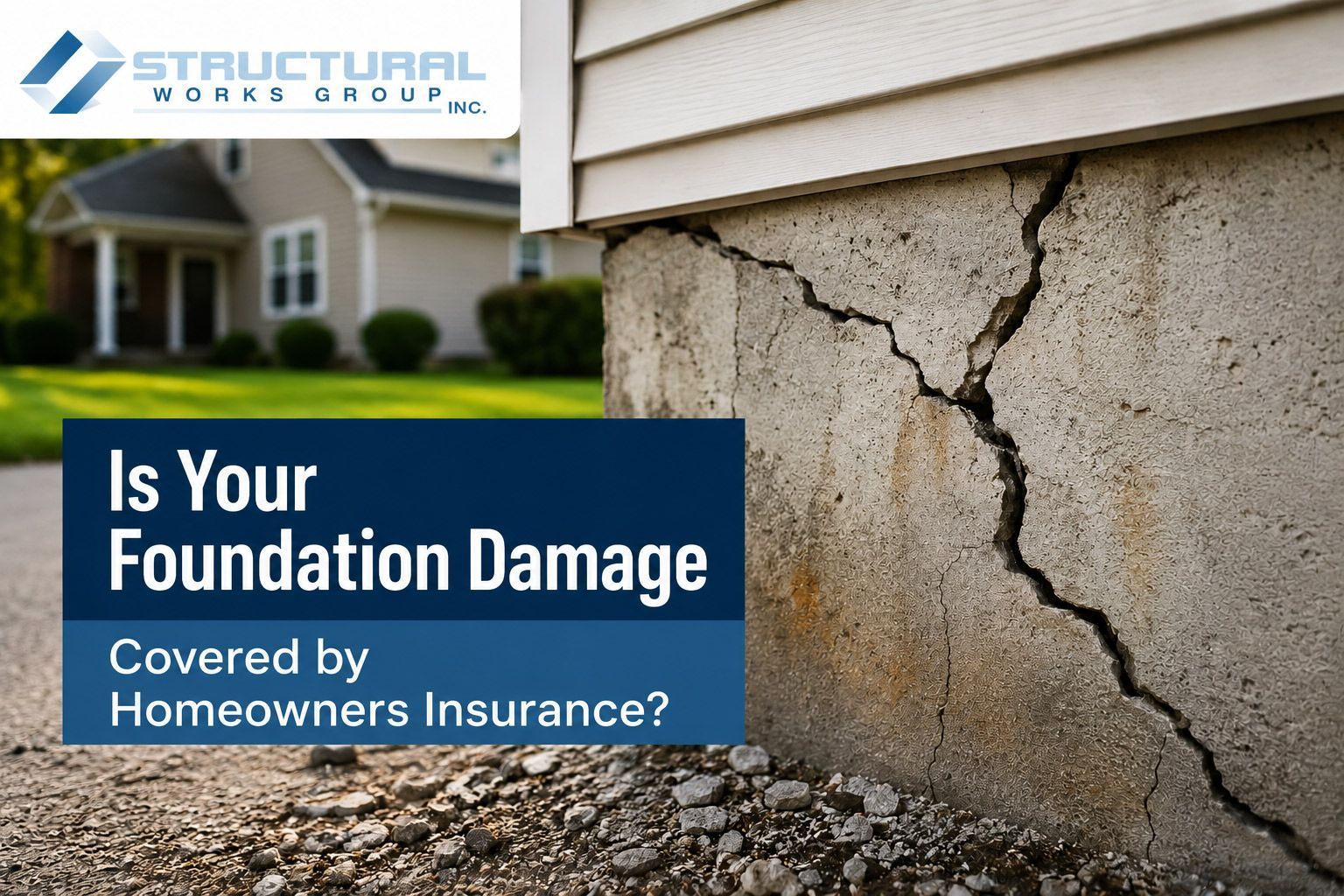
Most foundation damage is excluded from standard homeowners insurance — learn what is and isn't covered before you file a claim.
April 26, 2026
Learn the real structural reasons decks and porches weaken over time—from hidden rot to footing movement—and how small issues turn dangerous.
April 5, 2026
Introduction For many homeowners, a home inspection feels like a formality—something you schedule to move a sale along. But inspections don’t just observe a property. They create a permanent written record. Once a structural issue appears in that report, it stops being optional. Cracks that could once be ignored become “material defects.” Soft floors become “safety concerns.” A leaning pier becomes “structural instability.”  From that moment forward, the house is no longer just aging—it is documented as impaired . Lenders, insurers, buyers, and appraisers treat it differently. This is how inspections quietly turn deferred maintenance into mandatory repair. This blog explains how inspection reports change the rules, which findings typically force action, and why structural issues become non-negotiable once they are officially recorded. What an Inspection Really Does to a Property A home inspection doesn’t fix anything. It changes the status of the home. Before inspection, a crack is just a crack. After inspection, it is a known defect . That distinction matters because: Sellers must legally disclose known defects Buyers can renegotiate or walk away Lenders may withhold financing Insurers may refuse coverage Appraisers can adjust value downward The inspection report becomes part of the transaction history. Even if the deal falls through, that documentation follows the property. Structural findings are treated differently than cosmetic ones. A stained wall might be negotiable. A compromised beam is not. Structural Findings That Trigger Mandatory Action Not every inspection note forces repair. But certain categories almost always do. These findings typically halt or complicate a sale: Foundation movement or active cracking Sagging or uneven floors tied to framing issues Rot in load-bearing beams or joists Leaning support piers in crawlspaces Bowed basement walls Termite damage affecting structure Evidence of ongoing settlement These are not “maintenance items.” They are flagged as: Safety hazards Structural deficiencies Material defects Once those terms appear in an inspection, the house becomes non-compliant in the eyes of lenders and underwriters. Why Lenders Enforce Structural Repairs Most buyers rely on financing. And most lenders will not fund a mortgage on a home with unresolved structural defects. From a lender’s perspective: The house is the collateral Structural instability threatens that collateral The risk is not theoretical—it’s documented That’s why loans such as FHA, VA, and USDA often require: Proof of professional structural repair Engineering letters Reinspection clearance Repair completion before closing Conventional lenders are more flexible, but major defects still trigger conditions. The sale may proceed only if repairs are completed or escrowed. This is when “recommended” repairs become “required” repairs. How Sellers Lose Leverage After Inspection Before an inspection, sellers can say: “The house is priced accordingly.” “It’s normal for a home this age.” “It’s never been a problem.” After inspection, those arguments disappear. Once a report states: “Active foundation movement observed” “Structural components compromised” “Further evaluation by a licensed contractor recommended” The seller must either: Repair the issue Reduce the price significantly Offer repair credits Lose the buyer Even if the buyer walks, the seller must disclose the same issue to the next one. This is why many homeowners are surprised by how “sudden” a structural repair becomes urgent. The house didn’t change. The paperwork did. The Chain Reaction Inspections Create A single structural note can trigger multiple consequences: Inspector flags a defect Buyer requests repair or credit Lender conditions the loan Appraiser adjusts valuation Insurer questions coverage Seller must act or relist At that point, repair is no longer about preference. It’s about viability. Homes with unresolved structural findings often: Sit on the market longer Lose negotiating power Attract lower offers Fail multiple contracts The cost of delay compounds with every failed deal. Why “It’s Always Been Like That” Doesn’t Work Many structural issues develop slowly. Homeowners adapt. You stop noticing the slope You learn which door sticks You repaint over cracks You avoid that soft spot But inspectors are trained to look past normalcy. They document condition, not comfort. A house that “feels fine” can still fail: Minimum property standards Safety thresholds Structural tolerance limits Once written, that assessment becomes objective truth in the transaction. FAQ
March 29, 2026
Learn the earliest signs of hidden structural damage—like trim gaps, sticky doors, and uneven floors—before they turn into expensive repairs.
March 1, 2026
Explore real foundation repair costs in Charlotte, NC based on local soil, home type, and repair method—plus pricing ranges and cost factors.
February 22, 2026
Find out when structural damage qualifies for insurance coverage and when you’re responsible for repairs based on cause, timeline, and policy exclusions.
February 1, 2026
Learn how crawlspace repairs impact your home's value, energy efficiency, and long-term maintenance costs—before small issues become major expenses.