Does Fixing Your Foundation Increase Home Resale Value?
October 25, 2026
Introduction
Homeowners considering a foundation repair often ask the same practical question: will this actually pay off when I sell? It's a fair thing to weigh before spending thousands of dollars on work that's largely invisible once finished.
The short answer for most homes in Charlotte, NC is yes. A properly documented foundation repair tends to protect resale value and often removes a barrier that would otherwise scare off buyers or stall a sale entirely.
Foundation issues carry unique weight in real estate transactions because they touch financing, insurance, and safety all at once. A home with an unresolved structural issue isn't just less attractive, in many cases it's un-financeable through certain loan types until the problem is addressed.
It's helpful to think of a foundation repair less like a kitchen renovation, which adds discretionary appeal, and more like a new roof, which primarily protects value by resolving something buyers expect to already be in good working order.
Homeowners rarely see a dollar-for-dollar return on cosmetic upgrades either, but foundation repair tends to behave differently precisely because its absence can block a sale entirely, not just make the home slightly less appealing.
How Buyers and Appraisers View Foundation Repairs
Buyers today are more informed than they once were, and many specifically ask whether a home has ever had foundation work and, if so, whether it's warrantied.
A repair with clear documentation and a transferable warranty is generally viewed as a strength, since it signals the issue is resolved and backed by a professional guarantee. Appraisers are trained to note structural repairs the same way, and a well-documented repair typically supports the home's value rather than undermining it.
Real estate agents in Charlotte, NC often reinforce this perception during showings, presenting completed structural work and its warranty as a selling point rather than something to gloss over.
Repairs With the Highest Return
Not every structural repair adds equal value at resale, but a few categories consistently protect or improve a home's marketability.
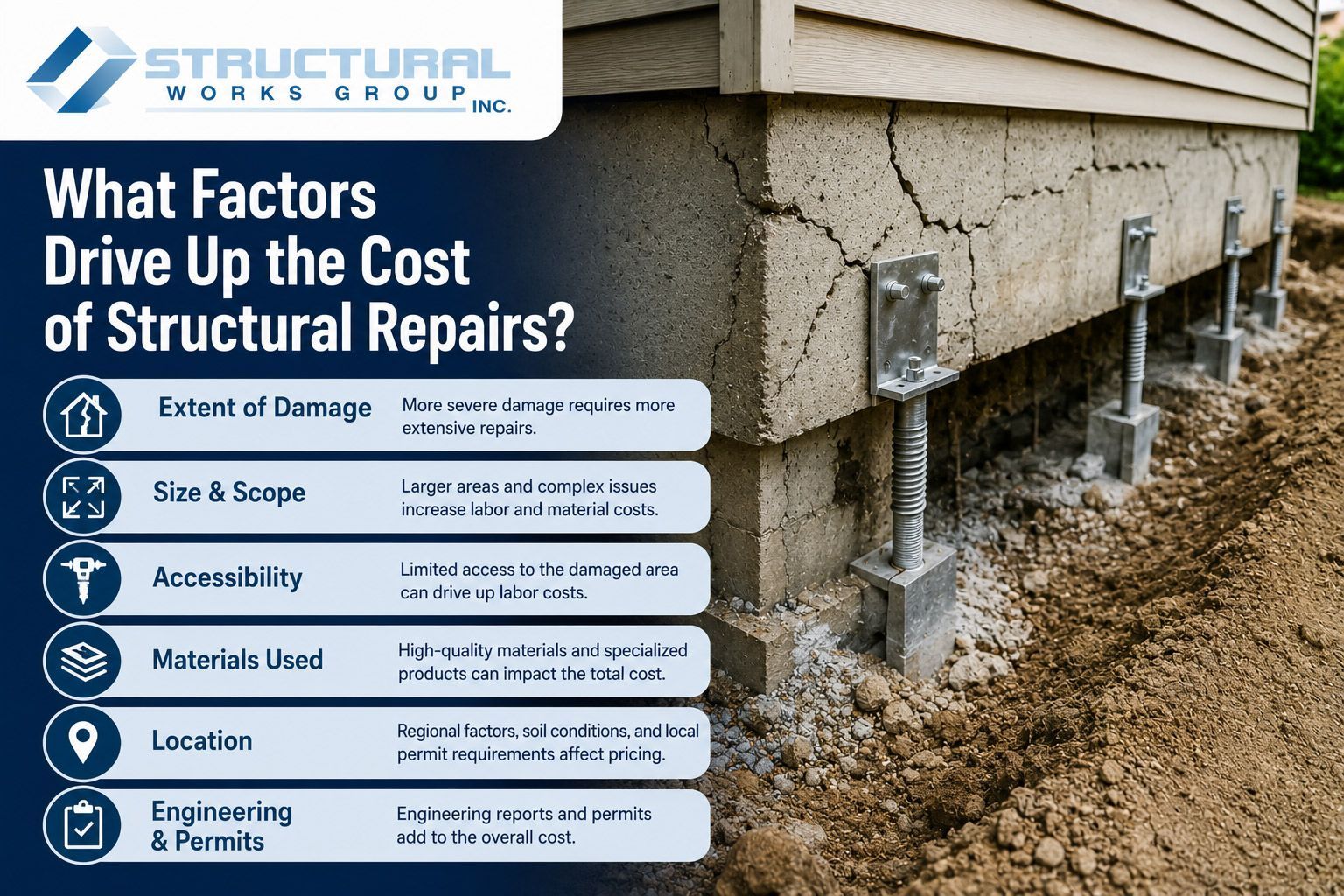
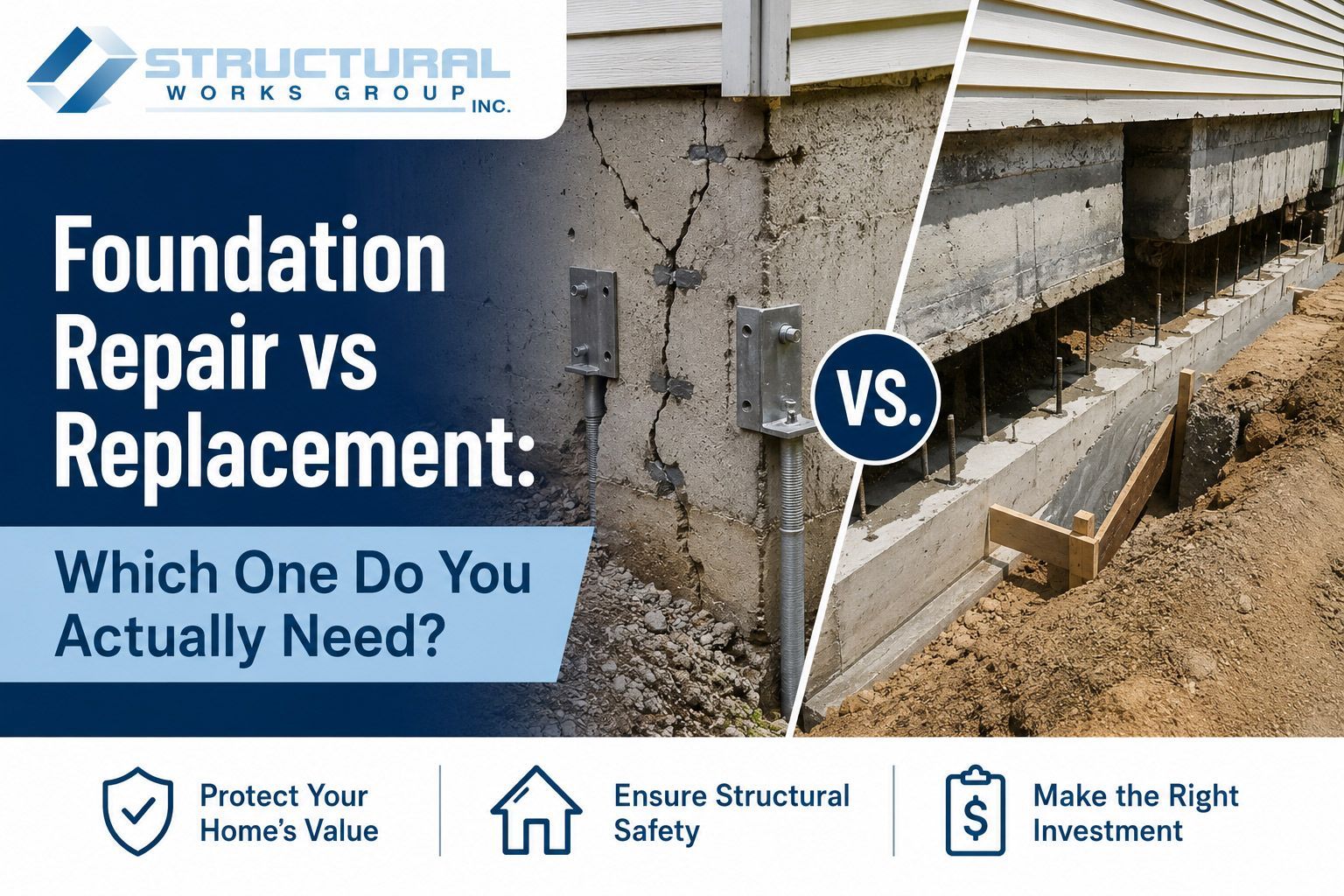
Foundation stabilization with pier systems, which resolves settling issues that would otherwise appear on nearly every home inspection.
Crawlspace encapsulation, which addresses moisture and air-quality concerns that increasingly come up during buyer due diligence.
Basement waterproofing, which prevents the kind of water staining and mold that immediately raises red flags for buyers.
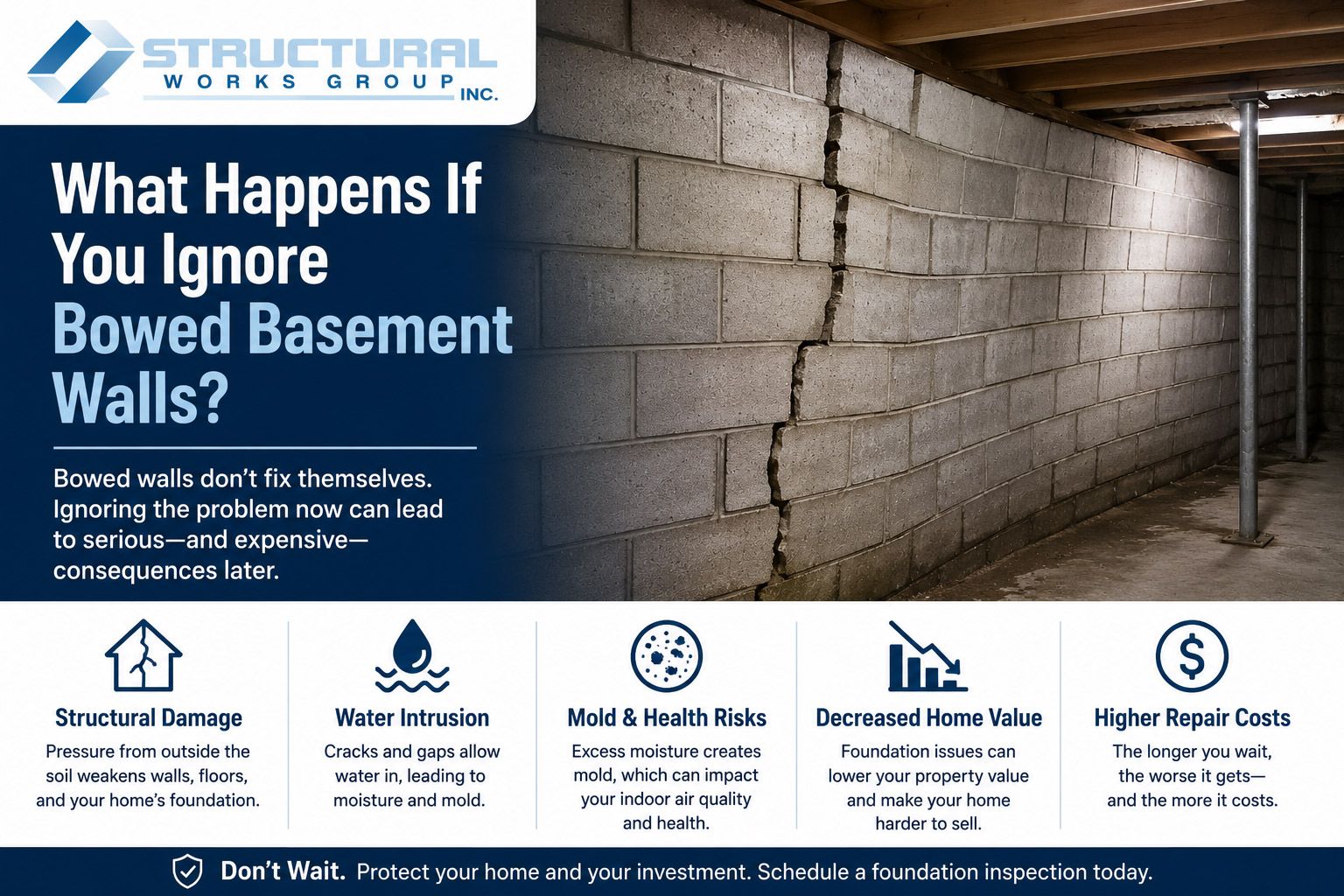
Bowing wall correction with carbon fiber or anchor systems, which resolves a defect that most conventional lenders will flag before closing.
Documentation That Preserves Resale Value
The repair itself is only half the equation. Documentation is what allows a buyer, their lender, and their inspector to trust that the fix is complete and reliable.
A complete file typically includes the following, and having it ready before you list can meaningfully speed up a sale.
- A transferable written warranty covering the specific repair performed.
- Before-and-after photos documenting the condition and the completed work.
- A clear written description of the repair method and materials used.
- Any engineer's letter or reinspection report tied to the project.
It's a good habit to store this documentation alongside other major home records, such as HVAC service history or roof warranty paperwork, so it's easy to locate whenever a sale eventually comes together.
The Charlotte, NC Real Estate Market and Foundation Disclosure
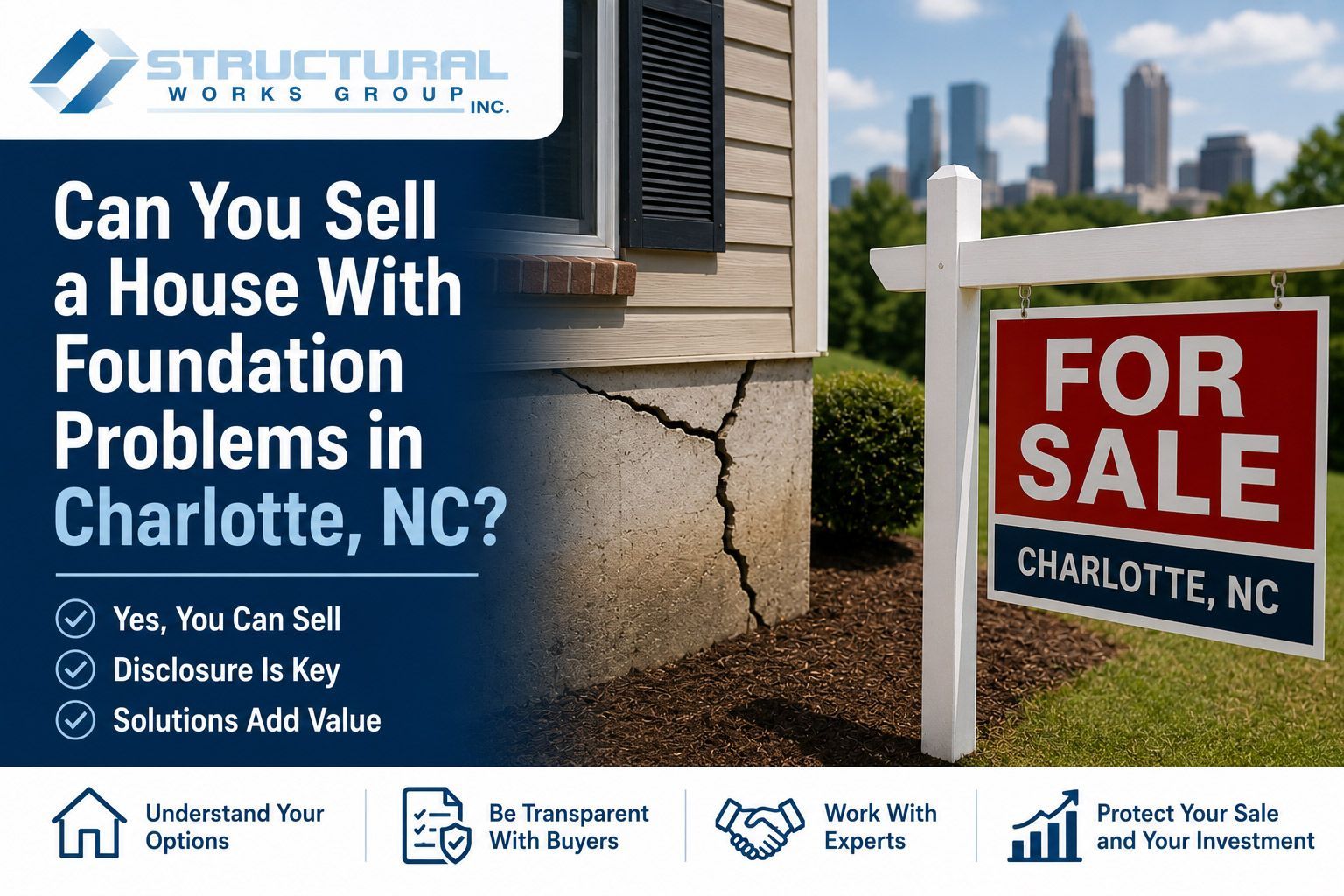
North Carolina law requires sellers to disclose known structural issues, which means a foundation problem can't simply be left off the table when listing a home in Charlotte, NC.
What can change the outcome dramatically is whether that disclosure describes an unresolved problem or a completed, warrantied repair. In a competitive Charlotte, NC market, buyers frequently have other options, and an unresolved structural issue is one of the fastest ways to lose interest or trigger a lower offer.
It's also worth considering the buyer's own financing timeline, since even a motivated buyer can be forced to walk away if their lender won't fund the loan until a structural issue is resolved, costing the seller weeks of market exposure.
Repairs That Rarely Move the Needle on Value
Not every structural expense translates into a stronger resale position, and it helps to know which categories tend to matter less to buyers and appraisers.
- Purely cosmetic patching of a crack without addressing its underlying cause.
- Repairs completed without any documentation or warranty to show a future buyer.
- Partial fixes that leave part of a known issue unresolved.
- Work performed by an unlicensed or uninsured contractor, which buyers' lenders may not accept.
Frequently Asked Question
Do I still need to disclose a foundation issue if it's already been repaired?
Yes. North Carolina disclosure law generally requires sellers to note that a structural issue existed, even if it was later repaired, along with supporting documentation of the fix.
Does the specific repair method affect how buyers perceive the fix?
Somewhat. Buyers and their agents often research the repair system used, and well-known, warrantied methods tend to inspire more confidence than unfamiliar or undocumented approaches.
Will a repaired foundation still pass a new inspection during a sale?
In most cases yes, provided the repair was done correctly and the underlying cause was addressed, since inspectors are generally looking for unresolved movement rather than evidence that a repair once took place.
Does an appraisal reflect a foundation repair right away?
An appraiser will typically note the repair and its documentation during a new appraisal, but value impact depends on the overall market and comparable sales, not solely on the repair itself.
Is it better to repair before listing or offer the buyer a credit instead?
Repairing before listing is usually preferable, since it avoids negotiation delays and financing complications for the buyer, though a credit can work if timeline or cash flow makes repair before listing difficult.
Conclusion
A properly repaired and documented foundation tends to protect, and often improve, a home's resale value, largely by removing an obstacle that would otherwise complicate financing and buyer confidence.
Structural Works Group provides the detailed documentation and transferable warranties that homeowners across Charlotte, NC need when it's time to sell. Call
980-522-7581 to schedule a free evaluation before you list