Basement Waterproofing Cost in Charlotte, NC: 2025 Breakdown

August 28, 2025

Introduction: Why Waterproofing Matters for Charlotte Homes

Basement leaks are more than a nuisance — they’re a warning sign. Water intrusion can cause mold, damage finishes, and weaken your foundation over time. In Charlotte, NC, where clay-heavy soil and frequent storms create constant pressure against basement walls, waterproofing is one of the smartest investments a homeowner can make.


But how much does basement waterproofing really cost in Charlotte in 2025? This guide explains the price ranges, repair options, and benefits so you can make the right decision for your home.


Average Basement Waterproofing Costs in Charlotte (2025)

Waterproofing prices vary depending on whether the solution is interior, exterior, or combined. Here’s a breakdown:

Waterproofing Method Average Cost in Charlotte, NC When It’s Used
Crack Injection $400 – $1,200 Small wall/floor cracks letting in water
Interior Drainage System $2,000 – $7,000 Redirects water inside basement to sump pump
Sump Pump Installation $1,000 – $3,000 Pumps water out during heavy rains
Exterior Waterproofing $5,000 – $15,000+ Long-term solution; seals walls from outside
Full Basement Waterproofing Package $8,000 – $20,000+ Comprehensive moisture and structural protection

👉 Structural Works Group provides a free $300 evaluation so you know exactly which solution your basement needs.


Factors That Influence Basement Waterproofing Cost

  1. Extent of Water Intrusion: Small cracks vs. frequent flooding.
  2. Foundation Type: Basements vs. crawl spaces require different methods.
  3. Soil & Drainage Conditions: Charlotte’s expansive clay soil often worsens water issues.
  4. Repair Method: Interior solutions are generally cheaper than exterior excavation.
  5. Add-Ons: Mold remediation, sump pumps, or French drains add to the cost.


Interior vs. Exterior Waterproofing: Which is Best?

Feature Interior Waterproofing Exterior Waterproofing
Cost Lower ($2,000–$7,000) Higher ($5,000–$15,000+)
Installation Less invasive, installed inside basement Requires excavation around home
Effectiveness Redirects water after it enters Prevents water from entering at all
Longevity 10–15 years 20+ years

👉 In Charlotte, combining interior drainage + sump pump + exterior sealing often provides the most effective long-term protection.


Step-by-Step Waterproofing Process

Here’s what to expect with Structural Works Group:

  1. Free Basement Evaluation → Inspection for cracks, leaks, and moisture.
  2. Problem Identification → Soil analysis, water entry points, foundation check.
  3. Custom Plan → Interior drains, sump pump, or exterior sealing recommended.
  4. Installation → Waterproofing system installed with minimal disruption.
  5. Warranty Protection → Peace of mind with long-term coverage.


FAQs: Basement Waterproofing in Charlotte

How much does it cost to waterproof a basement in Charlotte?
Between
$2,000 and $20,000+, depending on the method and extent of repairs.

Is basement waterproofing worth the cost?
Yes — it prevents structural damage, mold growth, and costly repairs down the road.

Can I waterproof my basement myself?
DIY fixes may work for small cracks, but lasting solutions usually require professional installation.

How long does basement waterproofing last?
Interior systems last
10–15 years, while exterior sealing can last 20+ years with proper maintenance.


Why Choose Structural Works Group for Waterproofing

  • Local expertise with Charlotte’s unique water and soil conditions.
  • Comprehensive solutions from crack repairs to full exterior systems.
  • Free $300 evaluation before committing to repairs.
  • Warranty-backed systems for long-term peace of mind.


Conclusion: Protect Your Basement and Foundation

Water in your basement won’t fix itself — and ignoring it only makes the problem worse. Investing in waterproofing now protects your home, health, and property value for years to come.


📞 Call Structural Works Group today at 980-522-7581 for your free basement evaluation and customized waterproofing plan.
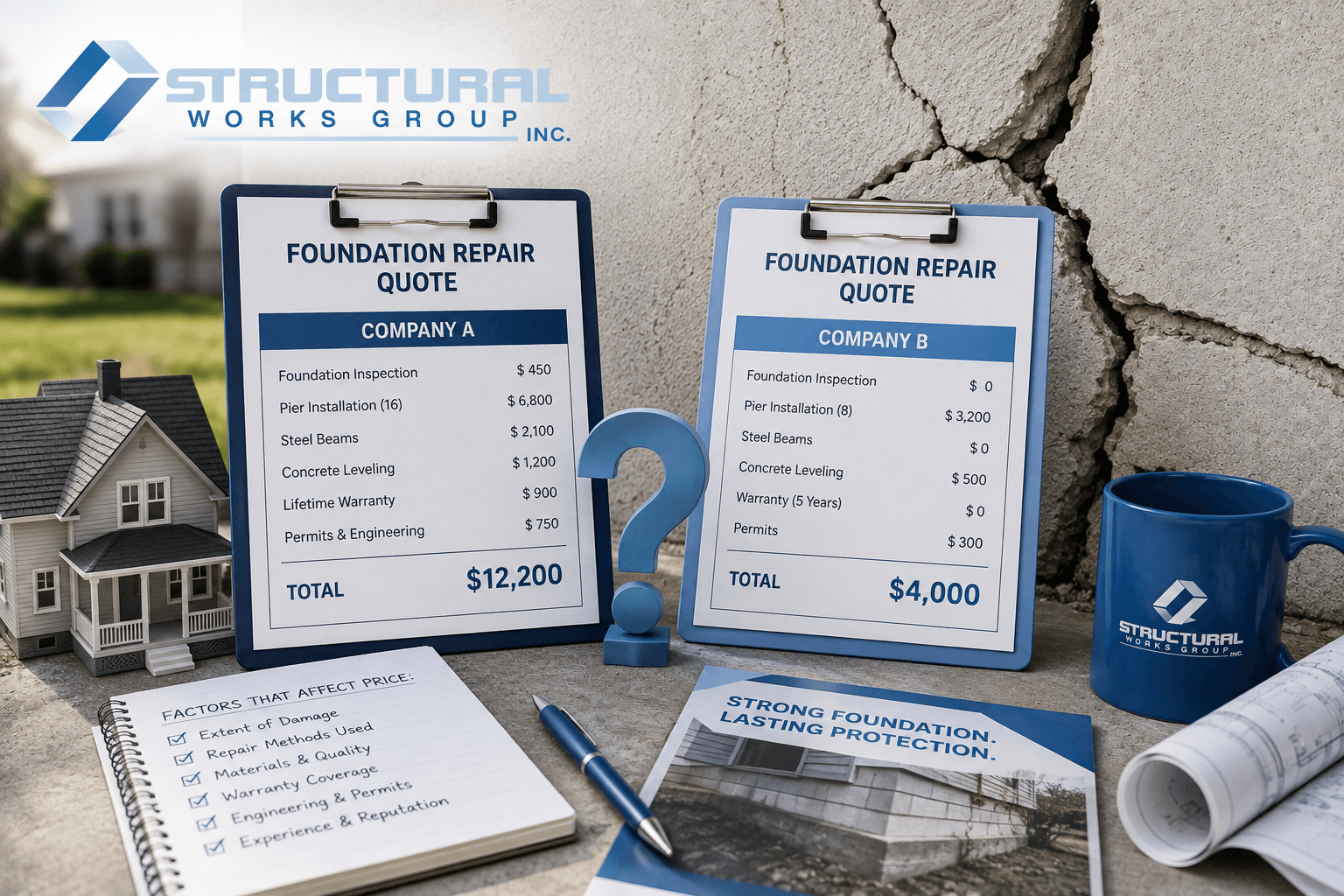
Foundation repair quote boards, house photo, pen, mug, and rolled plans on a desk with a cracked wall backdrop
October 4, 2026
Two foundation repair quotes for the same Charlotte, NC home can differ by thousands — here's what actually causes the gap.
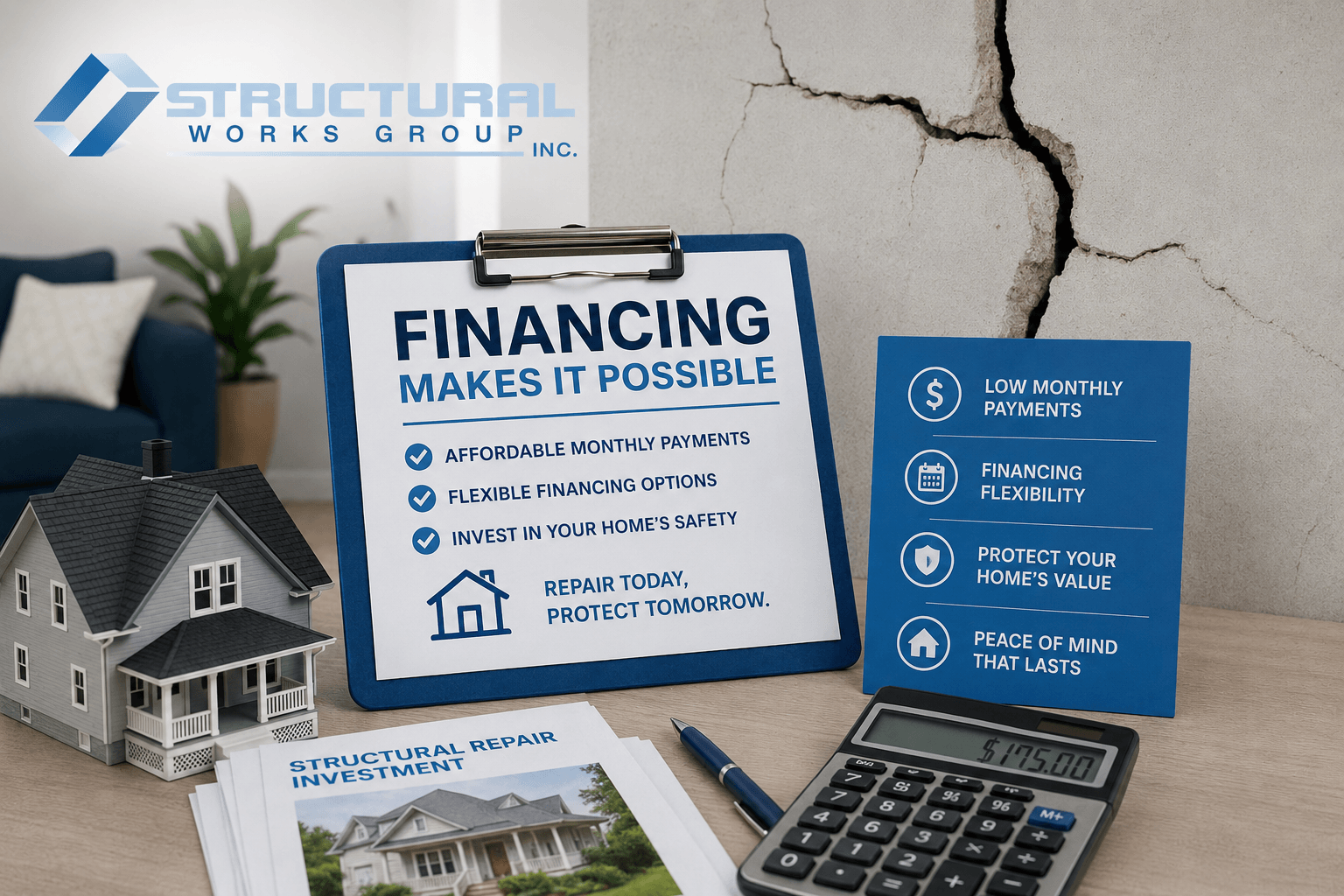
Financing flyer beside house model, calculator, and blue brochure on a desk with Structural Works Group logo
September 27, 2026
Financing won't lower the total cost of structural repair, but it can make an urgent Charlotte, NC repair far more manageable to pay for.
FHA foundation repair comparison infographic with cracked floor, standard vs FHA repairs, costs and features
September 6, 2026
Delaying foundation repair in Charlotte, NC almost always costs more than fixing it early — here's how the expense compounds over time.
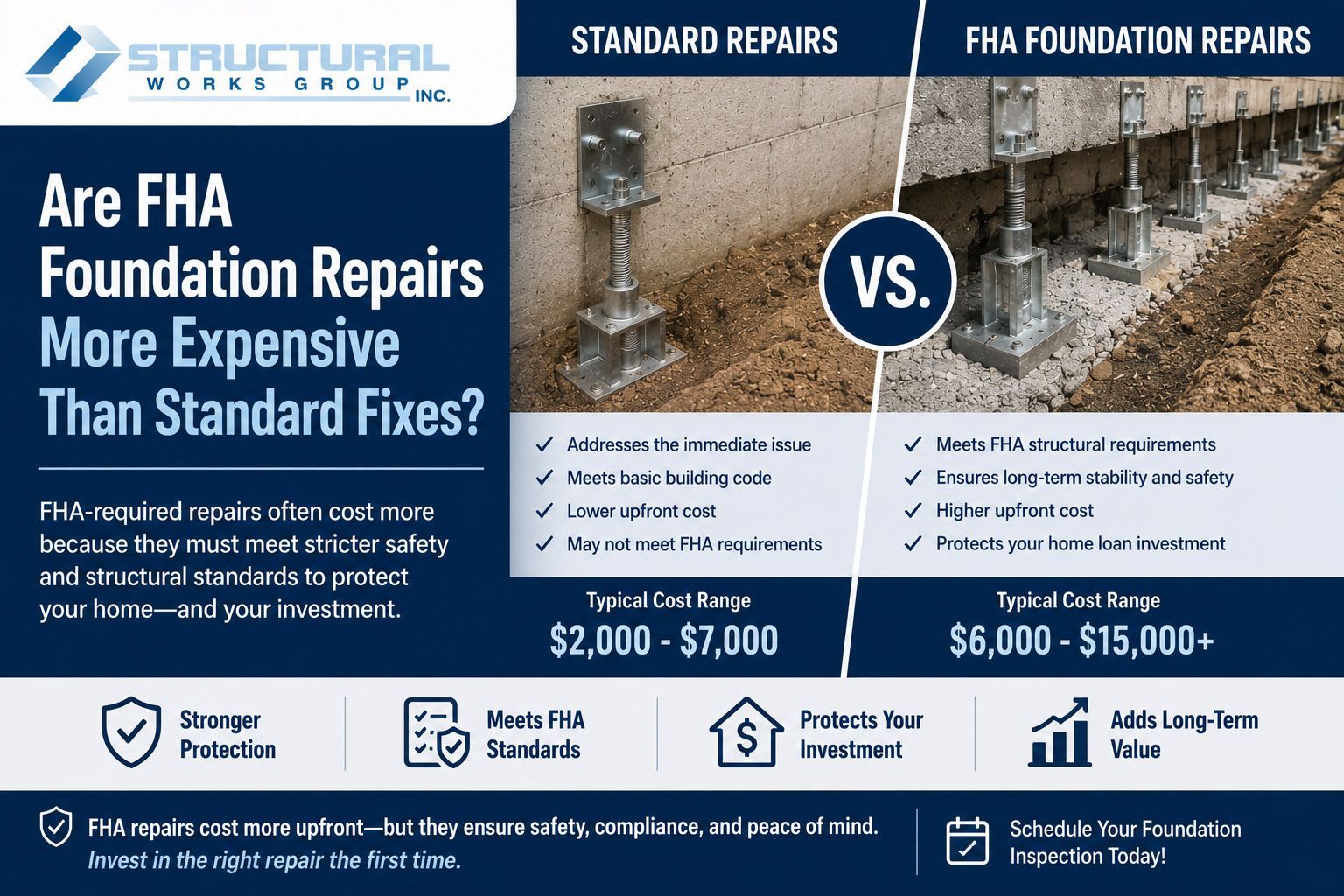
Infographic comparing standard and FHA foundation repairs, showing cracks, prices, and cost differences.
August 30, 2026
FHA foundation repairs aren't always more costly — learn when they are, why, and how to navigate government-backed repair requirements.
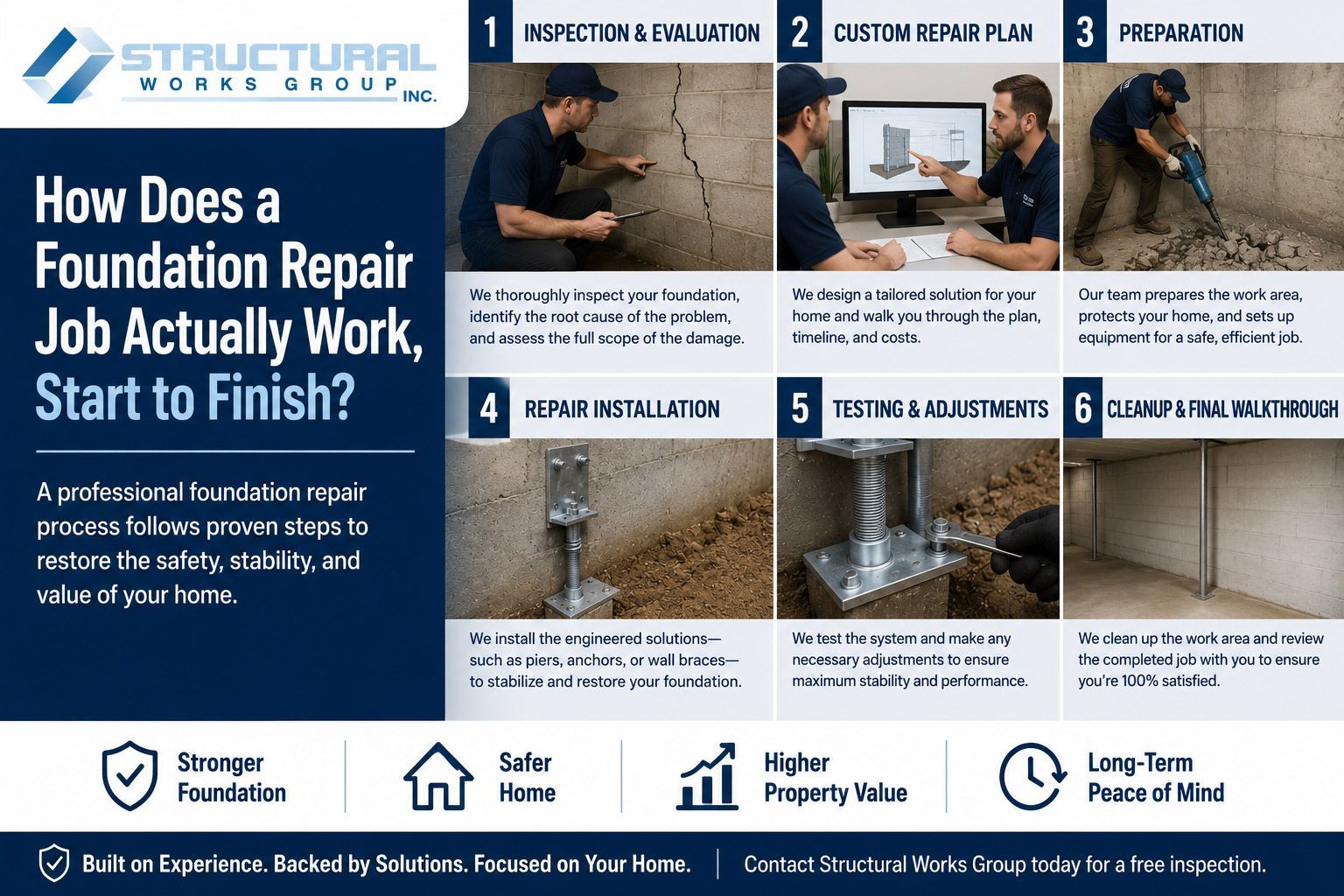
Infographic on foundation repair workflow, with six step photos and blue construction-themed design
August 2, 2026
From inspection to final walkthrough, here is exactly how a professional foundation repair project works so you know what to expect.
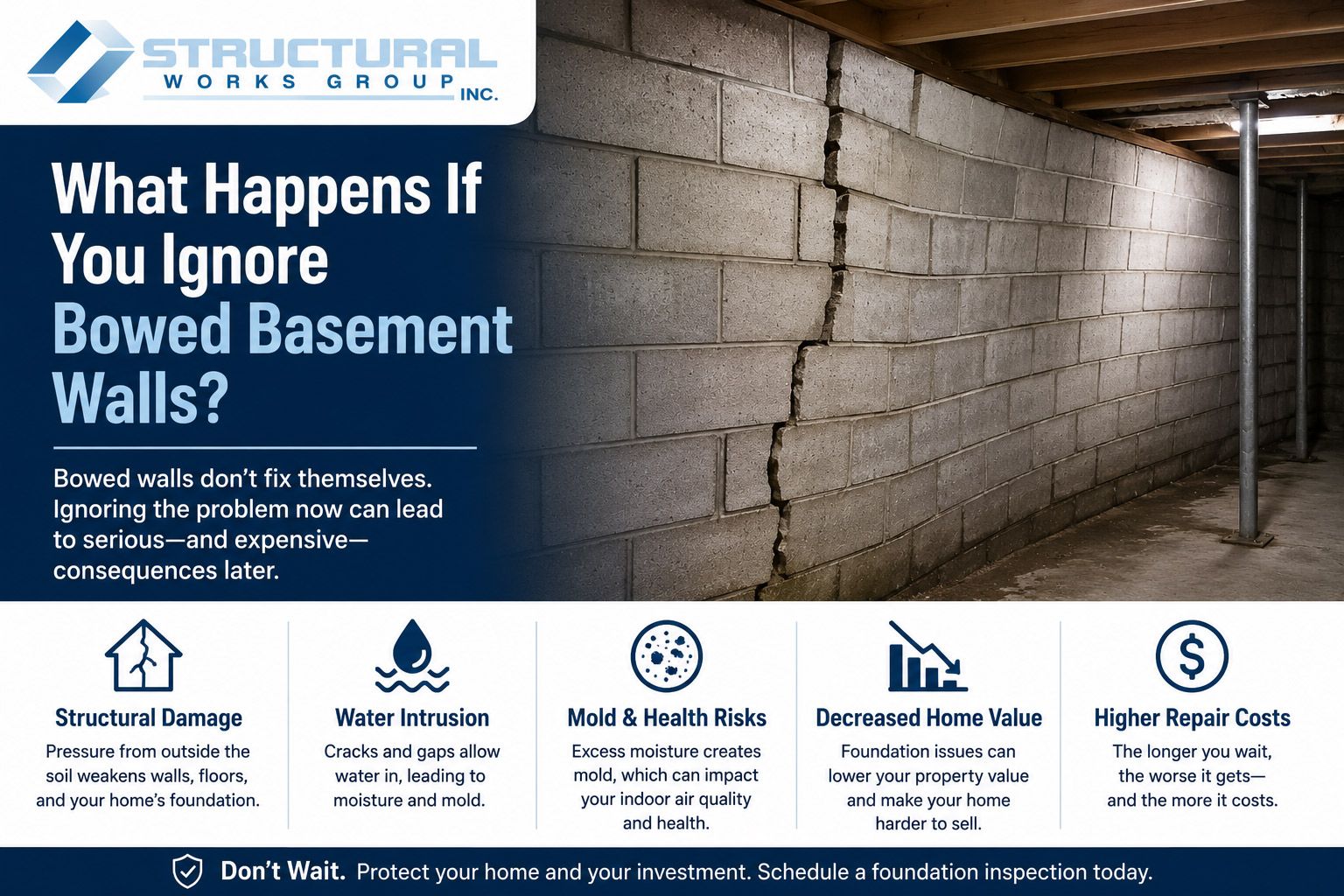
Infographic about the risks of ignoring bowed basement walls, with brick wall graphic and blue/white layout
July 26, 2026
Ignoring bowed basement walls leads to water damage, floor failure, and costly reconstruction — here is the full progression of damage.
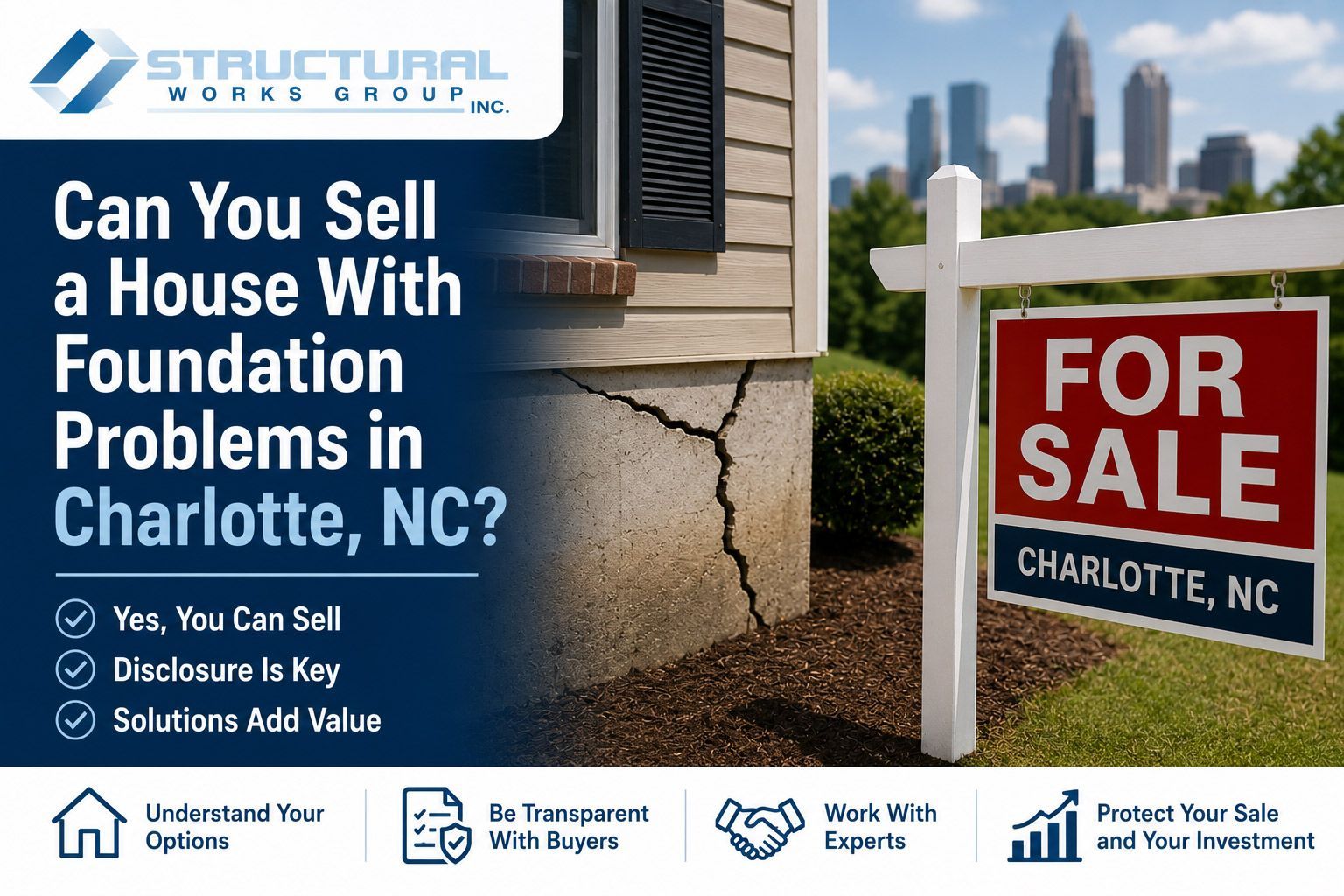
Graphic: “Can You Sell a House With Foundation Problems in Charlotte, NC?” with for-sale sign and house foundation crack
July 5, 2026
You can sell a Charlotte home with foundation problems — disclosure is required and repair often pays off. Here's what you need to know.
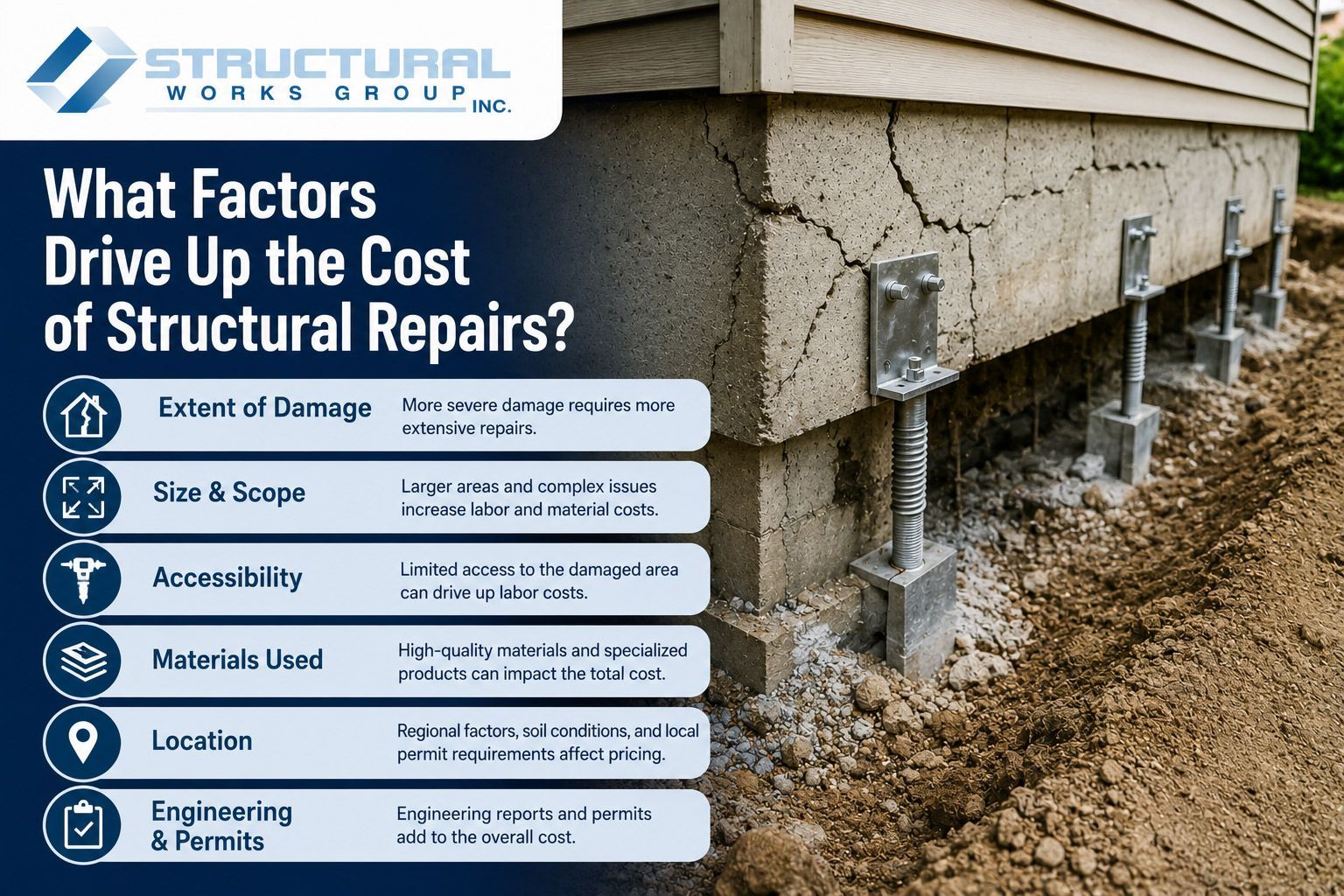
Infographic on structural repair costs beside a cracked home foundation with drainage damage beneath siding
June 28, 2026
Structural repair is one of those categories where two homeowners with seemingly similar problems can receive quotes that are thousands of dollars apart. That gap is not random — it is the product of specific variables that experienced contractors assess before they can give you an accurate number. If you have recently received a structural repair estimate that was higher than you expected, or if you are trying to budget for work you know is coming, understanding what actually drives cost is the most useful place to start. Some of these factors are outside your control, but others can be managed with the right timing and approach. The Severity and Extent of Existing Damage The single biggest cost driver in any structural repair project is how far the damage has progressed. A hairline crack in a foundation wall that is monitored and addressed early is a fundamentally different — and far less expensive — repair than a crack that has widened over years, allowed water infiltration, and triggered wood rot in adjacent framing. Every month that structural damage goes unaddressed, the scope of repair typically expands. In Charlotte, NC, the region's clay-heavy soils and high seasonal humidity accelerate this progression. What begins as a minor settling issue can develop into bowed walls, cracked slabs, and compromised joists if left alone. Early intervention is almost always the single most effective way to keep structural repair costs manageable. Accessibility and Site Conditions Labor costs are directly tied to how easy or difficult it is for crews to access the damaged area. Several site conditions add meaningful cost to structural repair projects: Crawlspace clearance — very low crawlspaces require workers to maneuver in confined quarters, slowing work and increasing labor hours Landscaping or hardscaping — exterior foundation repair that requires removing and replacing mature landscaping, patios, driveways, or retaining walls adds significant material and labor cost Slope and grade — homes built on sloped lots in Charlotte, NC and the surrounding hill country often have uneven foundation depths, making excavation more complex Finished basements — repairs in finished basements require either working around existing finishes or removing and replacing flooring, drywall, and trim Equipment access — properties on narrow lots or with restricted driveway access may prevent heavy equipment from reaching the work area, requiring alternative methods These conditions are not factors a contractor inflates arbitrarily — they represent genuine increases in labor time and complexity that translate directly into higher project costs. The Type of Repair Method Required Different structural problems call for different repair approaches, and those approaches carry very different price tags. The method selected is determined by the type of damage, not by cost preference. Here is how common repair methods compare in terms of typical cost ranges: Carbon fiber strap installation for bowing walls: $300 – $600 per strap, with most walls requiring multiple straps Wall anchor systems for moderate to severe bowing: $500 – $1,200 per anchor Helical or push pier installation for settling foundations: $1,000 – $2,500 per pier, with most projects requiring multiple piers Full crawlspace encapsulation: $5,000 – $12,000+ depending on size and condition Concrete slab lifting with polyurethane foam: $800 – $2,500 depending on the area Full basement wall excavation and waterproofing: $10,000 – $25,000+ In Charlotte, NC, piering is particularly common due to expansive clay soils that cause foundation settling. Projects requiring multiple piers — often six to twelve for a single corner of a home — accumulate costs quickly but deliver lasting stability when properly installed. Underlying Causes That Must Be Addressed One of the most overlooked cost components in structural repair is the work required to address the root cause of the damage. Repairing a foundation wall without fixing the drainage issue driving hydrostatic pressure against it is like patching a ceiling without fixing the roof leak above it — the repair will not hold. Root cause correction often adds to the project cost but is essential for the repair to be effective and lasting. Common root cause corrections include: Exterior waterproofing and drainage system installation Downspout extension and grading corrections to redirect surface water away from the foundation Interior drain tile system installation to manage groundwater Sump pump installation or replacement Soil stabilization or compaction in areas of significant settlement Homeowners in Charlotte, NC who address only the structural symptom and not the underlying water or soil problem should expect the damage to recur, often within a few years. Getting the root cause corrected as part of the initial project is almost always more cost-effective than returning for repeat repairs. Frequently Asked Questions
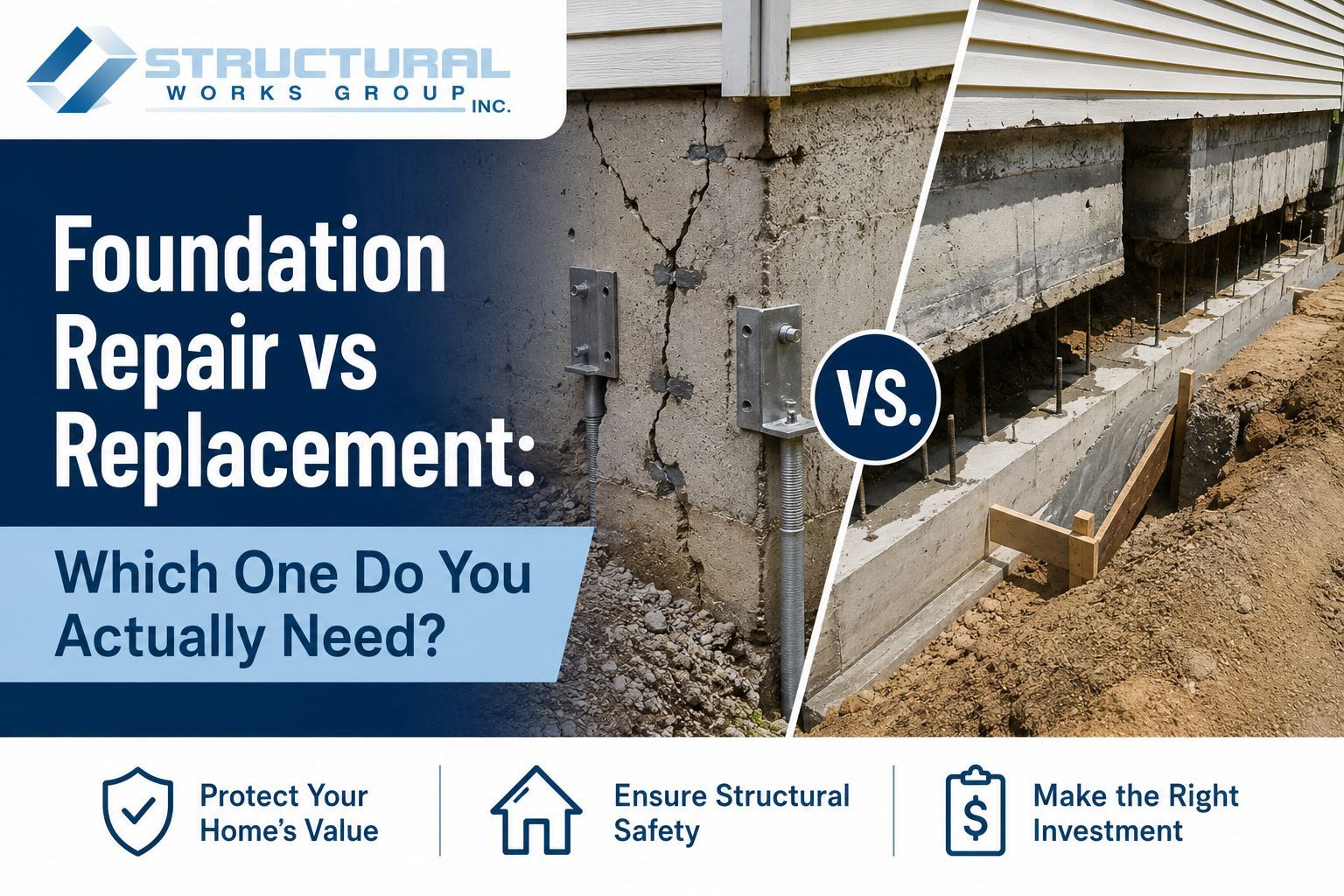
Graphic comparing foundation repair vs replacement with split-house image and “Which one do you actually need?” text
May 31, 2026
Most foundation damage can be repaired, not replaced — learn what factors determine the right approach for your home.
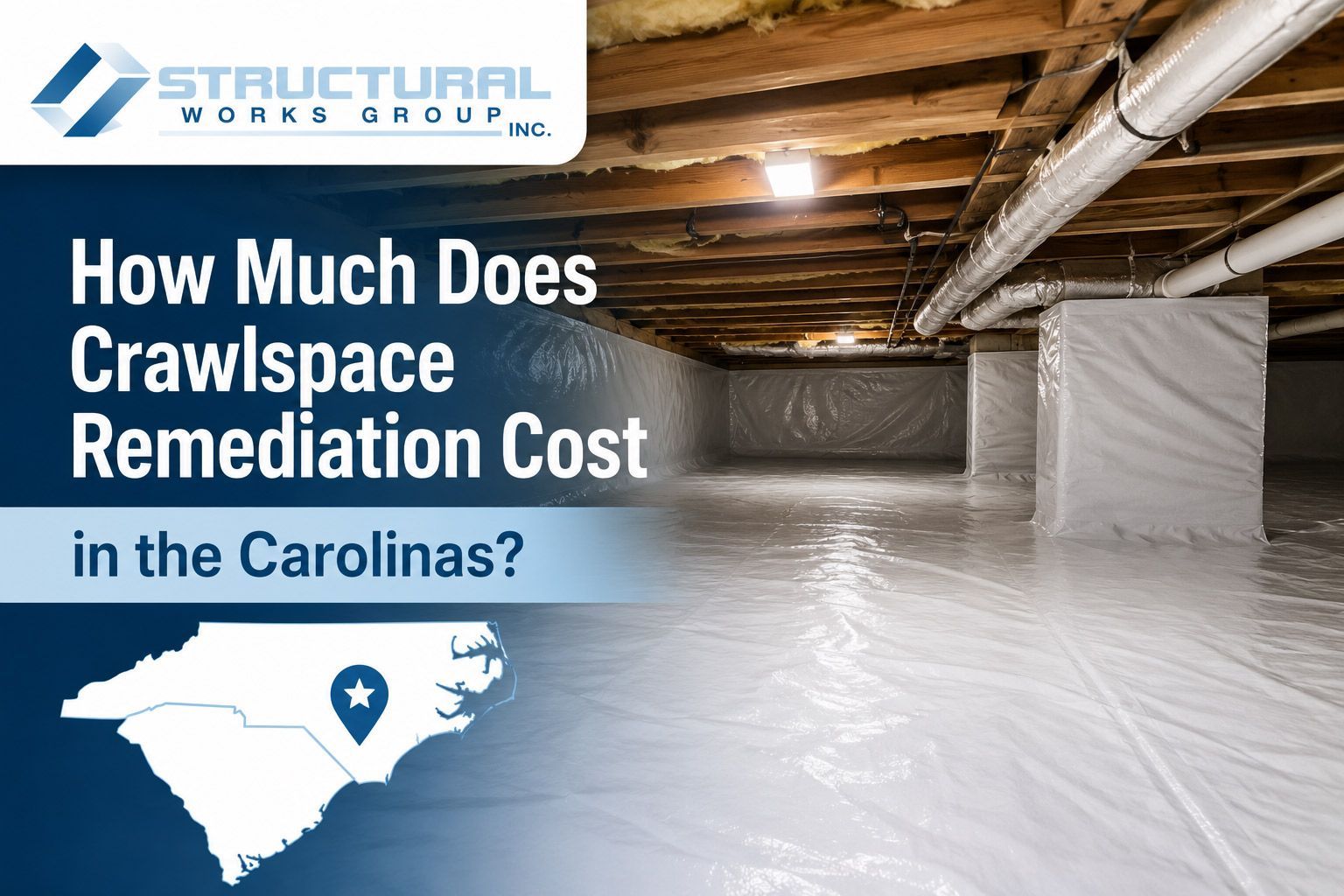
May 25, 2026
Crawlspace remediation costs in the Carolinas range from $1,200 to $15,000+ — learn what drives pricing and what to expect.