What Causes Foundation Problems?
March 6, 2025
Your home's foundation is its literal support system. When that system weakens, everything above it becomes at risk. Foundation problems can start small but grow into major structural issues that affect your home's safety and value.
The main causes of foundation problems are unstable soil conditions, water damage, and structural stress factors. These issues often work together, creating a perfect storm that damages your foundation over time.
Understanding what causes foundation problems is the first step to protecting your home. In this guide, we'll explore these causes, help you spot warning signs, and show you how to address foundation issues before they become serious threats to your home.
Common Causes of Foundation Problems
Soil Types and Their Impact
The soil under your home plays a huge role in foundation health. Different soil types behave differently when wet or dry.
Clay soils are common in Charlotte, Concord, and throughout North Carolina. These soils expand when wet and shrink when dry. This constant movement puts stress on your foundation.
Sandy soils drain quickly but can wash away, creating voids under your foundation. Loam soils are generally more stable but can still cause problems if not properly compacted before building.
Homes built on fill dirt often face more foundation issues because this soil wasn't naturally compacted over time.
Water Damage and Moisture Issues
Water is a foundation's worst enemy. Too much or too little moisture around your foundation can cause serious problems.
Poor drainage around your home leads to water pooling near the foundation. This water puts pressure on foundation walls and can seep into basements and crawlspaces.
Plumbing leaks under or near your home can wash away soil or cause it to expand. Even gutter problems can direct water toward your foundation instead of away from it.
During drought conditions, soil shrinks away from your foundation, removing support. When rain finally comes, the sudden expansion can crack foundation walls.
Structural Stress Factors
Your home itself can create stress on its foundation.
Poor initial construction is a common cause of foundation failure. This includes inadequate footings, improper reinforcement, or using low-quality concrete.
Home additions built without proper planning can put extra weight on your foundation. Even large trees planted too close to your home can damage foundations as their roots grow and seek water.
Natural settling happens to all homes, but excessive or uneven settling signals a problem. Homes in Gastonia, Mooresville, and Shelby often experience these issues due to the region's varied terrain.
Recognizing the Warning Signs
Visible Cracks and When to Worry
Cracks are the most obvious sign of foundation problems. But not all cracks mean trouble.
Hairline cracks in walls or floors often come from normal settling. However, horizontal cracks in foundation walls are serious and need immediate attention.
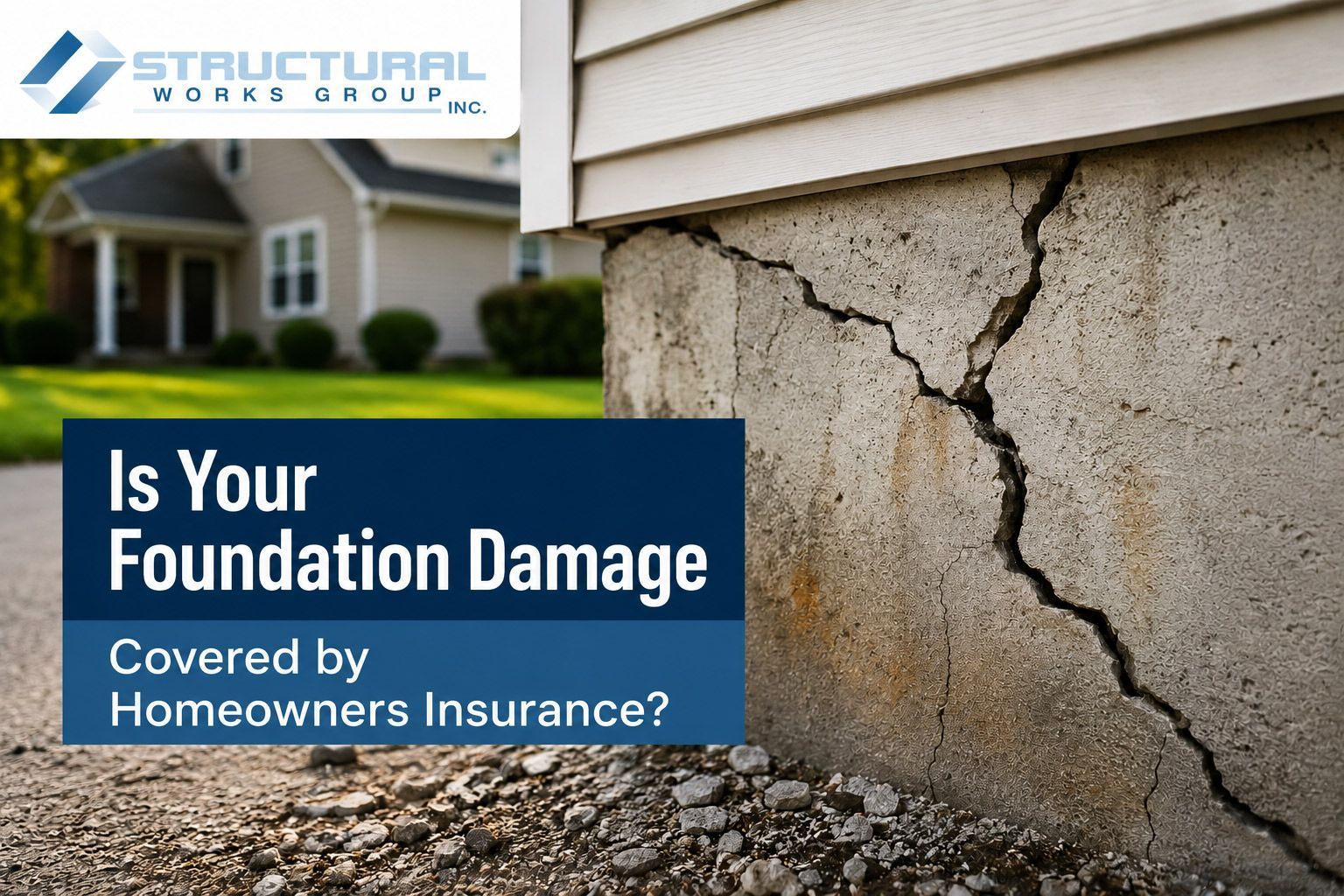
Stair-step cracks in brick or block walls often point to foundation movement. Wide cracks (wider than 1/4 inch) or cracks that grow over time are red flags.
Look for cracks that form patterns rather than isolated cracks. These patterns tell a story about what's happening to your foundation.
Door and Window Issues
When foundations shift, doors and windows are often the first to show it.
Sticking doors that once worked fine may signal foundation movement. Windows that won't close properly or have developed cracks in the glass or frame need attention.
Cabinet doors that won't stay closed or have gaps at the top are another warning sign. These issues happen because the frame of your home is no longer square.
Sloping Floors and Uneven Surfaces
A level home should have level floors. Sloping or sagging floors often point to foundation problems below.
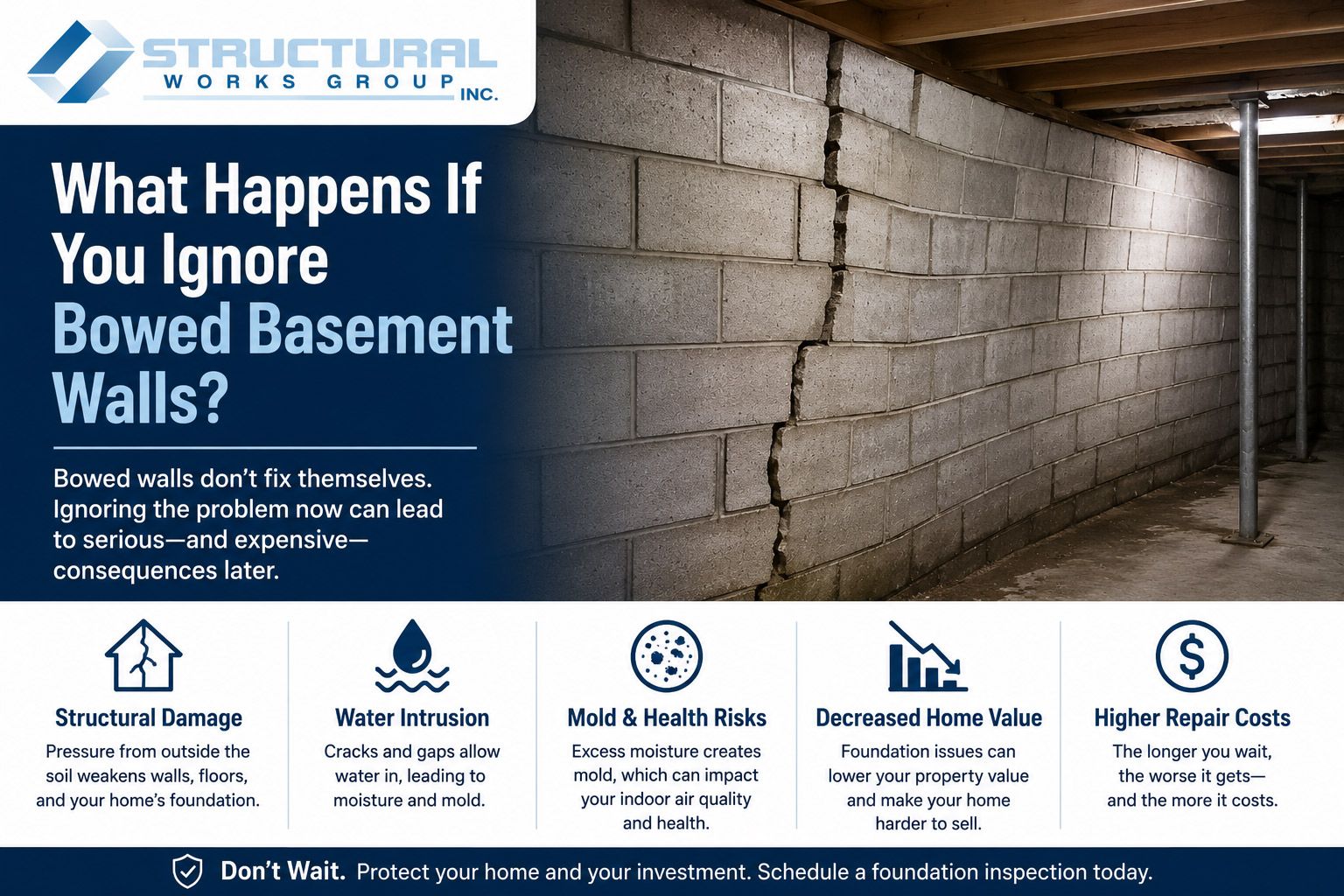
Countertops pulling away from walls show that your home is shifting. Even bulging or leaning walls in basements indicate pressure from outside soil.
Use a marble test by placing a marble on the floor to see if it rolls in one direction. This simple test can reveal slope issues that might otherwise go unnoticed.
Solutions for Foundation Problems
Professional Assessment and Inspection
Before panic sets in, get a professional opinion. Foundation experts can tell the difference between normal settling and serious problems.
A good inspection includes checking the interior and exterior of your home. Pros look for patterns of damage that tell the whole story.
Sometimes problems that look foundation-related actually have other causes. Only a trained eye can make this distinction correctly.
Repair Methods and Techniques
Modern foundation repair offers many solutions based on your specific problem.
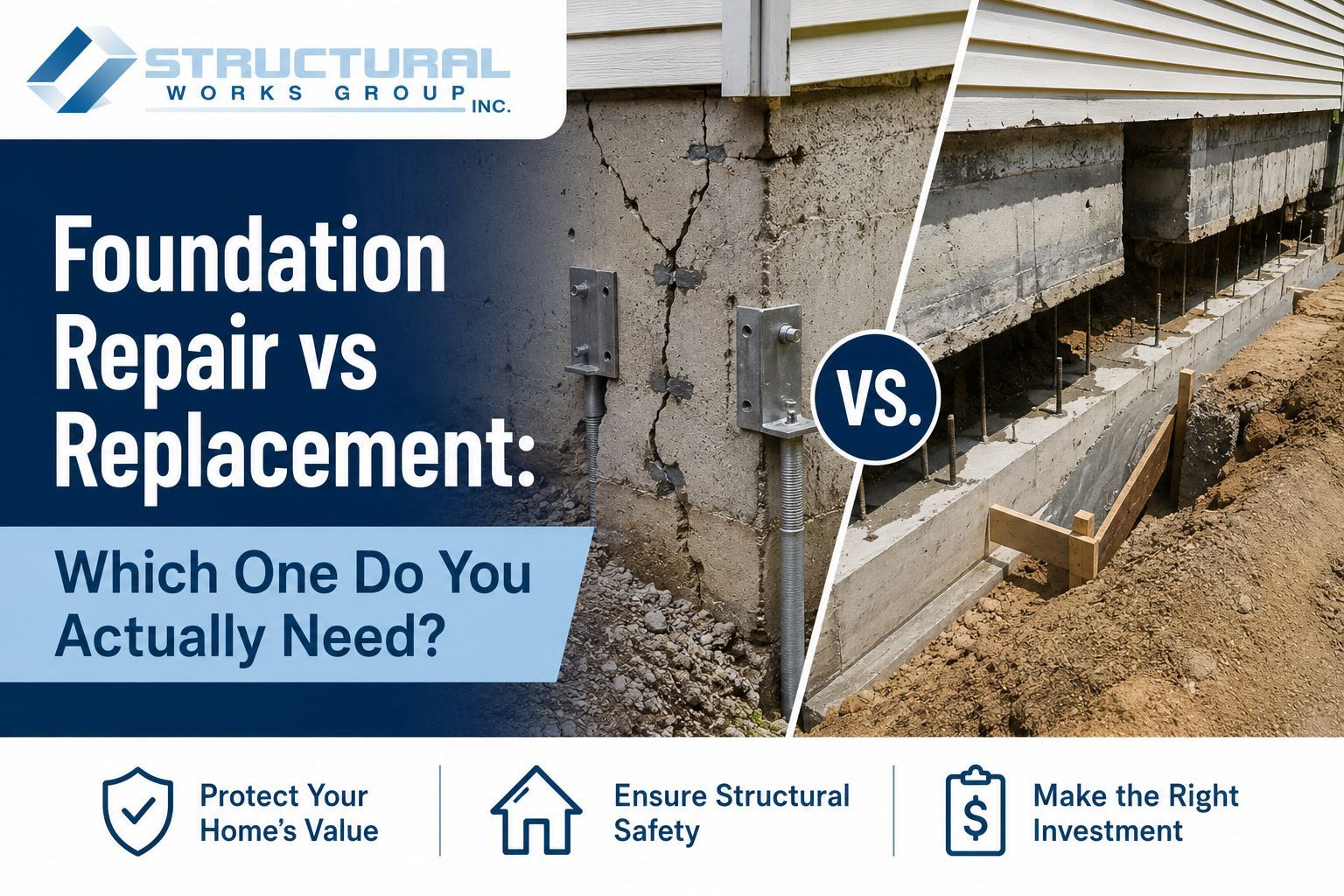
Piering involves driving steel supports deep into stable soil to support your foundation. This works well in the shifting soils common in Concord and Charlotte.
Slabjacking or mudjacking lifts concrete slabs by pumping material underneath. Wall anchors can stabilize bowing basement walls before they fail completely.
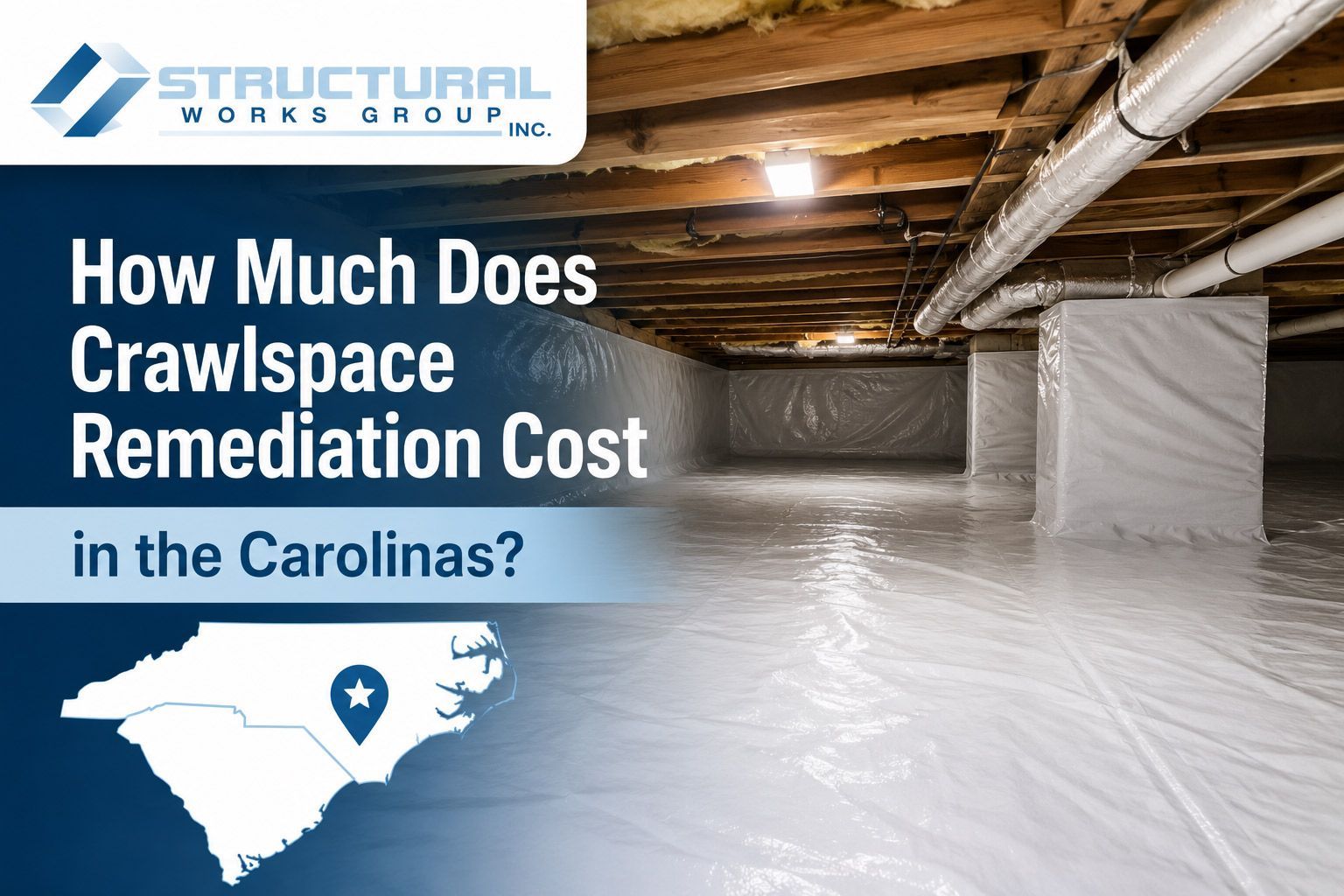
Waterproofing measures often accompany structural repairs to prevent future water damage. This may include exterior drainage systems, sump pumps, or vapor barriers.
Preventive Measures to Protect Your Foundation
Preventing foundation problems is always cheaper than fixing them.
Maintain consistent soil moisture around your foundation. Water during droughts but don't overwater.
Clean and maintain gutters to direct water away from your foundation. Grade the soil around your home to slope away from foundation walls.
Install proper drainage systems including French drains if needed. In areas like Shelby and Mooresville, where heavy rains can be common, good drainage is essential.
When to Call Foundation Repair Experts
Understanding the Repair Process
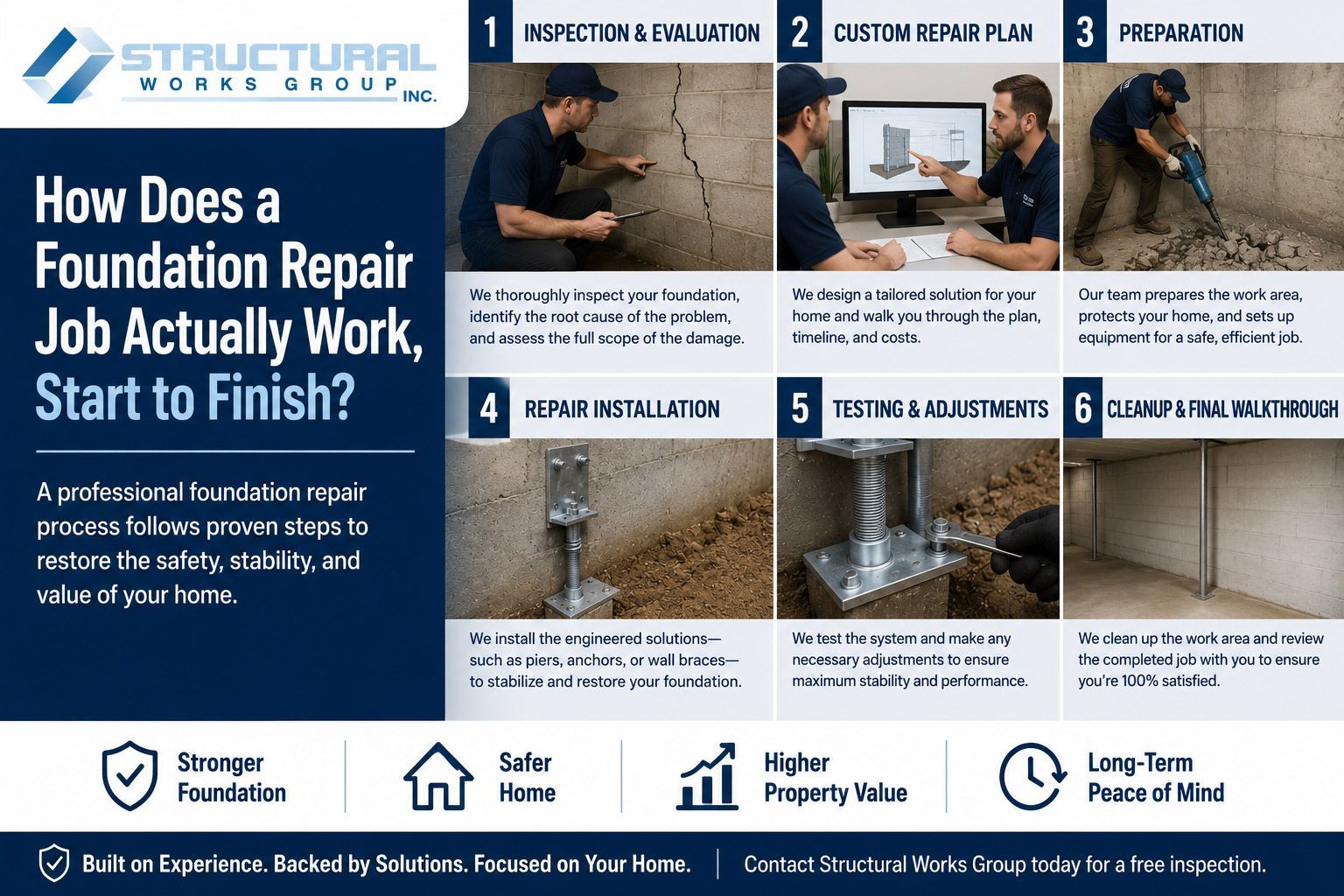
Professional foundation repair follows a proven process.
First comes a thorough inspection to identify the root causes of your problems. Then experts create a custom repair plan that addresses those specific issues.
Quality repairs include warranties that protect your investment. Ask about warranty terms before hiring any foundation contractor.
Cost Considerations and Value of Repairs
Foundation repairs aren't cheap, but they're worth it.
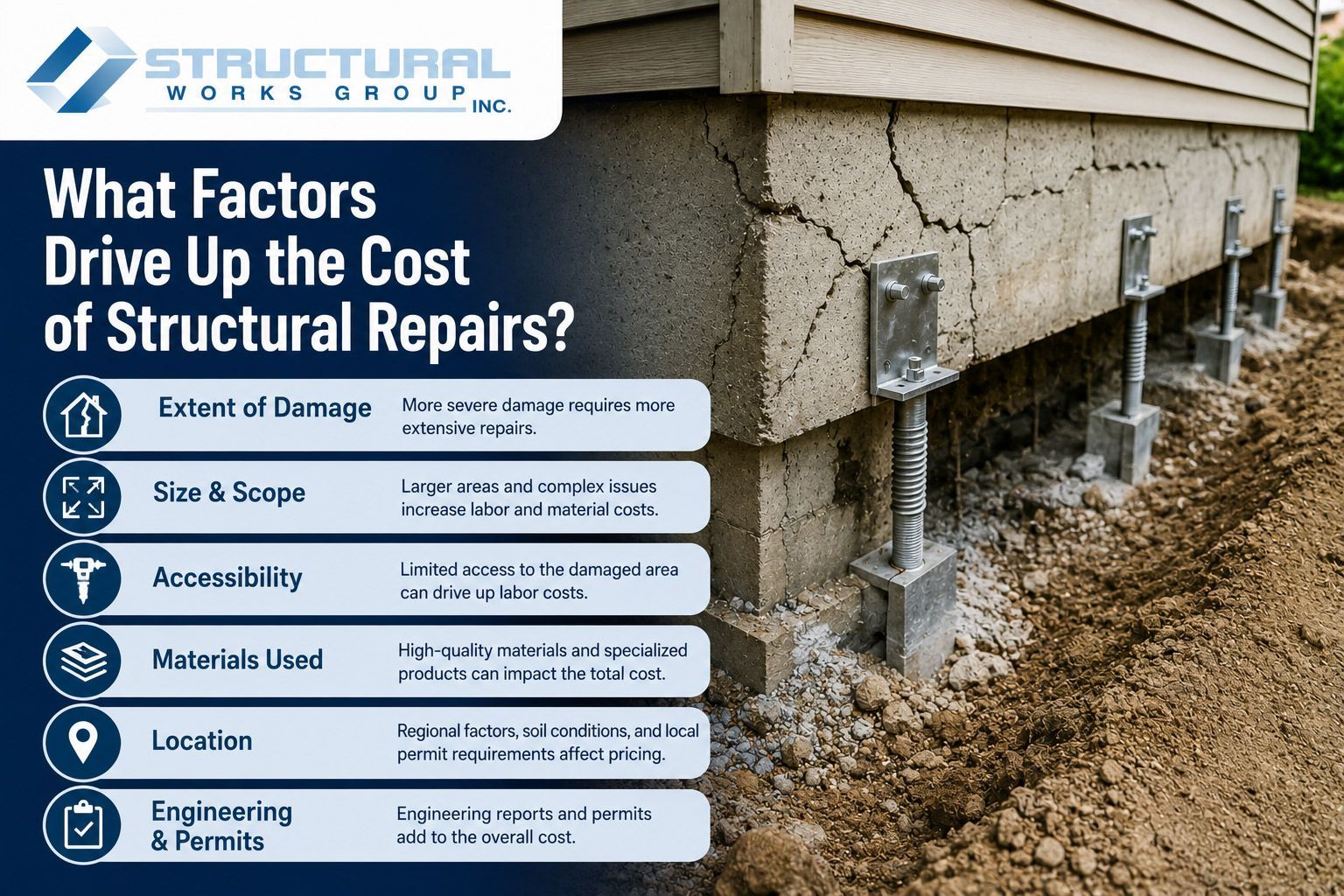
The average cost depends on the severity of your problem and the repair method needed. However, foundation problems never fix themselves and always get more expensive over time.
Consider that foundation problems can reduce your home's value by 10-15%. Repairs not only restore your home's safety but also its market value.
Most importantly, repairs provide peace of mind knowing your largest investment is protected.
Conclusion and Next Steps
Your home's foundation deserves attention and care. By understanding what causes foundation problems, you can spot early warning signs and take action before small issues become big expenses.
Don't ignore the warning signs of foundation trouble. Whether you live in Charlotte, Concord, Gastonia, Mooresville, or Shelby, professional help is available to assess and address your foundation concerns.
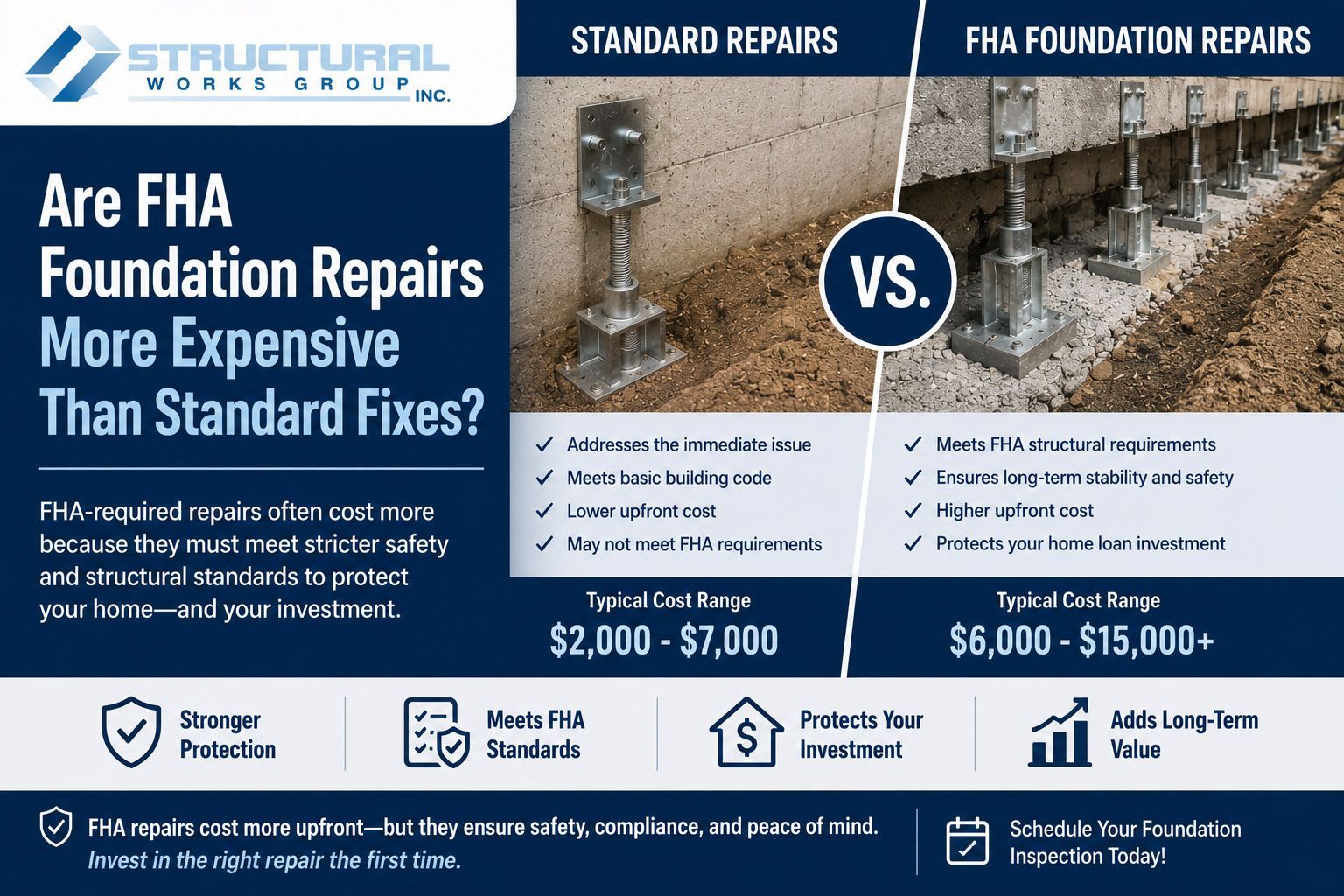
Ready to protect your home's foundation? Contact Structural Works Group today for expert foundation repair, home inspection repairs, crawlspace remediation, and all your structural repair needs. Our experienced team serves Charlotte, Concord, Gastonia, Mooresville, Shelby and surrounding areas with professional FHA, VA, and HUD foundation repairs. Don't wait until small problems become big expenses – call us today for a free assessment and restore your home's safety and value.