How Much Does Foundation Repair Cost in Charlotte, NC?

March 1, 2026

Introduction

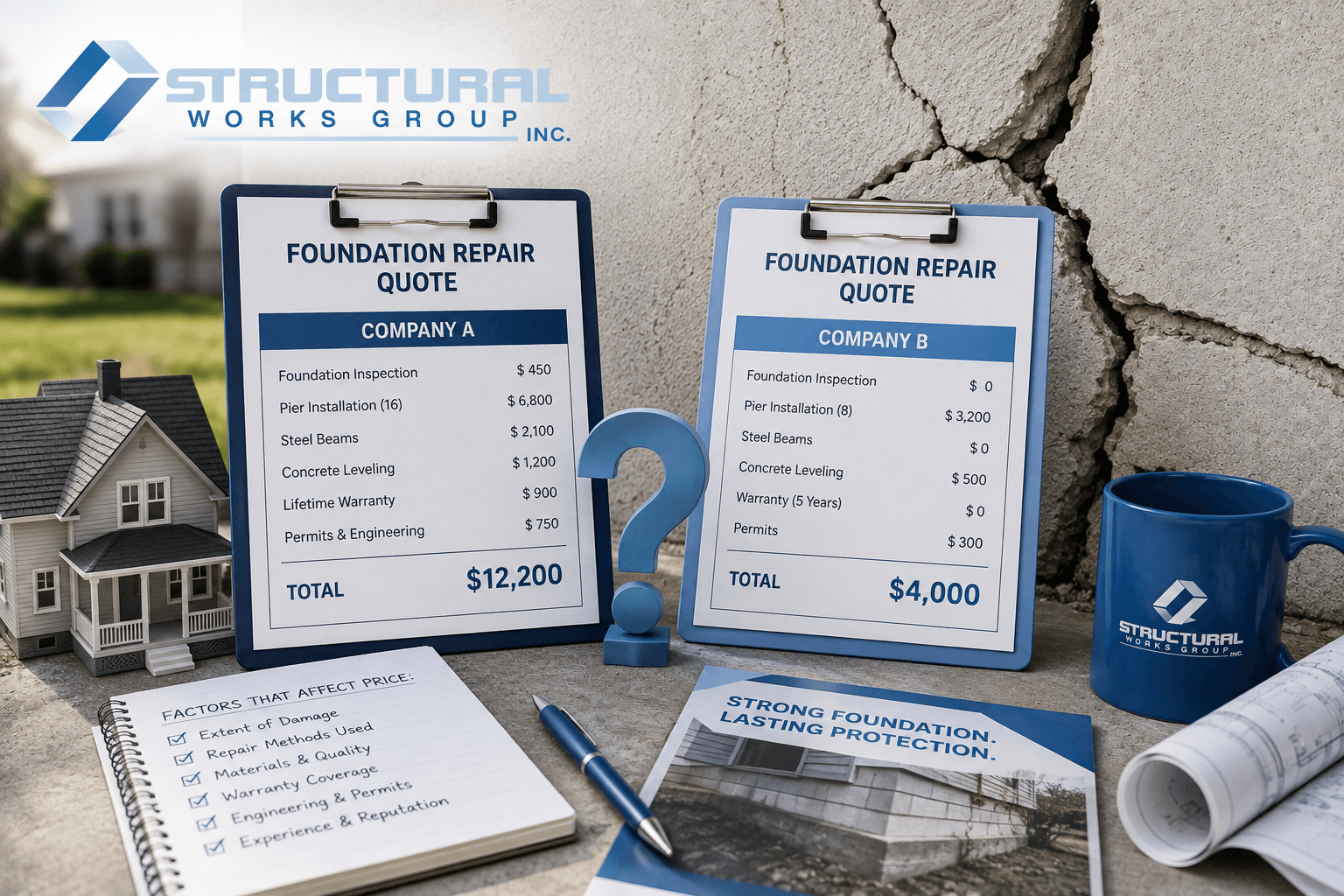
Charlotte’s mix of red clay soil, variable rainfall, and booming construction has made foundation issues a common—and costly—concern for homeowners. But when a foundation starts to crack, settle, or shift, price estimates can vary wildly. Some repairs cost under $3,000. Others exceed $25,000. The difference isn’t about who you hire—it’s about what your home actually needs.


This guide doesn’t just throw out averages. It breaks down what Charlotte homeowners are actually paying for when they get a foundation repaired, how local conditions affect pricing, and what hidden cost factors often drive up the final bill.


Charlotte’s Soil and Foundation Conditions

Understanding local soil behavior is key to understanding why foundation repairs cost what they do in this region.


Charlotte, NC, sits on expansive clay soil—commonly referred to as “shrink-swell” clay. During wet seasons, it soaks up water and expands. In dry periods, it contracts and pulls away from foundations. Over time, this movement creates cycles of stress that crack concrete, misalign support structures, and destabilize piers.

Common foundation types in Charlotte homes:

  • Slab-on-grade foundations (common in newer developments)
  • Crawlspace foundations with pier-and-beam support
  • Basement foundations in older or custom homes

Each type requires different repair approaches, which vary in price significantly depending on accessibility and severity of damage.


Cost Ranges Based on Type of Foundation Repair

Prices vary based on the size of the home, extent of movement, accessibility of the repair site, and whether cosmetic or structural fixes are included.

1. Pier Installation (Helical or Steel Push Piers)

Used to stabilize and level settling foundations by anchoring to deeper, stable soil.

  • Cost per pier: $1,200–$2,200
  • Total project range: $6,000–$20,000+
  • When needed: Visible wall separation, sinking slab, or dropped corners

2. Slab Jacking / Polyurethane Foam Injection

Used to lift concrete slabs by injecting material underneath.

  • Typical cost: $3,000–$6,000
  • When needed: Sunken porches, garage slabs, or non-load-bearing areas

3. Crawlspace Pier or Beam Repair

Involves replacing or reinforcing wooden support members in homes with crawlspaces.

  • Typical cost: $4,000–$12,000
  • When needed: Sagging floors, bouncy rooms, cracked drywall

4. Basement Wall Reinforcement

May include carbon fiber straps, wall anchors, or steel beams.

  • Typical cost: $4,000–$15,000
  • When needed: Bowed or leaning walls, water intrusion

5. Comprehensive Foundation Reconstruction

Full replacement of footings, structural slabs, or perimeter walls.

  • Typical cost: $20,000–$40,000+
  • When needed: Severe foundation collapse or code violations


Additional Costs That Can Affect Pricing

Some homes in Charlotte may require added services depending on the site conditions or extent of damage:

Add-On Service Insurability Hinges On…
Soil testing & geotechnical report $500–$2,000
Permit fees (Mecklenburg County) $250–$1,000+ depending on scope
Drainage correction / French drains $1,500–$7,000
Mold remediation in crawlspaces $1,000–$5,000
Vapor barrier installation $1,200–$3,500

Homes with prior patch jobs or hidden framing damage may also face higher repair costs due to required tear-out and replacement.


Factors That Raise or Lower Your Final Cost

Increases Cost:

  • Multiple points of structural failure
  • Limited access under the home or around perimeter
  • Complex load transfer due to home additions
  • Pre-existing cosmetic damage that must be restored

Lowers Cost:

  • Early intervention before major movement
  • Open site access for machinery or crews
  • Shallow repair depth (in areas without deep clay layers)
  • Single-location settlement

Not every foundation issue requires major structural overhaul. Some early-stage problems—especially in crawlspaces—can be fixed with minor reinforcements or adjustments if caught early.


Local Insights for Charlotte Homeowners

In Charlotte, it’s not unusual to see foundation movement show up within 10–15 years of construction. Rapid housing development in areas like Ballantyne, Steele Creek, and Highland Creek has led to a rise in shallow-footed slab homes built on fill soils—both of which are more vulnerable to settlement.


Crawlspace homes in older neighborhoods like Dilworth, Myers Park, or Plaza Midwood often experience wood rot, pier shifting, or moisture damage due to lack of vapor barriers and long-term humidity.


Repair costs in Charlotte tend to be slightly higher than the national average due to local permitting requirements and the clay-heavy soil composition that demands deeper pier depths.


FAQ

  • Can foundation repair be financed?

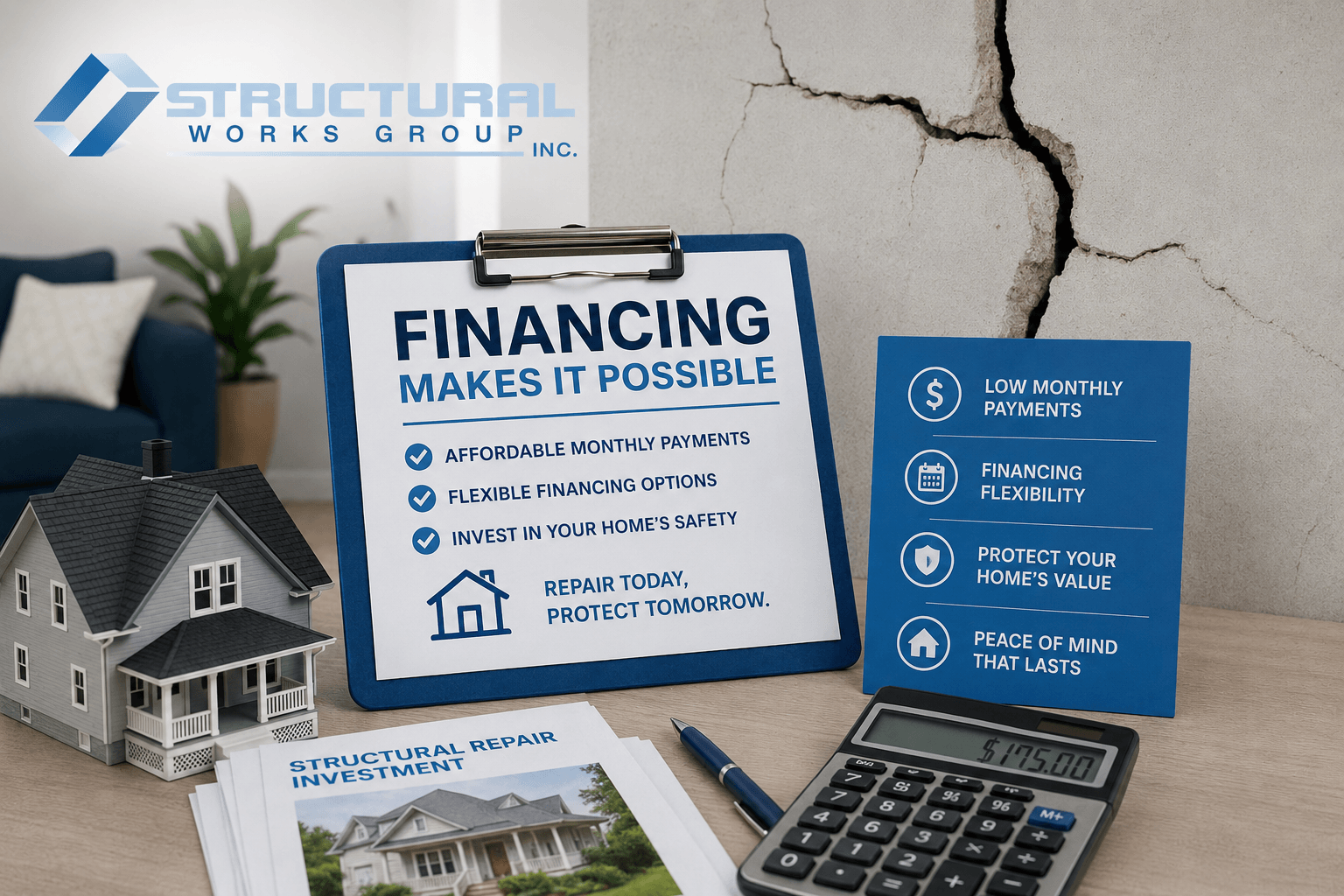
     Yes. Most reputable contractors in Charlotte offer third-party financing options with fixed rates and staged payments.

  • Will insurance cover any part of foundation repair?

     Not usually. Only damage from sudden events (like a burst pipe or fallen tree) might be covered. Settlement and soil movement are excluded.

  • Do I need a structural engineer first?

     For major repairs, yes—especially if the home is being sold, appraised, or if the cause of damage needs clarification for a claim.

  • How long do foundation repairs last?

     With proper materials and installation, piers and reinforcements can last 75–100 years. Many come with transferable warranties.

  • How soon should I act after seeing cracks?

     Immediately. Waiting often increases the scope—and price—of the repair.

Conclusion

Foundation repair in Charlotte isn’t one-size-fits-all—and neither are the prices. What may cost $4,000 in one home could run $25,000 in another based on soil depth, structure type, and damage severity. But one thing holds true: early action saves money. The sooner you catch foundation movement, the more affordable the solution becomes.


If you're starting to notice uneven floors, sticking doors, or visible cracks, don’t wait. A professional inspection can determine if your foundation problem is minor—or heading toward major. And in a city like Charlotte, the ground won’t stop moving just because you do.

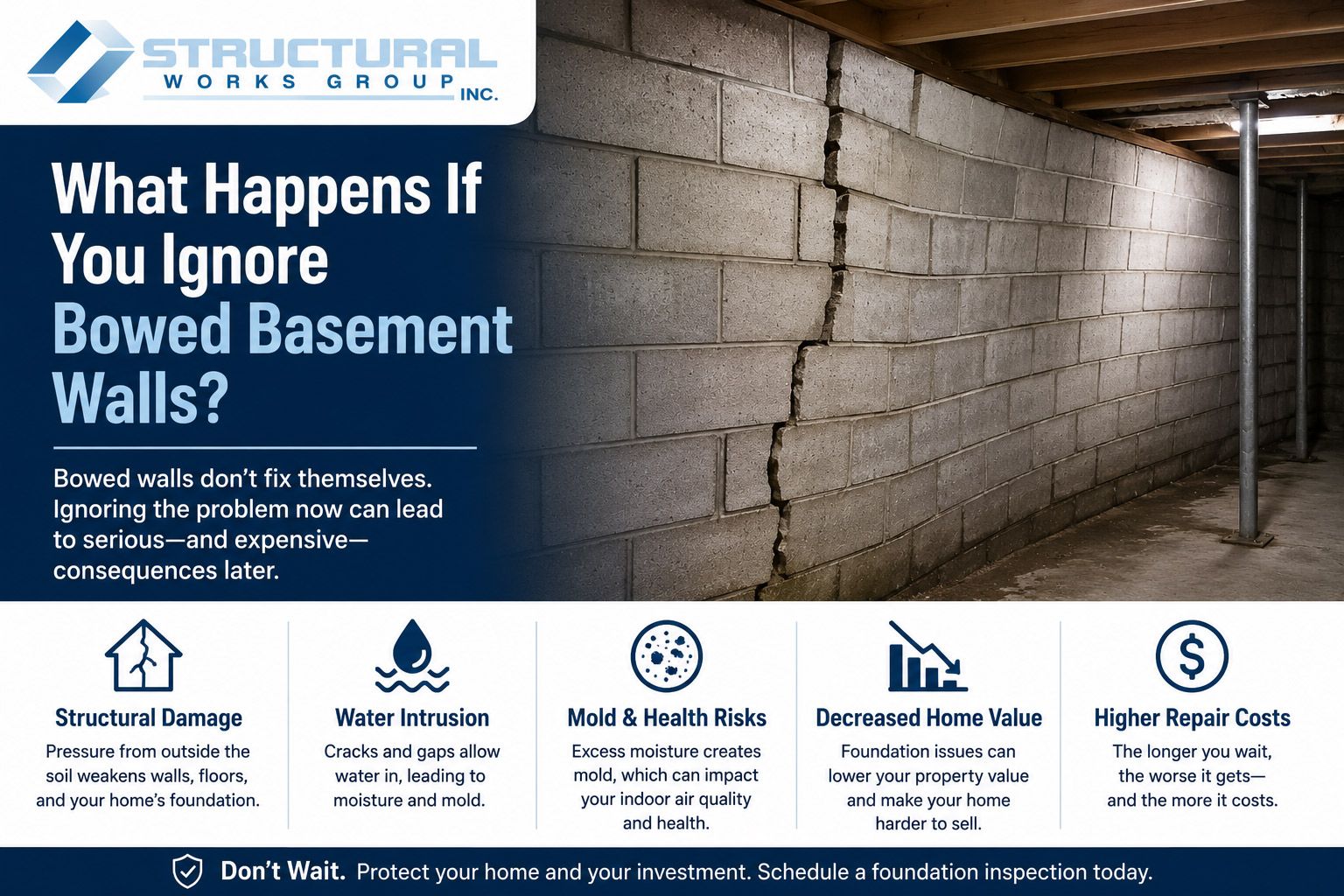
Infographic about the risks of ignoring bowed basement walls, with brick wall graphic and blue/white layout
July 26, 2026
Ignoring bowed basement walls leads to water damage, floor failure, and costly reconstruction — here is the full progression of damage.
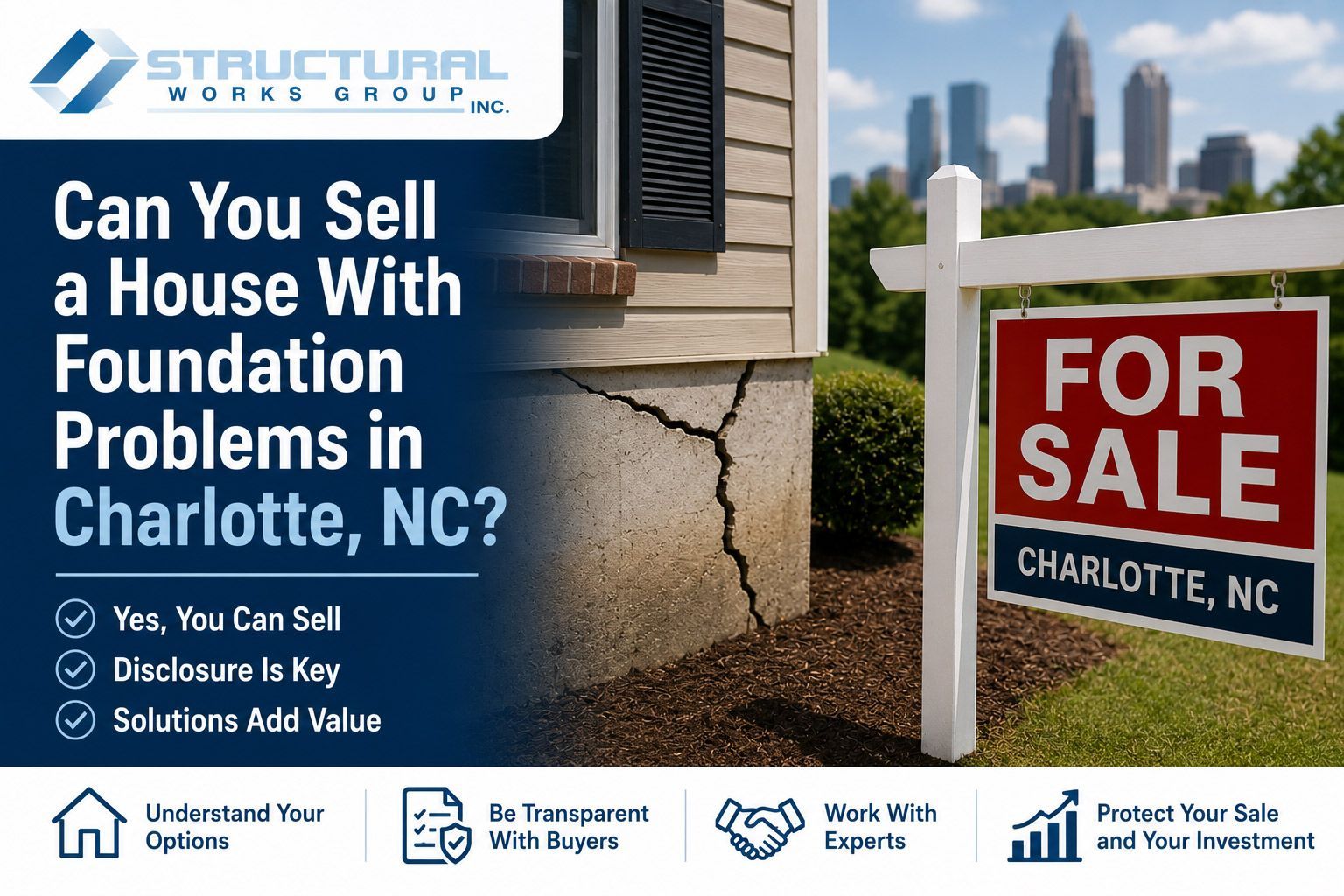
Graphic: “Can You Sell a House With Foundation Problems in Charlotte, NC?” with for-sale sign and house foundation crack
July 5, 2026
You can sell a Charlotte home with foundation problems — disclosure is required and repair often pays off. Here's what you need to know.
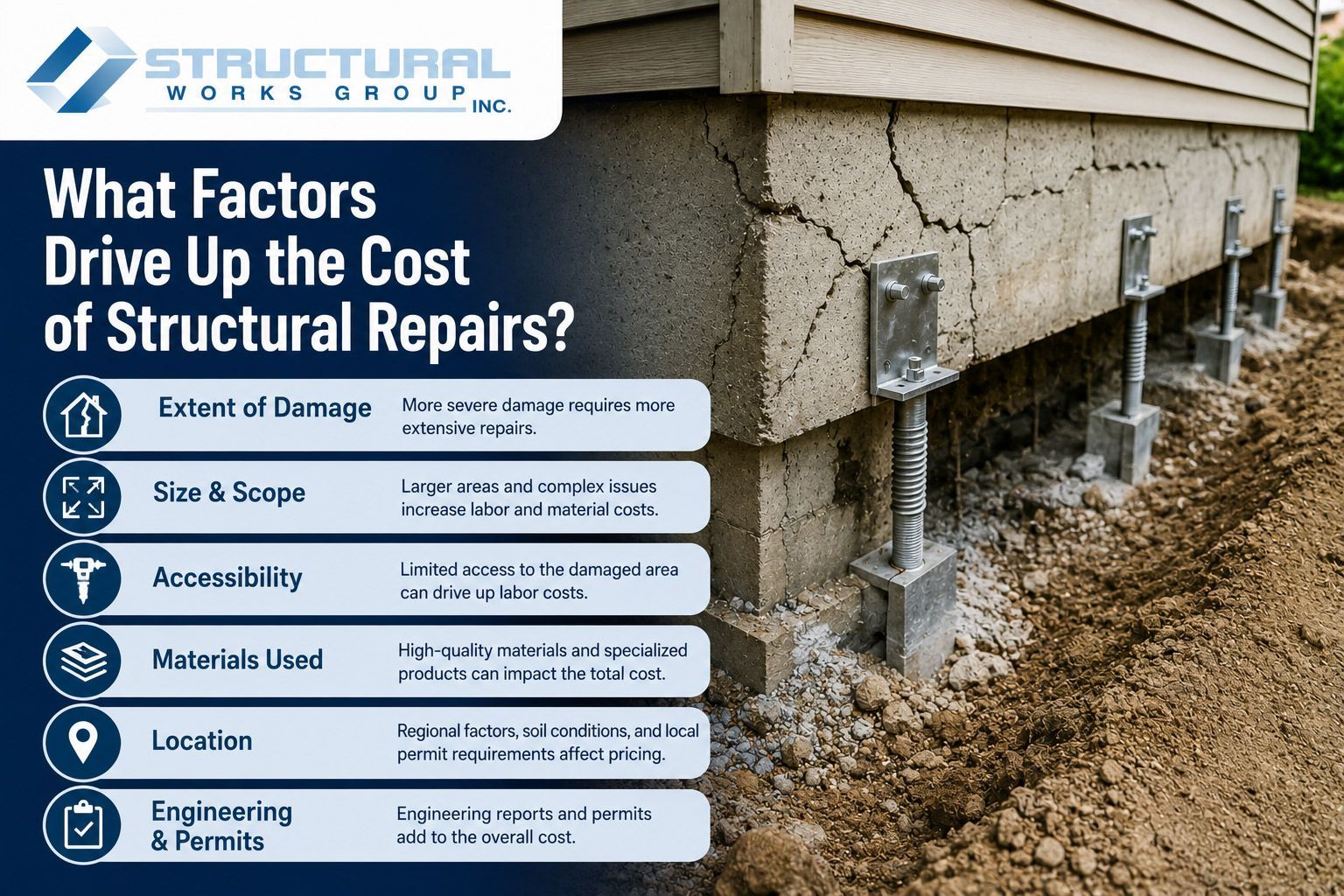
Infographic on structural repair costs beside a cracked home foundation with drainage damage beneath siding
June 28, 2026
Structural repair is one of those categories where two homeowners with seemingly similar problems can receive quotes that are thousands of dollars apart. That gap is not random — it is the product of specific variables that experienced contractors assess before they can give you an accurate number. If you have recently received a structural repair estimate that was higher than you expected, or if you are trying to budget for work you know is coming, understanding what actually drives cost is the most useful place to start. Some of these factors are outside your control, but others can be managed with the right timing and approach. The Severity and Extent of Existing Damage The single biggest cost driver in any structural repair project is how far the damage has progressed. A hairline crack in a foundation wall that is monitored and addressed early is a fundamentally different — and far less expensive — repair than a crack that has widened over years, allowed water infiltration, and triggered wood rot in adjacent framing. Every month that structural damage goes unaddressed, the scope of repair typically expands. In Charlotte, NC, the region's clay-heavy soils and high seasonal humidity accelerate this progression. What begins as a minor settling issue can develop into bowed walls, cracked slabs, and compromised joists if left alone. Early intervention is almost always the single most effective way to keep structural repair costs manageable. Accessibility and Site Conditions Labor costs are directly tied to how easy or difficult it is for crews to access the damaged area. Several site conditions add meaningful cost to structural repair projects: Crawlspace clearance — very low crawlspaces require workers to maneuver in confined quarters, slowing work and increasing labor hours Landscaping or hardscaping — exterior foundation repair that requires removing and replacing mature landscaping, patios, driveways, or retaining walls adds significant material and labor cost Slope and grade — homes built on sloped lots in Charlotte, NC and the surrounding hill country often have uneven foundation depths, making excavation more complex Finished basements — repairs in finished basements require either working around existing finishes or removing and replacing flooring, drywall, and trim Equipment access — properties on narrow lots or with restricted driveway access may prevent heavy equipment from reaching the work area, requiring alternative methods These conditions are not factors a contractor inflates arbitrarily — they represent genuine increases in labor time and complexity that translate directly into higher project costs. The Type of Repair Method Required Different structural problems call for different repair approaches, and those approaches carry very different price tags. The method selected is determined by the type of damage, not by cost preference. Here is how common repair methods compare in terms of typical cost ranges: Carbon fiber strap installation for bowing walls: $300 – $600 per strap, with most walls requiring multiple straps Wall anchor systems for moderate to severe bowing: $500 – $1,200 per anchor Helical or push pier installation for settling foundations: $1,000 – $2,500 per pier, with most projects requiring multiple piers Full crawlspace encapsulation: $5,000 – $12,000+ depending on size and condition Concrete slab lifting with polyurethane foam: $800 – $2,500 depending on the area Full basement wall excavation and waterproofing: $10,000 – $25,000+ In Charlotte, NC, piering is particularly common due to expansive clay soils that cause foundation settling. Projects requiring multiple piers — often six to twelve for a single corner of a home — accumulate costs quickly but deliver lasting stability when properly installed. Underlying Causes That Must Be Addressed One of the most overlooked cost components in structural repair is the work required to address the root cause of the damage. Repairing a foundation wall without fixing the drainage issue driving hydrostatic pressure against it is like patching a ceiling without fixing the roof leak above it — the repair will not hold. Root cause correction often adds to the project cost but is essential for the repair to be effective and lasting. Common root cause corrections include: Exterior waterproofing and drainage system installation Downspout extension and grading corrections to redirect surface water away from the foundation Interior drain tile system installation to manage groundwater Sump pump installation or replacement Soil stabilization or compaction in areas of significant settlement Homeowners in Charlotte, NC who address only the structural symptom and not the underlying water or soil problem should expect the damage to recur, often within a few years. Getting the root cause corrected as part of the initial project is almost always more cost-effective than returning for repeat repairs. Frequently Asked Questions
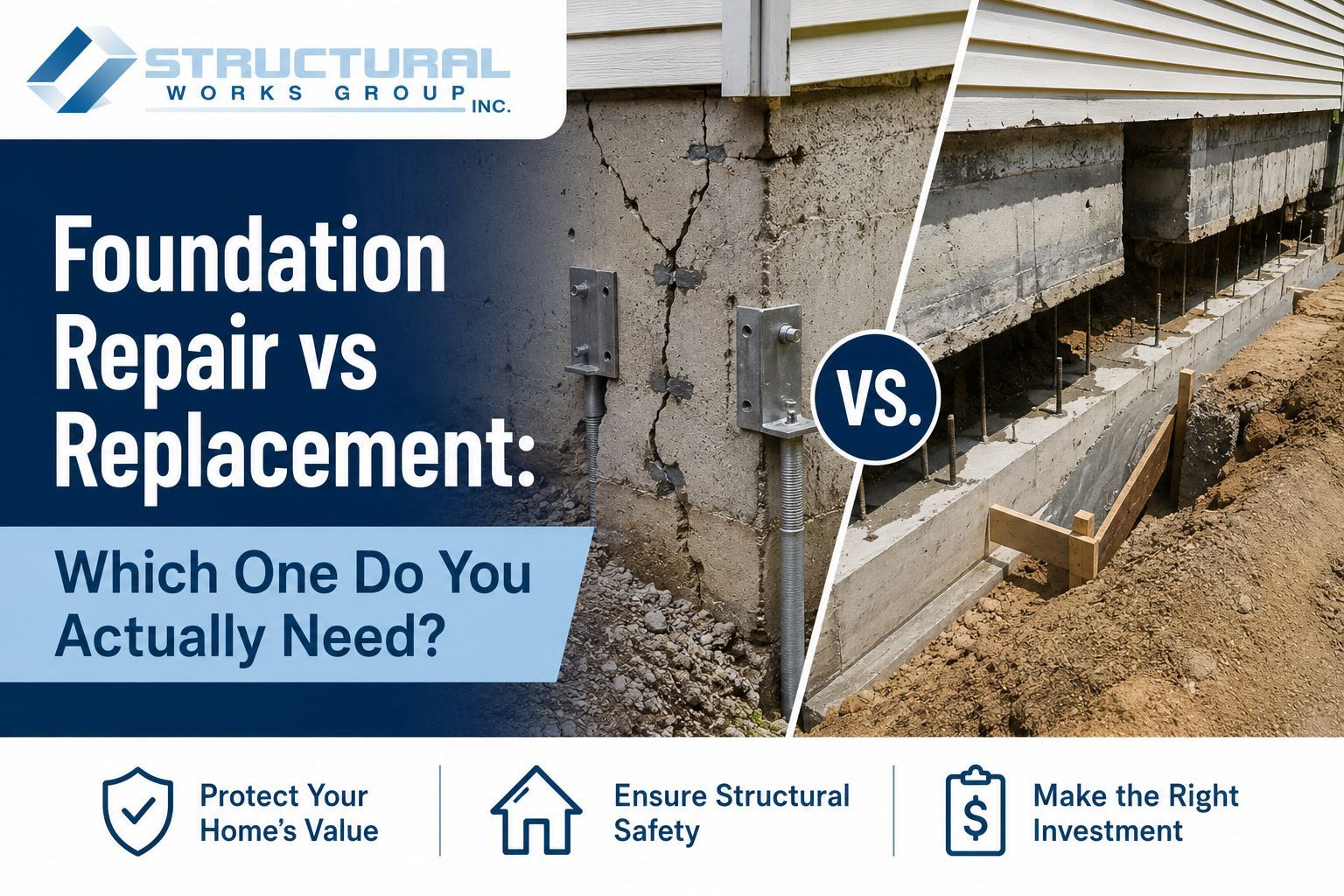
Graphic comparing foundation repair vs replacement with split-house image and “Which one do you actually need?” text
May 31, 2026
Most foundation damage can be repaired, not replaced — learn what factors determine the right approach for your home.
May 25, 2026
Crawlspace remediation costs in the Carolinas range from $1,200 to $15,000+ — learn what drives pricing and what to expect.
May 4, 2026
Most foundation damage is excluded from standard homeowners insurance — learn what is and isn't covered before you file a claim.
April 26, 2026
Learn the real structural reasons decks and porches weaken over time—from hidden rot to footing movement—and how small issues turn dangerous.
April 5, 2026
Introduction For many homeowners, a home inspection feels like a formality—something you schedule to move a sale along. But inspections don’t just observe a property. They create a permanent written record. Once a structural issue appears in that report, it stops being optional. Cracks that could once be ignored become “material defects.” Soft floors become “safety concerns.” A leaning pier becomes “structural instability.”  From that moment forward, the house is no longer just aging—it is documented as impaired . Lenders, insurers, buyers, and appraisers treat it differently. This is how inspections quietly turn deferred maintenance into mandatory repair. This blog explains how inspection reports change the rules, which findings typically force action, and why structural issues become non-negotiable once they are officially recorded. What an Inspection Really Does to a Property A home inspection doesn’t fix anything. It changes the status of the home. Before inspection, a crack is just a crack. After inspection, it is a known defect . That distinction matters because: Sellers must legally disclose known defects Buyers can renegotiate or walk away Lenders may withhold financing Insurers may refuse coverage Appraisers can adjust value downward The inspection report becomes part of the transaction history. Even if the deal falls through, that documentation follows the property. Structural findings are treated differently than cosmetic ones. A stained wall might be negotiable. A compromised beam is not. Structural Findings That Trigger Mandatory Action Not every inspection note forces repair. But certain categories almost always do. These findings typically halt or complicate a sale: Foundation movement or active cracking Sagging or uneven floors tied to framing issues Rot in load-bearing beams or joists Leaning support piers in crawlspaces Bowed basement walls Termite damage affecting structure Evidence of ongoing settlement These are not “maintenance items.” They are flagged as: Safety hazards Structural deficiencies Material defects Once those terms appear in an inspection, the house becomes non-compliant in the eyes of lenders and underwriters. Why Lenders Enforce Structural Repairs Most buyers rely on financing. And most lenders will not fund a mortgage on a home with unresolved structural defects. From a lender’s perspective: The house is the collateral Structural instability threatens that collateral The risk is not theoretical—it’s documented That’s why loans such as FHA, VA, and USDA often require: Proof of professional structural repair Engineering letters Reinspection clearance Repair completion before closing Conventional lenders are more flexible, but major defects still trigger conditions. The sale may proceed only if repairs are completed or escrowed. This is when “recommended” repairs become “required” repairs. How Sellers Lose Leverage After Inspection Before an inspection, sellers can say: “The house is priced accordingly.” “It’s normal for a home this age.” “It’s never been a problem.” After inspection, those arguments disappear. Once a report states: “Active foundation movement observed” “Structural components compromised” “Further evaluation by a licensed contractor recommended” The seller must either: Repair the issue Reduce the price significantly Offer repair credits Lose the buyer Even if the buyer walks, the seller must disclose the same issue to the next one. This is why many homeowners are surprised by how “sudden” a structural repair becomes urgent. The house didn’t change. The paperwork did. The Chain Reaction Inspections Create A single structural note can trigger multiple consequences: Inspector flags a defect Buyer requests repair or credit Lender conditions the loan Appraiser adjusts valuation Insurer questions coverage Seller must act or relist At that point, repair is no longer about preference. It’s about viability. Homes with unresolved structural findings often: Sit on the market longer Lose negotiating power Attract lower offers Fail multiple contracts The cost of delay compounds with every failed deal. Why “It’s Always Been Like That” Doesn’t Work Many structural issues develop slowly. Homeowners adapt. You stop noticing the slope You learn which door sticks You repaint over cracks You avoid that soft spot But inspectors are trained to look past normalcy. They document condition, not comfort. A house that “feels fine” can still fail: Minimum property standards Safety thresholds Structural tolerance limits Once written, that assessment becomes objective truth in the transaction. FAQ
March 29, 2026
Learn the earliest signs of hidden structural damage—like trim gaps, sticky doors, and uneven floors—before they turn into expensive repairs.
February 22, 2026
Find out when structural damage qualifies for insurance coverage and when you’re responsible for repairs based on cause, timeline, and policy exclusions.