How Do Home Inspections Trigger Mandatory Structural Repairs?
April 5, 2026
Introduction
For many homeowners, a home inspection feels like a formality—something you schedule to move a sale along. But inspections don’t just observe a property. They create a permanent written record. Once a structural issue appears in that report, it stops being optional.
Cracks that could once be ignored become “material defects.”
Soft floors become “safety concerns.”
A leaning pier becomes “structural instability.”
From that moment forward, the house is no longer just aging—it is documented as impaired. Lenders, insurers, buyers, and appraisers treat it differently. This is how inspections quietly turn deferred maintenance into mandatory repair.
This blog explains how inspection reports change the rules, which findings typically force action, and why structural issues become non-negotiable once they are officially recorded.
What an Inspection Really Does to a Property
A home inspection doesn’t fix anything. It changes the status of the home.
Before inspection, a crack is just a crack.
After inspection, it is a
known defect.
That distinction matters because:
- Sellers must legally disclose known defects
- Buyers can renegotiate or walk away
- Lenders may withhold financing
- Insurers may refuse coverage
- Appraisers can adjust value downward
The inspection report becomes part of the transaction history. Even if the deal falls through, that documentation follows the property.
Structural findings are treated differently than cosmetic ones. A stained wall might be negotiable. A compromised beam is not.
Structural Findings That Trigger Mandatory Action
Not every inspection note forces repair. But certain categories almost always do.
These findings typically halt or complicate a sale:
- Foundation movement or active cracking
- Sagging or uneven floors tied to framing issues
- Rot in load-bearing beams or joists
- Leaning support piers in crawlspaces
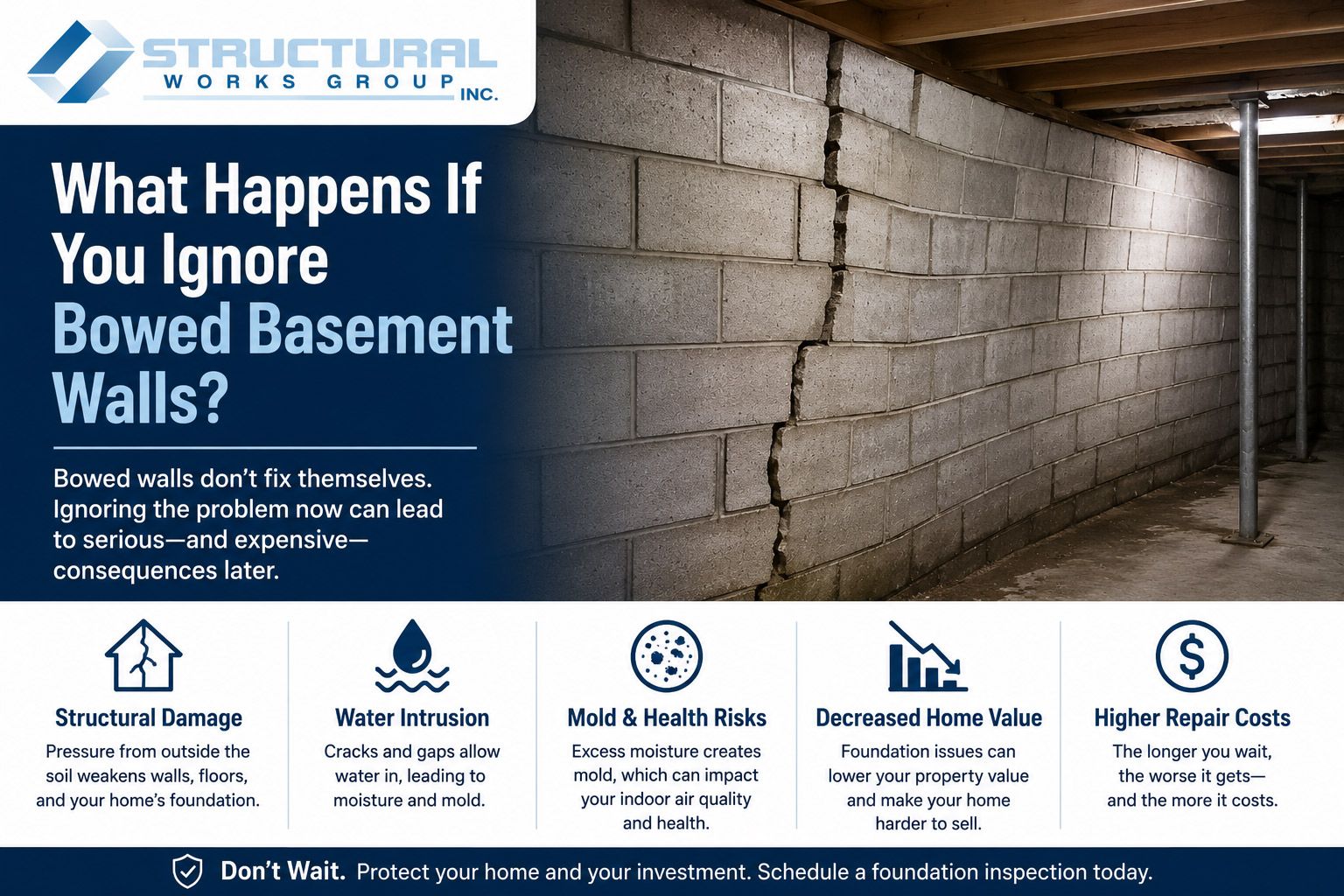
- Bowed basement walls
- Termite damage affecting structure
- Evidence of ongoing settlement
These are not “maintenance items.” They are flagged as:
- Safety hazards
- Structural deficiencies
- Material defects
Once those terms appear in an inspection, the house becomes non-compliant in the eyes of lenders and underwriters.
Why Lenders Enforce Structural Repairs
Most buyers rely on financing. And most lenders will not fund a mortgage on a home with unresolved structural defects.
From a lender’s perspective:
- The house is the collateral
- Structural instability threatens that collateral
- The risk is not theoretical—it’s documented
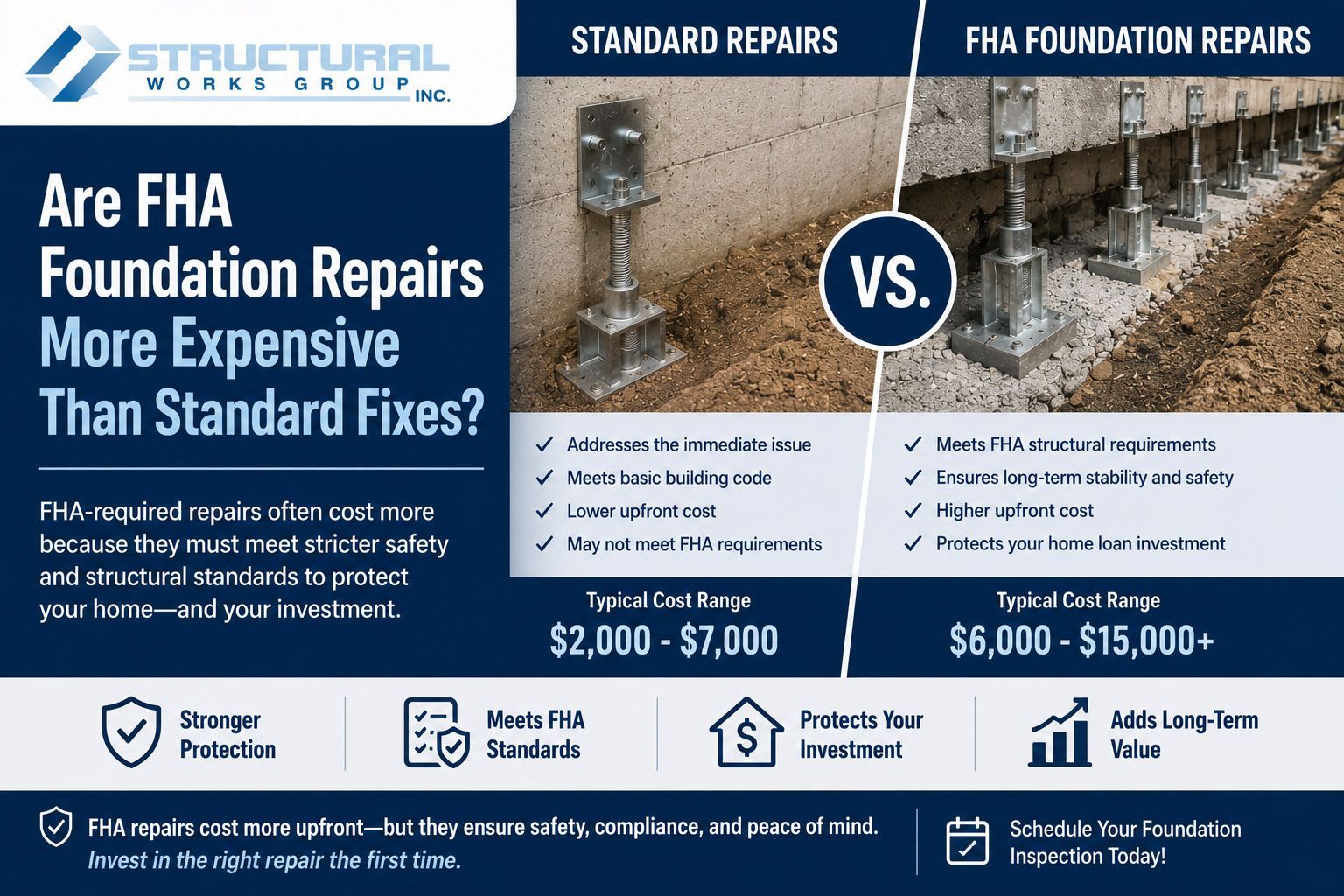
That’s why loans such as FHA, VA, and USDA often require:
- Proof of professional structural repair
- Engineering letters
- Reinspection clearance
- Repair completion before closing
Conventional lenders are more flexible, but major defects still trigger conditions. The sale may proceed only if repairs are completed or escrowed.
This is when “recommended” repairs become “required” repairs.
How Sellers Lose Leverage After Inspection
Before an inspection, sellers can say:
- “The house is priced accordingly.”
- “It’s normal for a home this age.”
- “It’s never been a problem.”
After inspection, those arguments disappear.
Once a report states:
- “Active foundation movement observed”
- “Structural components compromised”
- “Further evaluation by a licensed contractor recommended”
The seller must either:
- Repair the issue
- Reduce the price significantly
- Offer repair credits
- Lose the buyer
Even if the buyer walks, the seller must disclose the same issue to the next one.
This is why many homeowners are surprised by how “sudden” a structural repair becomes urgent. The house didn’t change. The paperwork did.
The Chain Reaction Inspections Create
A single structural note can trigger multiple consequences:
- Inspector flags a defect
- Buyer requests repair or credit
- Lender conditions the loan
- Appraiser adjusts valuation
- Insurer questions coverage
- Seller must act or relist
At that point, repair is no longer about preference. It’s about viability.
Homes with unresolved structural findings often:
- Sit on the market longer
- Lose negotiating power
- Attract lower offers
- Fail multiple contracts
The cost of delay compounds with every failed deal.
Why “It’s Always Been Like That” Doesn’t Work
Many structural issues develop slowly. Homeowners adapt.
- You stop noticing the slope
- You learn which door sticks
- You repaint over cracks
- You avoid that soft spot
But inspectors are trained to look past normalcy. They document condition, not comfort.
A house that “feels fine” can still fail:
- Minimum property standards
- Safety thresholds
- Structural tolerance limits
Once written, that assessment becomes objective truth in the transaction.
FAQ
How do I know if a crack is cosmetic or structural?
No, but they can walk away. And once the issue is documented, every future buyer will see it.
What if the inspector is wrong?
You can request a structural evaluation or engineering report. But if the concern is validated, it strengthens the case for repair.
Do all structural notes stop a sale?
Not all. Minor, inactive cracks may be negotiable. Active movement or compromised framing usually is not.
Can I sell “as-is” after inspection?
Yes, but you must disclose the defect. “As-is” doesn’t remove liability—it just limits your obligation to repair.
Is it better to inspect before listing?
Often, yes. Pre-listing inspections allow sellers to control timing, pricing, and repair strategy before negotiations begin.
Conclusion
Home inspections don’t create structural problems—they formalize them.
The moment a structural issue appears in a report, it becomes:
- A disclosure obligation
- A financing obstacle
- A negotiation anchor
- A resale liability
That’s how optional repairs become mandatory ones.
Whether you’re selling, buying, or preparing to refinance, structural conditions carry weight far beyond the crawlspace or foundation wall. They follow the property. And once documented, they demand resolution.
Understanding this shift lets you act on your terms—before the market, the lender, or the next buyer forces your hand.