When Do Structural Repairs Become an Insurance vs. Out-of-Pocket Cost?
February 22, 2026
Introduction
The moment structural damage appears, it doesn’t just affect the integrity of your home—it immediately raises financial stakes. Cracks in the foundation, sagging floors, or wall separation don’t come with price tags attached, but someone has to pay for the fix. And in most cases, the deciding factor isn’t how bad the damage is, but whether the conditions behind it fall within the narrow definitions of insurance coverage.
This isn’t about hypotheticals. It’s about real-world consequences for homeowners navigating repairs that can cost thousands. This blog outlines the difference between covered structural events and non-covered ones, how insurance providers interpret causes, and what steps can shift the burden from your bank account to your policy.
What Insurance Actually Covers (and What It Doesn’t)
Most homeowners insurance policies only pay for damage caused by sudden, accidental events. That distinction matters more than the severity of the damage.
Typically Covered:
- Vehicle collision into structural walls
- Tree collapse during a storm
- House fire or explosion affecting framing or foundation
- Sudden plumbing break that weakens load-bearing elements
- Vandalism that leads to physical damage
In these cases, the damage has a clear timestamp, a defined incident, and no long-term buildup. That makes the repair eligible for a claim.
Commonly Excluded:
- Foundation cracks from natural soil movement
- Long-term water damage or slow leaks
- Wood rot from humidity or poor ventilation
- Sagging floors from age-related deterioration
- Termite damage to joists or beams
These are treated as homeowner maintenance issues, even if the resulting repairs are structural and expensive.
Cause Is Everything: Sudden vs. Gradual Onset
Insurance adjusters look past the damage itself and focus on how it happened. If they find evidence that it occurred over months or years, they’re likely to deny coverage—no matter how bad it looks now.
Clear-Cut Scenarios:
- Covered: A burst pipe floods a crawlspace overnight, destabilizing a pier.
- Not Covered: Rainwater has been pooling around the foundation for years, slowly shifting the structure.
One has a specific start point. The other reflects ongoing conditions that could have been mitigated through upkeep.
Getting a professional structural evaluation early—before clean-up or temporary fixes—preserves crucial evidence about timing.
Situations That Require Additional Documentation
Some structural claims live in the gray area. Whether they’re covered or not depends on what’s found during inspection, how it’s written in the report, and how your insurer interprets it.
Conditional Scenarios:
| Damage Type | Insurability Hinges On… |
|---|---|
| Crawlspace framing rot | Sudden leak vs. long-term moisture exposure |
| Crack near HVAC drain lineaCrack near HVAC drain line structure | Pipe failure vs. condensation over time |
| Floor drop after roof runoff | Gutter overflow vs. general water accumulation |
| Beam collapse | Termite compromise vs. external force (e.g. vehicle or impact) |
If Insurance Denies the Claim
If the insurer deems the damage outside of policy coverage, you’re left with out-of-pocket repair options. That doesn’t always mean paying all at once. You may:
- Break repairs into phases based on urgency
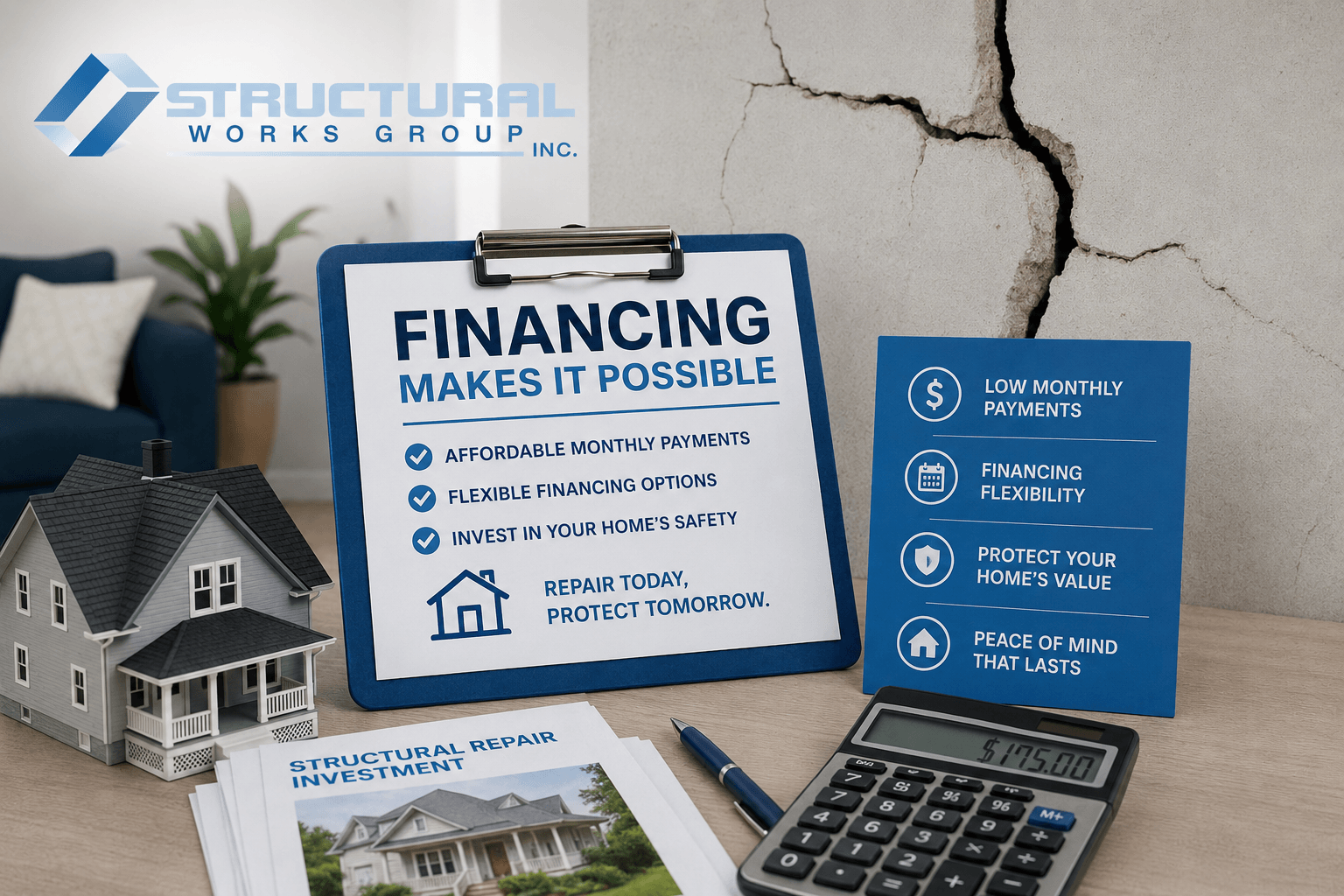
- Use contractor-provided financing or low-interest plans
- Tap into a home equity line of credit (HELOC)
- Use repair scope as a qualifier for a larger renovation loan
Reputable structural repair contractors will walk you through options without pressuring you to commit beyond your budget.
How to Position a Structural Claim Effectively
To avoid an automatic denial, you need to support your claim with more than just a photo of the damage.
Steps to strengthen your insurance claim:
- Capture the full scope — Take detailed photos immediately, including surrounding systems.
- Record changes over time — Make notes about when symptoms first appeared, and any events that may have triggered them.
- Schedule a professional evaluation — Ask for a cause-focused report, not just a repair estimate.
- Avoid altering the site — Don’t patch cracks, replace drywall, or remove materials before documentation.
- Communicate with your adjuster using precise language — Emphasize sudden causes, not structural failure symptoms.
The more clearly your contractor can separate cause from result, the more likely the insurer will consider the claim valid.
FAQ
Will insurance cover damage from foundation settling?
No. Normal soil settlement is considered a maintenance issue, even if it results in large structural damage.
What if a storm caused structural damage but didn’t directly hit the house?
If a tree fell or water intrusion created sudden damage, that might qualify. But general rain or wind-related soil movement is rarely covered.
Is termite damage ever covered?
Almost never. Pest-related structural damage is considered preventable through regular inspections and maintenance.
Can I submit a claim if the damage has been getting worse slowly?
You can, but if there’s no identifiable triggering event, it’s unlikely to be approved.
Can insurance cover partial repairs, even if the whole structure isn’t affected?
Yes. If part of the damage ties directly to a covered event, insurers may pay for that section, even if other areas are excluded.
Conclusion
Insurance won’t pay for structural damage just because it’s expensive. It pays when that damage is the result of a covered, accidental event—not long-term deterioration.
That means timing, documentation, and cause are everything. The moment you notice structural issues, your next call should be to a qualified professional—not just to repair the damage, but to help clarify what caused it and when. That distinction can shift thousands of dollars of cost off your plate and into your policy.