Is It Cheaper to Stabilize a Foundation or Replace Damaged Sections?
January 25, 2026
Introduction
When a foundation problem surfaces, homeowners often imagine the worst—jackhammers, torn-out concrete, and massive bills. Contractors usually present two paths: stabilize what exists or remove and replace what’s failing. On paper, stabilization often looks cheaper. Replacement feels permanent. But cost alone is a misleading comparison.
The real question is not “Which option is cheaper?”
It’s “Which option actually solves the problem without creating a second one later?”
A foundation can be cracked, tilted, sunken, or partially broken. Each condition changes what “cheaper” really means. This guide explains how stabilization and replacement differ, when one becomes more cost-effective than the other, and why choosing the wrong approach often leads to paying twice.
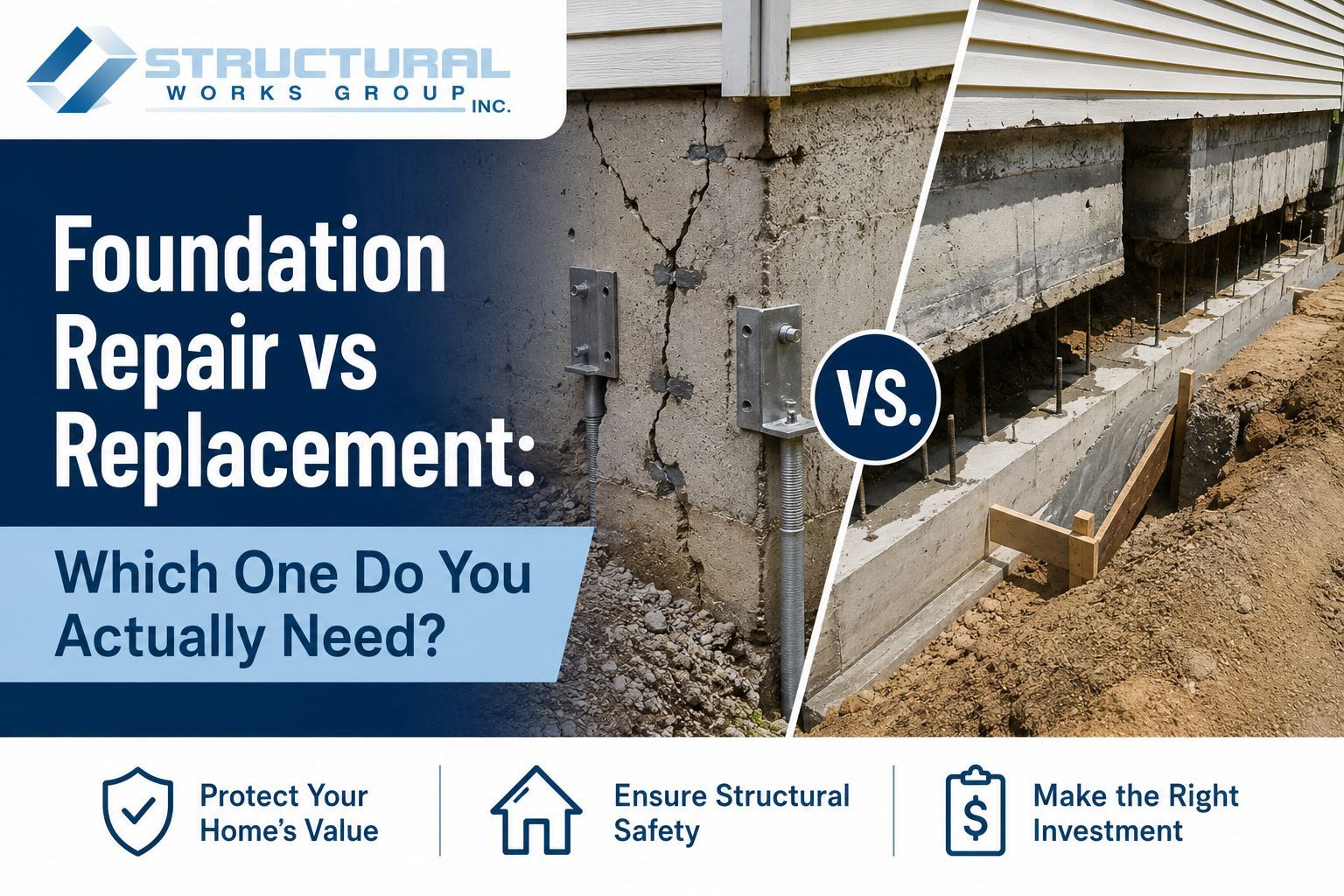
Stabilization vs. Replacement: What Each Option Actually Does
These two solutions are not interchangeable. They address different failure states.
Stabilization is about
stopping movement.
Replacement is about
removing failed structure.
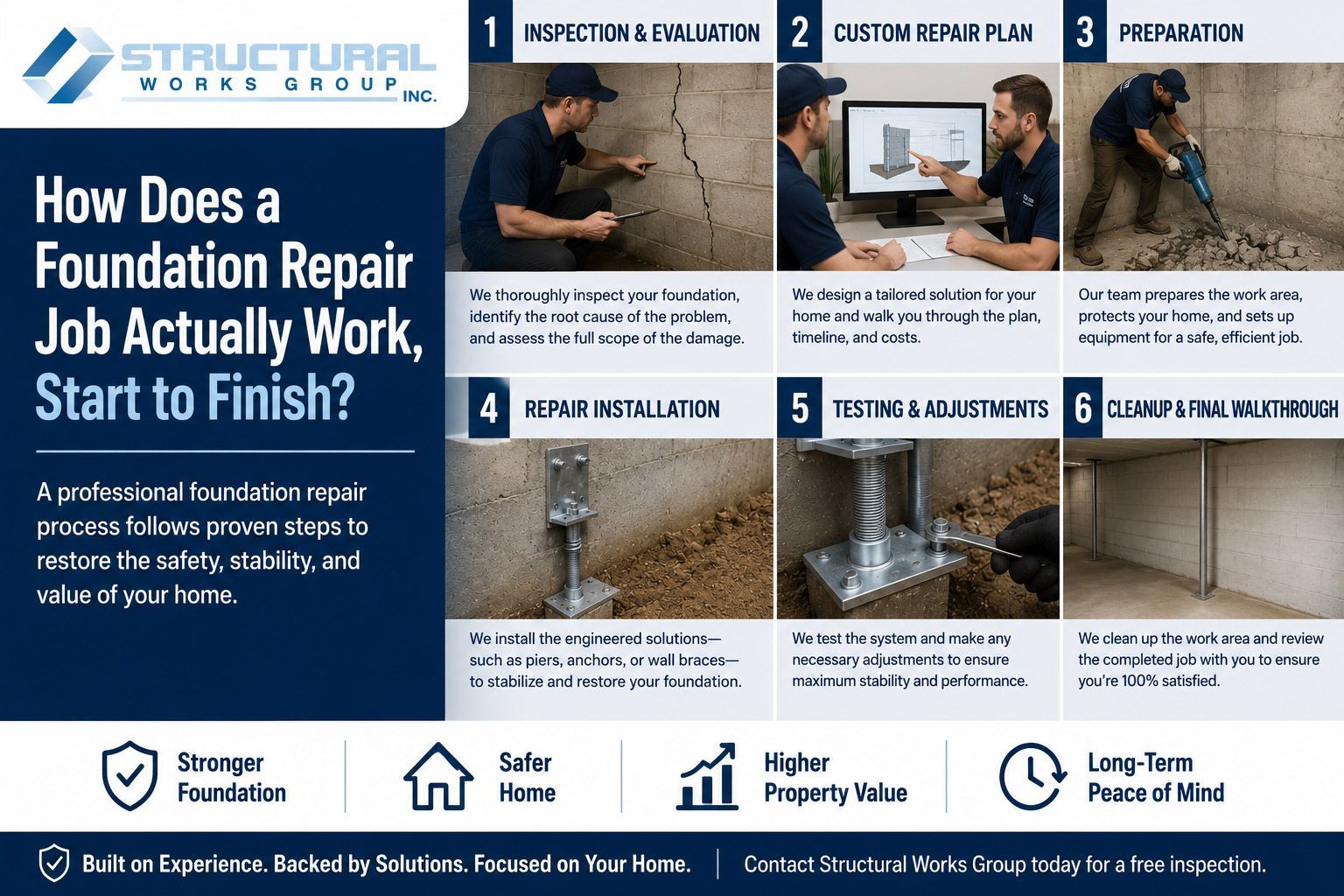
Stabilization typically involves:
- Installing steel or helical piers beneath the foundation
- Underpinning sections that have settled
- Bracing walls that are bowing or leaning
- Redistributing structural loads to stable soil
Nothing is removed. The existing foundation remains. The goal is to freeze movement and prevent further damage.
Replacement involves:
- Cutting out cracked or displaced foundation sections
- Rebuilding footings or wall segments
- Reconnecting load paths from the home to new concrete
- Restoring structural continuity
Replacement does not stop soil movement by itself. It rebuilds what has already failed.
These approaches solve different problems. Cost depends on which problem your home actually has.
When Stabilization Is the Cheaper Long-Term Option
Stabilization is usually more economical when the foundation is still structurally intact but no longer stable.
This often looks like:
- Vertical or diagonal cracks that haven’t separated
- Uneven floors without major wall displacement
- Doors and windows sticking
- Minor wall bowing without shear failure
In these cases, the concrete hasn’t lost its structural role. The issue is that the soil beneath it is no longer supporting it evenly.
Stabilization works because:
- It bypasses unstable soil
- It transfers weight to deeper, load-bearing strata
- It prevents additional movement
The cost stays lower because:
- No demolition is required
- Structural systems remain connected
- Repairs are targeted, not reconstructive
Here, replacement would mean tearing out functioning material. You’d be paying for demolition, disposal, reconstruction, and interior restoration that stabilization avoids entirely.
In these scenarios, replacement is not “more thorough.” It’s unnecessary.
When Replacement Becomes the Cheaper Option
Replacement becomes more cost-effective once the foundation has crossed from movement into structural failure.
This includes:
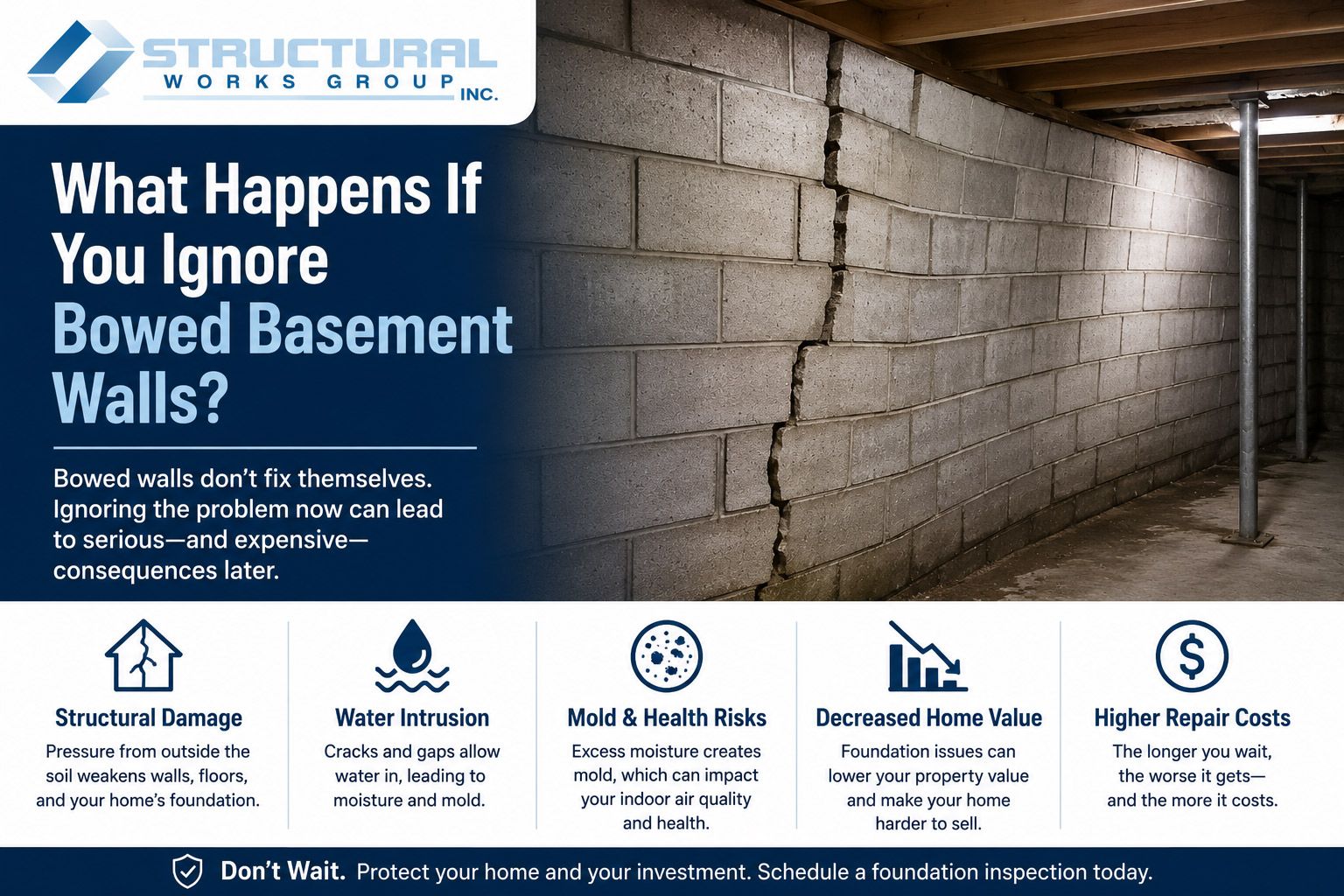
- Cracks with visible separation
- Sheared wall sections
- Broken footings
- Displaced slabs
- Walls that have lost load-bearing integrity
At this stage, stabilization alone cannot restore function. You can stop further movement, but the damaged sections still cannot safely carry load.
Trying to stabilize without replacing failed concrete creates a layered problem:
- Movement stops
- The broken section remains
- Load paths stay compromised
- Stress transfers elsewhere
- New cracks form
Homeowners often spend money on stabilization first, only to replace the damaged section later anyway.
In this scenario, replacement is cheaper because:
- It resolves both the structural break and the movement
- It prevents secondary failure
- It avoids duplicating labor
Paying once for the correct solution is always cheaper than paying twice for partial fixes.
Why These Costs Are Often Misjudged
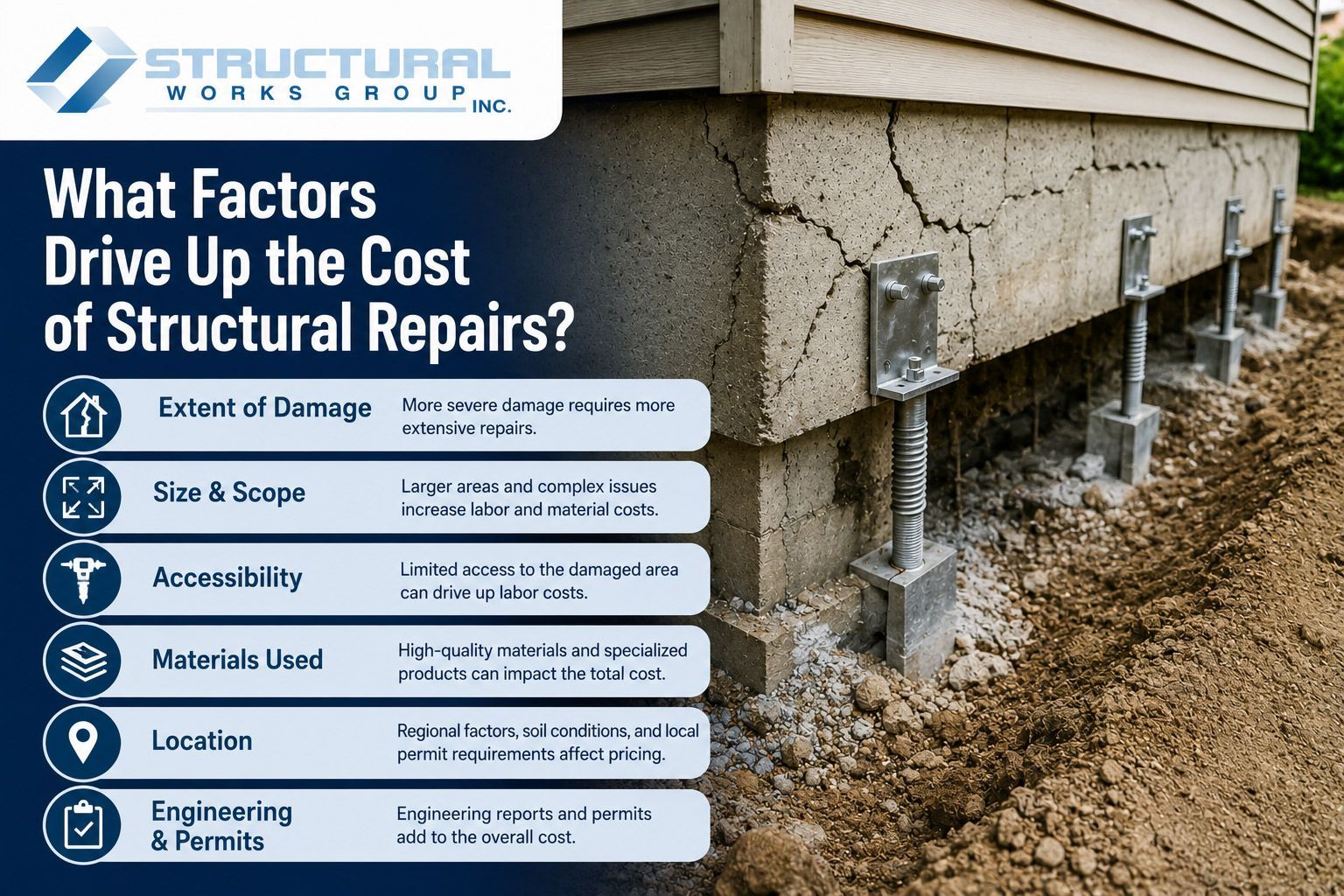
Homeowners often assume stabilization is “small” and replacement is “big.” In reality, the size of the work depends on how much of the system has failed.
A single pier installation may cost far less than removing a wall section. But stabilizing a home that has multiple fractured zones can require:
- Numerous piers
- Extensive bracing
- Ongoing adjustments
- Interior repairs that never fully align
Meanwhile, replacing one compromised segment may:
- Restore load paths
- Eliminate stress concentrations
- Reduce future reinforcement needs
The cheaper option is the one that ends the problem, not the one with the lowest initial estimate.
Decision Path: How Contractors Choose Between Them
Professionals do not choose between stabilization and replacement based on price. They choose based on failure mode.
A simplified evaluation looks like this:
- Is the foundation still structurally intact?
- Has any section lost its load-bearing function?
- Is the movement ongoing or historical?
- Are cracks widening or static?
- Are walls deflecting or separating?
If the structure is intact but moving, stabilization is appropriate.
If any section has failed structurally, replacement becomes necessary.
The cost difference comes from the stage of failure, not from contractor preference.
Hidden Costs of Choosing the Wrong Approach
Selecting stabilization when replacement is required often leads to:
- Continued interior cracking
- Doors and windows drifting out of alignment
- Load shifting to new areas
- Repeat service calls
- Secondary repairs elsewhere in the home
Each of these carries its own cost. None of them fix the broken section.
Choosing replacement when stabilization would suffice leads to:
- Unnecessary demolition
- Higher labor expense
- Longer disruption
- Restoring finishes that didn’t need removal
Both mistakes come from misunderstanding what the foundation is actually doing.
FAQ
Is stabilization always cheaper upfront?
Often, yes. But upfront cost does not equal total cost. If stabilization cannot restore structural function, replacement becomes cheaper over time.
Can a foundation be both stabilized and replaced?
Yes. Many homes require both—replacement of failed sections and stabilization of surrounding areas to prevent recurrence.
Will replacement alone stop future movement?
No. Replacement rebuilds damaged areas but does not correct soil instability. Without stabilization, new movement may occur.
Can small cracks be replaced instead of stabilized?
Cracks are symptoms. Replacement is rarely done for cracks alone unless structural separation has occurred.
Why do some homes need both solutions?
Because parts of the foundation may have failed while others are simply moving. Each area must be treated based on its condition.
Conclusion
Stabilization is cheaper when the foundation is intact but unstable.
Replacement is cheaper when the structure itself has failed.
The cost difference is not about methods—it’s about damage stage. Early movement favors stabilization. Structural breakage demands replacement.
The mistake homeowners make is choosing based on price instead of condition. That’s how a “cheaper” fix becomes the most expensive outcome.
A professional structural evaluation identifies whether your home needs reinforcement, reconstruction, or both. The right solution is the one that ends the problem—not the one that merely slows it.